



The Sun’s Volatile Temper
Space weather refers to the changing conditions in our solar system, driven by the Sun's activity. The primary threats are solar flares, which are intense bursts of radiation, and coronal mass ejections (CMEs), which are giant clouds of charged particles
hurled into space. While a flare’s radiation reaches Earth in just eight minutes, a CME is a slower-moving storm that can take one to three days to arrive, triggering geomagnetic storms that can wreak havoc for days on end. These phenomena are not rare; the Sun operates on an approximately 11-year cycle, and we are currently in or approaching a period of maximum activity, meaning more frequent and intense events.
Satellites in the Firing Line
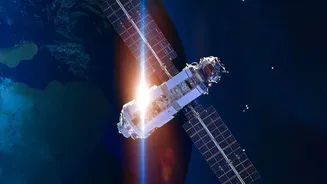
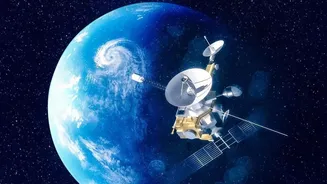
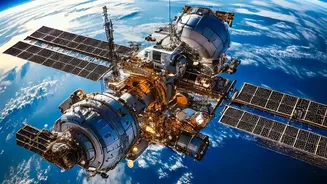
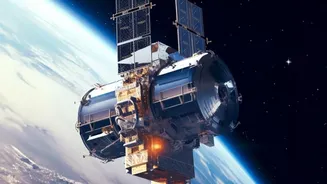
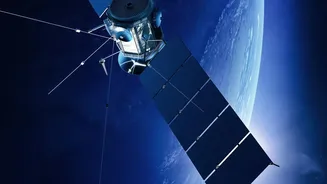
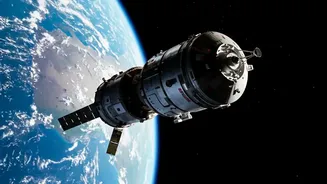
When a solar storm hits, satellites are directly in the line of fire. The high-energy particles can fry sensitive electronics, much like a power surge fries a home appliance. The storm also heats and expands Earth’s outer atmosphere, increasing drag on low-Earth orbit satellites, which can cause them to slow down, alter their orbit, and reduce their operational lifespan. Furthermore, the charged particles disrupt the radio signals used for communication and navigation, degrading the precision of GPS systems and potentially causing widespread blackouts of service. A severe event could render satellites inoperable for extended periods.
More Than Just Lost GPS
The potential impact goes far beyond navigation troubles. Our global economy is deeply intertwined with satellite functionality. Financial markets rely on the precise timing signals from GPS for high-frequency trading. Power grids use this timing to synchronise operations. Farmers use GPS for precision agriculture, while the aviation and shipping industries depend on it for safe navigation. An extreme space weather event could trigger a cascade of failures across these sectors, with some estimates putting the potential economic losses from a severe storm in the trillions of dollars.
The Challenge of Forecasting
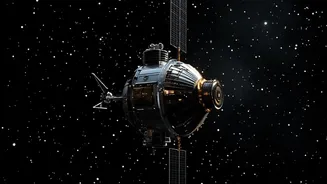
Traditionally, forecasting space weather has been a reactive process. Observatories like NOAA's DSCOVR satellite, positioned between the Sun and Earth, monitor the solar wind in real-time. However, this only provides about 15 to 60 minutes of warning before a CME hits—hardly enough time to implement comprehensive protective measures for critical infrastructure. While better than nothing, this short lead time highlights the urgent need for predictive models that can see a storm coming not minutes or hours, but days in advance.
The AI and Deep Space Advantage
Next-generation models are tackling this challenge on two fronts: artificial intelligence and new vantage points in space. Scientists are now using AI to analyse the Sun's magnetic fields deep beneath its surface, connecting them to the formation of flare-producing regions on the surface. One such model, known as PINNBARDS, has shown promise in extending forecast lead times from hours to potentially several weeks by better understanding where and when these volatile regions will form. Other AI systems are being developed to integrate multiple data sources to predict flare intensity, CME travel time, and the specific danger level for satellites.
New Eyes on the Sun
In parallel, space agencies are planning missions that will provide a crucial new perspective. ESA's upcoming HENON mission, slated for a 2027 launch, will send a small satellite ten times farther upstream from Earth than current monitors. This could extend the warning time for the most severe storms from 15 minutes to several hours. This mission is a precursor to a more permanent operational system. Similarly, NOAA’s Space Weather Next (SW Next) program will launch new observatories to ensure continuous, high-quality data for forecasters, improving our ability to predict and mitigate the impacts of solar storms.