





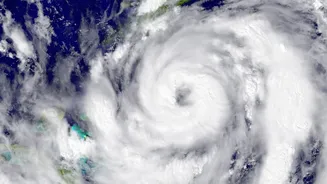


As 'very severe cyclonic storm' Arnab makes landfall on India's east coast, states like Andhra Pradesh, Odisha, and West Bengal are grappling with extremely heavy rainfall and high-speed winds. This has led to significant disruptions.
The Latest on Cyclone Arnab
The India Meteorological
Department (IMD) confirmed that Cyclone Arnab made landfall near Yanam on the Andhra Pradesh coast in the early hours of Wednesday, October 28. The storm is classified as a 'very severe cyclonic storm', with maximum sustained wind speeds of 125-135 kmph and gusts reaching up to 150 kmph. Red alerts for extremely heavy rainfall have been issued for coastal Andhra Pradesh and parts of Odisha. The storm's impact is also being felt in neighbouring states, including West Bengal, Jharkhand, and Chhattisgarh, which are experiencing heavy showers and gusty winds. Authorities have undertaken mass evacuations in low-lying coastal areas and set up thousands of cyclone shelters.
States Under Alert and Affected Regions
Andhra Pradesh is bearing the brunt of the cyclone's impact, with districts like Kakinada, Visakhapatnam, East and West Godavari, and Konaseema experiencing torrential rain and destructive winds. In Odisha, southern districts including Ganjam, Gajapati, Koraput, and Rayagada are under high alert for extremely heavy rainfall. West Bengal's coastal districts, such as Purba Medinipur and South 24 Parganas, are also receiving heavy rain. The IMD has warned of potential landslides in the Darjeeling and Kalimpong districts due to the intense rainfall. The impact extends to Telangana and Chhattisgarh, where heavy to very heavy rainfall is predicted.
Severe Disruptions to Train Services
Indian Railways has taken extensive precautionary measures, leading to the cancellation of more than 90 train services across the affected regions. The South Central Railway and East Coast Railway have cancelled, diverted, or short-terminated numerous trains passing through Andhra Pradesh, Odisha, and Telangana to ensure passenger safety. Major affected services include long-distance trains like the Falaknuma Express, Godavari Express, and Visakha Express, impacting routes connecting Howrah, Secunderabad, Visakhapatnam, and Bhubaneswar. Passengers are strongly advised to check the status of their specific train using the NTES platform or by calling the helpline at 139 before heading to the station.
Air Travel Status: Cancellations and Advisories
Air travel has been significantly hampered by the adverse weather. At least 21 flights were cancelled at Vijayawada and Visakhapatnam airports on October 27, and authorities at Vijayawada airport cancelled all flights for October 28 as a precaution. Major airlines, including Air India and IndiGo, have cancelled services on routes connecting cities like Delhi, Bengaluru, and Chennai to the cyclone-affected areas. Passengers with travel plans through airports in Visakhapatnam, Bhubaneswar, and surrounding regions are urged to check their flight status directly with their respective airlines, as schedules remain fluid and subject to change based on weather conditions.
Road Transport and Safety Advisory
Heavy rainfall has led to waterlogging and flooding on roads, severely affecting vehicular movement. In Kakinada district, service roads along the national highway were flooded, and uprooted trees blocked key routes like the Tuni–Narsipatnam road, causing significant traffic disruptions. Strong winds have uprooted trees and thousands of electricity poles in several districts, further obstructing roadways and posing a danger to commuters. Authorities have advised the public to avoid all non–essential travel. For those who must travel, extreme caution is advised. Check for local traffic advisories and expect significant delays. Do not attempt to drive through waterlogged areas.