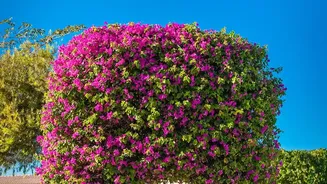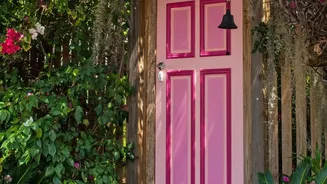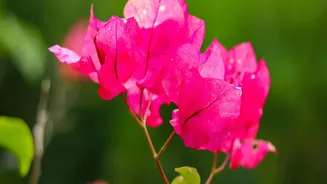

Few plants capture the essence of a tropical Indian garden like bougainvillea. With its riot of colour and thorny, fast-growing nature, it's the perfect choice for creating a living fence that is both beautiful and secure.
Why Bougainvillea Makes the Perfect Boundary
Before diving into the 'how-to',
let's appreciate the 'why'. Bougainvillea is more than just a pretty face in the garden. Its dense, woody, and thorny structure makes it an excellent natural deterrent, creating a secure perimeter that is far more attractive than a plain wall. These plants are champions of the Indian climate, thriving in intense heat and full sun where other plants might struggle. They are remarkably drought-tolerant once established, meaning they require minimal care and water, making them a sustainable choice for any garden. Their true flowers are small and white, but they are surrounded by colourful, paper-like leaves called bracts, which provide the spectacular, long-lasting display in shades of magenta, pink, orange, and white.
Choosing the Right Variety
Not all bougainvilleas are created equal, especially when planning a hedge. While towering climbers are great for covering pergolas, for a boundary you'll want to look for shrubbier, denser varieties. Cultivars like 'Barbara Karst' (bright red/magenta), 'New River' (deep purple and very upright), and dwarf varieties like 'Helen Johnson' or 'Miss Alice' (white and thornless) are excellent choices for creating a thick, manageable hedge. Some varieties, such as 'Bougainvillea glabra', are extremely common in India and work well for both pots and training on supports. Consider the final height and spread you desire. For a dense screen, planting vigorous growers is a good strategy as they will intertwine to form a solid barrier.
Planting for a Living Fence
Success starts with proper planting. Bougainvillea demands at least six to eight hours of direct sunlight daily to produce a profusion of blooms; do not even attempt to grow it in the shade. Soil must be well-draining. A mix of garden soil, sand, and compost is ideal to prevent root rot, a common issue in humid monsoon months. When planting a hedge, spacing is critical. For a dense boundary, plant your saplings about 3 to 5 feet apart. This allows them enough room to grow while encouraging them to weave together into a continuous screen. Dig a hole twice as wide as the root ball, place the plant carefully (the roots are fragile), and backfill with soil. Water thoroughly after planting to help it settle in.
The Art of Pruning for Density
Pruning is the most important step in transforming a rambling vine into a tidy, dense boundary. Bougainvillea blooms on new growth, so strategic cutting encourages more flowers and a bushier shape. The primary hard pruning should be done in late winter or early spring (around February–March in India), before the main growth spurt. Cut back the entire plant by at least one–third to one–half to stimulate strong new shoots from the base. Throughout the year, perform light trimming after each flowering cycle. Snip off the tips of long, leggy stems to encourage branching. This frequent pinching and trimming will force the plant to grow thick and full, rather than tall and sparse. Always wear thick, long gloves, as the thorns can be sharp.
Watering and Feeding for Abundant Blooms
Here lies the counterintuitive secret to bougainvillea care: they flower best when slightly stressed. Overwatering leads to lush green leaves but few flowers. Water deeply but infrequently, allowing the top couple of inches of soil to dry out completely between waterings. During the hot summer, this might be every 5 to 10 days, but reduce watering significantly during the monsoon and cooler winter months. Bougainvilleas are also heavy feeders. To support abundant blooming, use a fertiliser high in phosphorus and potassium. Many specific 'bougainvillea fertilizers' are available that contain the right balance of nutrients. Feed them regularly during the growing season, but stop fertilising around October to allow the plant a winter rest period, which can trigger heavier blooms in the spring.
Troubleshooting Common Problems
While relatively pest–free, bougainvilleas can sometimes face issues. The most common problem is a lack of flowers, which is almost always due to insufficient sunlight or overwatering. Pests like aphids, mealybugs, and the bougainvillea looper caterpillar can occasionally appear. Aphids and mealybugs can often be managed by spraying the plant with water or using a simple insecticidal soap. The looper caterpillar, which chews on leaves, can be picked off by hand or treated with an organic pesticide like Bacillus thuringiensis (Bt). Fungal leaf spot can occur in very humid conditions; ensure good air circulation by pruning and remove any affected leaves promptly to prevent its spread.