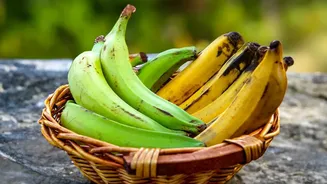





The banana is a staple in fruit bowls across India for a reason. But as it transforms from firm and green to soft and yellow, its nutritional profile changes dramatically. Which one is actually better for you? The answer depends on your health goals.
The Great Carbohydrate Transformation
The fundamental difference between a green and a ripe banana lies in the form of its carbohydrates. A green, or raw, banana is packed with resistant starch. This is a long-chain carbohydrate that, as its name suggests, 'resists' digestion in your small intestine. As the banana ripens, enzymes work to break down this complex starch into simple sugars like sucrose, glucose, and fructose. This is why a yellow banana tastes significantly sweeter. A fully ripe banana may contain only 1% starch, having converted the rest into sugar. While the total carbohydrate count remains similar, the type of carb you consume is completely different depending on the banana's ripeness.
Impact on Blood Sugar
This shift from starch to sugar has a direct impact on your blood sugar. Because resistant starch is not easily broken down, green bananas have a low glycemic index (GI), typically around 30 to 42. This means they release glucose into the bloodstream slowly, preventing sharp spikes in blood sugar and promoting a feeling of fullness. This makes them a more suitable choice for individuals managing blood sugar levels, such as those with type 2 diabetes. Conversely, a ripe yellow banana has a higher GI, somewhere between 51 and 62, because its sugars are absorbed much more quickly. This provides a rapid energy boost, making ripe bananas an excellent pre-workout snack or a quick source of fuel.
Digestion and Gut Health
Your digestive system handles the two types of bananas very differently. The resistant starch in green bananas functions like a prebiotic fiber. Since it passes through the small intestine undigested, it travels to the colon where it becomes food for your beneficial gut bacteria. This fermentation process produces short-chain fatty acids like butyrate, which are crucial for colon health. However, for some, this fermentation can cause gas or bloating. Ripe bananas, being lower in this starch and higher in simple sugars, are much easier and faster to digest. Their softer texture can be soothing for the digestive system, making them a good option for those with sensitive stomachs.
Nutrient Profile, Taste and Texture
While major nutrients like potassium, vitamin B6, and vitamin C remain present throughout the ripening process, their bioavailability and the presence of other compounds can change. Green bananas are firm, waxy, and can have a slightly bitter taste. As they ripen, they become softer, sweeter, and easier to peel. Some studies suggest that the level of antioxidants, such as phenolic compounds, increases as a banana ripens and develops brown spots. These antioxidants help combat oxidative stress in the body. However, other research indicates certain flavonoids are higher in mature green bananas. The key takeaway is that both forms offer valuable micronutrients.
The Verdict: Which Banana Is for You?
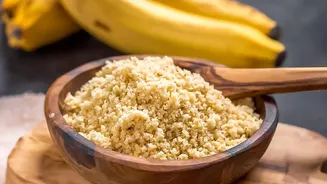
There is no single 'healthier' banana; the best choice is entirely dependent on your individual needs. If your priority is blood sugar control, improved gut health through prebiotics, or a greater feeling of fullness to aid in weight management, a green banana is the superior option. Its high resistant starch content provides these specific benefits. If you need a quick and easily digestible source of energy before physical activity, or if you simply prefer a sweeter taste and softer texture, a ripe yellow banana is the perfect pick. People with sensitive digestive systems may also find ripe bananas gentler on their stomach.