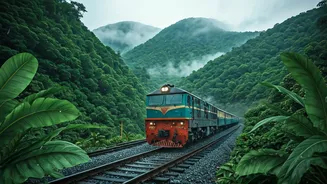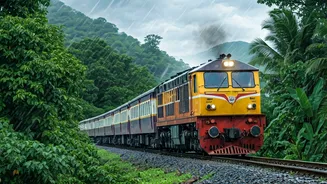








The Perennial Monsoon Challenge
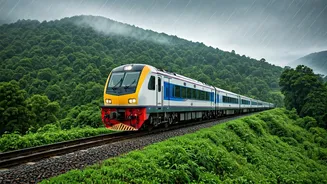
For decades, train travel in India's hilly regions during the monsoon has been a gamble against nature. The iconic routes, including the Konkan Railway along the western coast and the heritage lines to Shimla and Darjeeling, are famed for their breathtaking
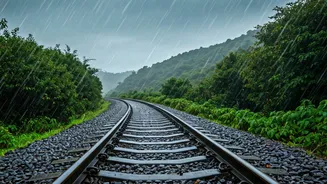
views but also notorious for their vulnerability. Heavy rains trigger landslides, rockfalls, and track washouts, leading to frequent disruptions, and in tragic cases, accidents. The very terrain that makes these journeys spectacular—steep cuttings, deep valleys, and winding tracks—also makes them susceptible to the fury of the monsoon. Every year, railway authorities have had to suspend services, sometimes for weeks, leaving passengers stranded and severing vital transport links for local communities.
A New Armour of Technology
To combat these age-old problems, Indian Railways is now deploying a modern arsenal of technology. On the critical Konkan Railway, an AI-based system is being piloted to provide real-time monitoring. Developed with the Centre for Development of Advanced Computing (C-DAC), the Rail Track Monitoring and Alert System (RTMAS) uses machine learning and high-speed cameras to detect landslides, fallen boulders, and even animals on the tracks, instantly alerting the control room. Elsewhere, on routes like the Kalka-Shimla line, landslide monitoring and early warning systems are being installed. These systems use a combination of sensors to measure soil movement, rainfall intensity, and pore water pressure, providing alerts that can predict a potential landslide hours in advance.
Reinforcing the Lifelines
Technology is only part of the solution. Across its hill sections, the Railways is also undertaking massive physical infrastructure upgrades to strengthen the tracks against landslides. On the Konkan route, large-scale slope stabilisation work has been a focus for years, including techniques like soil nailing, rock bolting, and shotcreting to secure vulnerable slopes. Massive rockfall protection nets and strong gabion walls—cages filled with rocks—have been erected in high-risk zones. Similar efforts are underway on the Darjeeling Himalayan Railway (DHR), where trackside reinforcement and improved drainage systems are being prioritised to prevent water accumulation, a key cause of hill collapses. These physical barriers are designed to either stop debris from reaching the tracks or to safely channel it away.
Smarter Operations, Safer Journeys
The final piece of the safety puzzle lies in changing how trains operate during the most dangerous periods. Indian Railways has instituted a special monsoon timetable for vulnerable routes like the Konkan line, which includes reduced speeds for all trains. Round-the-clock patrolling of tracks has been intensified, with hundreds of personnel deployed to walk along vulnerable sections and visually inspect them. These patrol teams are equipped to take immediate action if they spot any danger, and emergency telephones have been installed at regular intervals to ensure communication is possible even in low-signal areas. In addition, automatic rain gauges and flood warning systems have been installed to monitor weather conditions in real time, allowing for services to be suspended if rainfall or river water levels exceed a safe threshold.