
The Challenge of a Hostile Garden
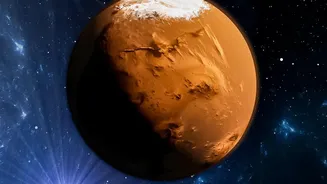
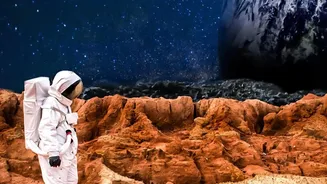
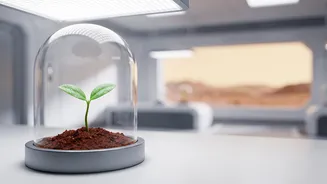
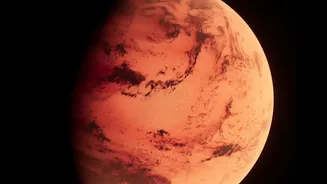
Growing plants on Mars is far more complicated than simply planting a seed in the red dirt. The planet presents a formidable set of obstacles. Its atmosphere is thin, offering little protection from harmful solar radiation. Temperatures can plunge to
an average of -65°C, and the sunlight that reaches the surface is only about 43% as strong as it is on Earth. Then there's the 'soil' itself, a substance called regolith. Martian regolith is essentially fine, broken rock dust, completely devoid of the organic matter and helpful microbes that make Earth soil fertile. Worse, it's laced with toxic perchlorate salts, which are harmful to both plants and humans.
Detoxing the Dirt or Ditching It Entirely
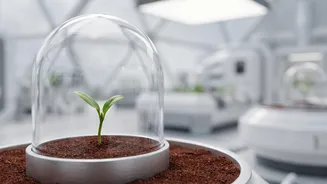
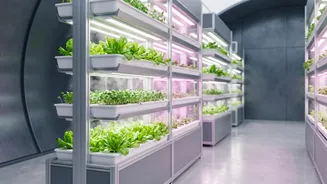
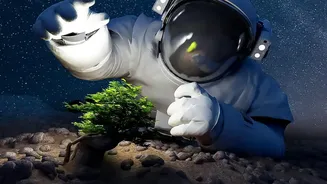
Scientists are exploring two main pathways to overcome the soil problem: fixing it or bypassing it. One approach involves a process of 'bioweathering', using microbes to break down the toxic perchlorates in the regolith and enrich it with organic nutrients. Research has shown that hardy plants like alfalfa can be grown in a simulant of this treated soil, with their biomass then used as a natural fertiliser for food crops like radishes, turnips, and lettuce. But an even more popular solution is to forget soil altogether. Hydroponics (growing plants in nutrient-rich water) and aeroponics (misting roots with nutrient-infused vapour) are leading contenders for Martian greenhouses. These methods are already used on the International Space Station and offer precise control over nutrients while using significantly less water.
A Greenhouse Under Pressure
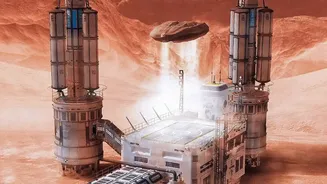
Regardless of the growing medium, Martian crops will need to live inside advanced, pressurised greenhouses. These controlled-environment habitats would shield plants from deadly radiation and freezing temperatures. Inside, the atmosphere can be optimised for plant growth, with higher concentrations of carbon dioxide than what's available in the thin Martian air. Since natural sunlight on Mars can be weak and unreliable, especially during planet-wide dust storms, these greenhouses will rely on electric lighting. Specialised LED lights that provide the exact red and blue wavelengths plants need for photosynthesis are a key technology, allowing for efficient, year-round cultivation independent of the Martian weather.
Finding and Recycling Every Last Drop
Water is another critical resource. While Mars has frozen water at its polar caps and potentially underground, it must be extracted and used with extreme efficiency. Future Martian colonies will depend on closed-loop systems that recycle nearly 100% of all water. This includes purifying wastewater from human habitats and capturing the water that plants release through transpiration. Researchers are developing systems that use microorganisms to break down human waste and recover water and nutrients, which can then be fed directly back into the plant growth systems. This kind of bioregenerative life support not only conserves a precious resource but also reduces the amount of fertiliser that would need to be shipped from Earth.
The Future of Off-World Farming
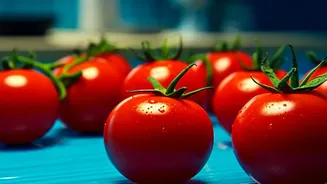
The quest to farm on Mars is pushing the boundaries of agricultural technology. Scientists are investigating everything from genetically engineering crops to be more resilient to cold and drought to using AI and machine vision to monitor plant health automatically. Experiments on the International Space Station are continually testing new methods and crops, from lettuce and tomatoes to radishes and alfalfa. These efforts are not just vital for the future of space exploration; they also have significant benefits for us on Earth. The development of ultra-efficient, closed-loop farming systems could revolutionise agriculture in harsh environments and help address food security challenges around the world. Solving the problem of lunch on Mars could, in the end, help us better manage dinner here at home.