

More Than Just A Finding
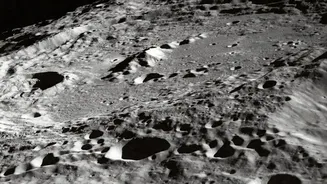
For decades, scientists have theorized about water on the Moon. Early missions, including India's own Chandrayaan-1, provided strong evidence by detecting hydrogen, a key component of water. Subsequent orbital data and even impact-based experiments continued
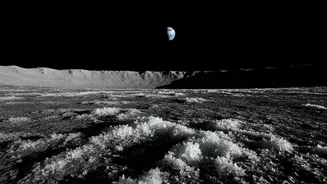
to build the case. However, this latest confirmation is different. It’s not just about finding trace molecules or deeply buried, inaccessible deposits. The new mapping points to significant quantities of water ice, mixed into the lunar regolith (the Moon's soil) at shallow depths in permanently shadowed regions. This distinction between finding water and finding accessible water is the critical breakthrough that shifts the conversation from scientific curiosity to practical application.
The Cosmic Water Detector
The discovery was made possible by an instrument called a neutron spectrometer. In simple terms, this device acts like a cosmic water detector. The Moon's surface is constantly bombarded by high-energy particles from space called cosmic rays. When these rays hit the lunar soil, they knock neutrons loose. A neutron spectrometer doesn't look for water directly; it counts these escaping neutrons. When neutrons collide with hydrogen atoms—the 'H' in H₂O—they lose a significant amount of energy. An instrument detecting fewer medium-energy neutrons coming from a specific area is a strong indicator that hydrogen is present beneath the surface, trapping them. By mapping these areas of neutron suppression, scientists can pinpoint hydrogen-rich deposits, which in the freezing, sunless craters of the south pole, almost certainly means water ice.
Fuel, Air, and Life Support
Finding accessible water on the Moon is arguably as significant as finding oil on Earth in the 19th century. Water is the key to what experts call 'in-situ resource utilization' (ISRU), or living off the land. The implications are enormous. For starters, it provides drinking water for astronauts and can be used to grow food, dramatically reducing the need for expensive resupply missions from Earth. Beyond life support, water can be split into its constituent elements: oxygen and hydrogen. This provides breathable air for a lunar habitat and, crucially, the two most essential components of rocket propellant. A future Moon base could effectively become a refueling station for missions venturing deeper into our solar system, including to Mars.
India's Polar Advantage
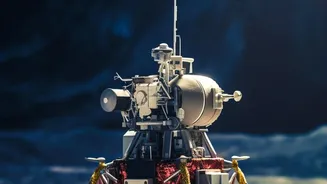
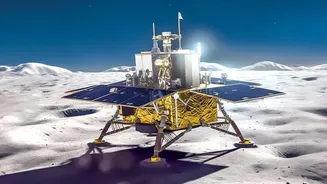
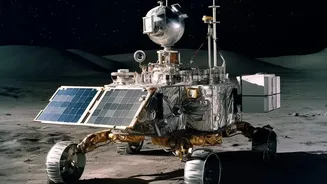
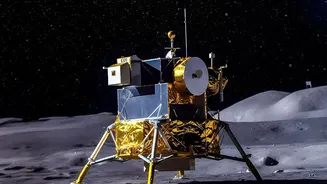
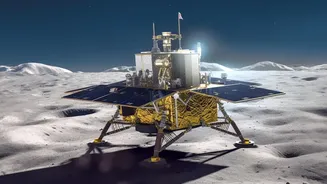
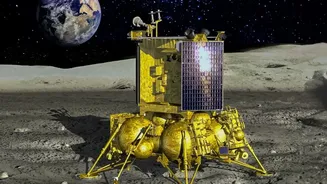
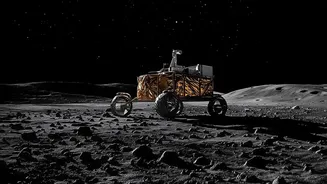
This confirmation holds particular significance for India. With the historic landing of Chandrayaan-3 near the south pole, ISRO has already demonstrated its capability to operate in this challenging yet resource-rich region. India is no longer just a participant in the lunar race; it is a leader with a strategic foothold in the most valuable real estate on the Moon. The data from Chandrayaan-2's orbiter and Chandrayaan-3's lander have already provided crucial insights into the thermal environment and potential for subsurface ice. Furthermore, ISRO is partnering with Japan's JAXA on the Lunar Polar Exploration (LUPEX) mission, which will use a rover equipped with a NASA-provided neutron spectrometer to further explore and quantify these very water ice deposits on the ground. This places India at the centre of efforts to map out and eventually harness these lunar resources.
The Path to a Lunar Outpost
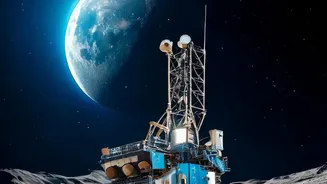
While the confirmation of accessible water ice is a monumental step, the road to a functioning lunar outpost is still long. The next phase of missions, including LUPEX and NASA's Artemis program, will focus on 'ground truth' — drilling into the regolith to analyze the purity, quantity, and distribution of the ice. Engineers must develop robotic and, eventually, human-operated systems capable of mining and processing this ice in extreme environments, where temperatures can plummet to below -200 degrees Celsius. There are also geopolitical questions to consider about the ownership and management of these resources. However, what was once science fiction is now a tangible engineering problem. This discovery provides the foundational resource needed to plan for long-term human presence on the Moon.