





Not An Election, But A Selection
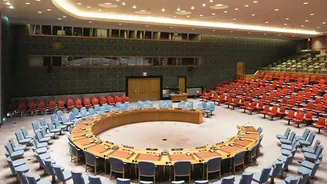
The United Nations Charter outlines a two-step process. First, the 15-member Security Council recommends a single candidate. Then, the 193-member General Assembly formally appoints them. In reality, the true power lies with the Security Council's five
permanent members: China, France, Russia, the United Kingdom, and the United States. Any one of these 'P5' nations can veto a candidate, effectively ending their bid. To win, a candidate needs at least nine 'encourage' votes from the Security Council with no vetoes from the P5. This turns the process into a search for the least objectionable candidate, one who won't antagonise any of the major world powers. The Council holds a series of secret straw polls, often using colour-coded ballots to distinguish P5 votes, to gauge support and gradually narrow the field.
The Unwritten Rules
Beyond the formal rules, two powerful informal conventions shape the race: geography and gender. By tradition, the top job rotates between different regions of the world. With current Secretary-General António Guterres from Western Europe, many diplomats argue it's the turn of Latin America and the Caribbean, or the Eastern European group, the only region never to have held the post. Simultaneously, there is immense pressure for the UN to appoint its first-ever female Secretary-General after 81 years and nine male leaders. This has led to a strong field of female candidates. However, these two informal rules can sometimes clash, complicating the diplomatic calculus for member states who must decide which principle to prioritise.
The Key Players in a Crowded Field
As of late 2026, the race is in its final, tense stages. Several high-profile candidates have emerged. Rebeca Grynspan of Costa Rica, a former vice president and current head of the UN's trade and development body, is widely seen as a frontrunner, consistently polling well in the Security Council's straw polls. Other prominent contenders include Lana Nusseibeh of the United Arab Emirates, and Rafael Grossi of Argentina, the head of the International Atomic Energy Agency. Yet, despite multiple rounds of voting, no candidate has managed to secure the needed support without also receiving 'discourage' votes from permanent members, raising the possibility of a continued deadlock.
The Geopolitical Chessboard
The final decision will come down to the strategic interests of the P5 nations. These global powers are often at odds, and each seeks a Secretary-General who aligns with, or at least does not challenge, their core interests. Russia, for instance, is seen as unlikely to support a candidate perceived as too close to NATO. The United States and its Western allies seek a leader who will champion human rights and be a strong manager, while China often prefers a candidate who prioritises national sovereignty and non-interference. The ongoing war in Ukraine and other global crises have only heightened these tensions, making consensus more difficult. The recent straw polls show a divided council, with every leading candidate facing potential vetoes. This deadlock has fueled speculation that a 'dark horse' or compromise candidate could emerge at the last minute, someone acceptable to all major parties even if they are not anyone's first choice.