

Understanding the Temperature Danger Zone
The core principle of cooling food safely is to move it through the "temperature danger zone" as quickly as possible. According to the U.S. Department of Agriculture (USDA), this zone is the temperature range between 40°F (4°C) and 140°F (60°C). Within
this range, harmful bacteria like Salmonella and E. coli can double in as little as 20 minutes. The longer your leftovers linger in this zone, the greater the risk of bacterial growth reaching dangerous levels. The goal is to get cooked food from its hot temperature down to a safe refrigerator temperature of 40°F or below within two hours of cooking.
The Problem with Large, Deep Pots
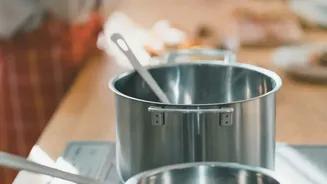
A large, deep stockpot full of hot food is an excellent insulator. While that's great for cooking, it's a significant problem for cooling. The food in the center of the pot will remain in the temperature danger zone for many hours, even if the pot is placed directly in the refrigerator. This extended time at unsafe temperatures provides a perfect breeding ground for bacteria. A common myth is that placing hot food in the fridge will damage the appliance; modern refrigerators are built to handle it. The real risk isn't to your fridge, but to the food itself, which simply won't cool fast enough in a large mass.
Divide and Conquer: The Shallow Container Strategy
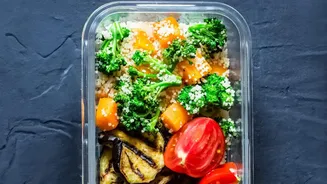
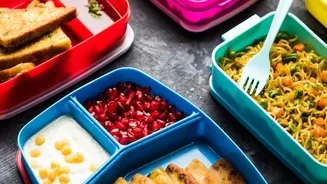
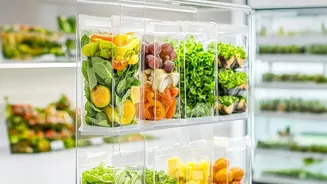
The most effective strategy to cool food rapidly is to increase its surface area. Instead of refrigerating a large pot, divide the contents into several smaller, shallow containers. Food safety experts recommend that the depth of the food in these containers should be no more than two to three inches. This allows heat to dissipate much more quickly. For example, a large batch of soup can be poured into a few shallow food storage containers or even a clean baking dish. Similarly, large cuts of meat like roasts or whole turkeys should be carved into smaller pieces before being refrigerated.
To Cover or Not to Cover?
The question of whether to cover hot food immediately is a common one. Trapping steam with a tight-fitting lid can slow down the cooling process. For the fastest cooling, it is best to leave the containers loosely covered or partially uncovered at first. This allows heat and steam to escape, which accelerates evaporative cooling. Once the food has cooled to room temperature or is no longer steaming, you can seal the containers tightly before placing them in the refrigerator. This two-step approach protects the food from cross-contamination while still allowing for efficient cooling.
Quick Cooling Techniques
Beyond using shallow containers, there are other methods you can use to speed up the process. One popular technique for soups, stews, or sauces is an ice bath. Place your smaller pot or container into a larger bowl or clean sink filled with ice and a little cold water. Stirring the food frequently while it's in the ice bath will help release heat even faster. You can also use special cooling paddles, which are filled with water and frozen, then used to stir large batches of liquid foods. Another simple trick is to add ice directly to the recipe if it won't negatively affect the final consistency.