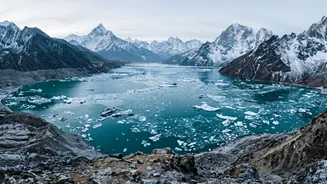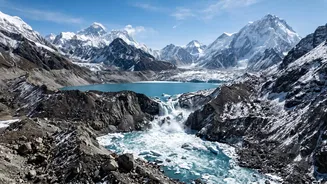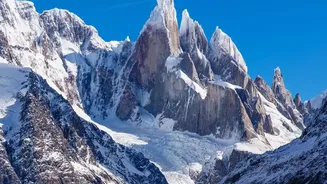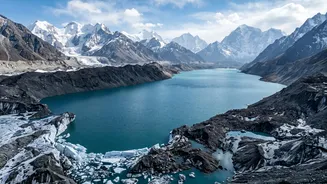






The Himalayas, the planet's 'Third Pole', are a lifeline for millions, but they are also becoming a significant threat. New warnings from the United Nations indicate that a warming climate is making devastating glacial outbursts more frequent.
What is a Glacial Lake Outburst Flood?
A Glacial
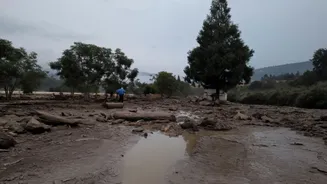
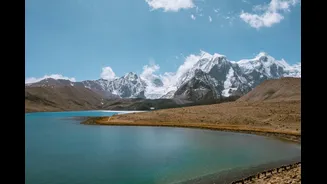
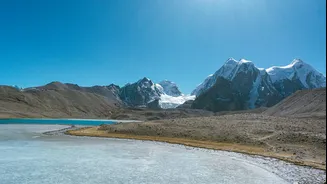
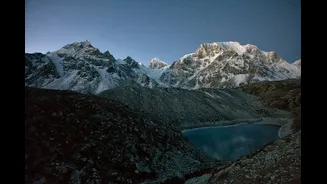
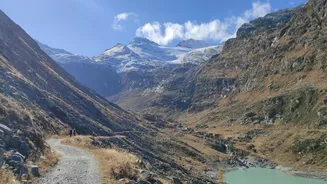
Lake Outburst Flood, or GLOF, is a sudden and often catastrophic release of water from a glacial lake. These lakes are formed as glaciers melt at an accelerated rate due to rising global temperatures. The meltwater collects behind natural dams, typically made of moraine—loose rock and debris left behind by the retreating glacier. These natural dams can be unstable. When they are breached, often by triggers like heavy rainfall, ice avalanches, or seismic activity, they release an enormous volume of water in a very short time. Unlike regular river floods, GLOFs create a powerful torrent carrying mud, boulders, and ice, destroying everything in their path, including bridges, dams, roads, and entire villages downstream.
A Climate Change Story
The increasing frequency and intensity of GLOFs are a direct consequence of climate change. Recent UN-backed reports released in November 2026 highlight that the world’s frozen regions are warming faster than the global average. The Hindu Kush Himalayan region, for instance, could warm by 1.8 to 2.2 degrees Celsius even if global warming is limited to 1.5 degrees. This accelerated warming is causing glaciers to melt at an unprecedented rate—65% faster in the last decade than the one before. As glaciers retreat, existing glacial lakes expand rapidly and new ones form, increasing the potential for catastrophic breaches. One study noted a fivefold increase in GLOF events per decade since 1950. The UN Secretary-General has warned that Himalayan glaciers are 'caving in', underscoring the urgency of the climate crisis.
The Devastating Human Cost
The impact of these events is terrifyingly real for communities in the Himalayan foothills. A UN-led study found that between 1835 and 2025, India recorded 6,119 deaths from GLOFs, the highest among eight countries in the Hindu Kush Himalaya region. The 2023 GLOF at South Lhonak Lake in Sikkim serves as a stark reminder. The lake, which had grown 12 times in size since 1975, breached and caused a flood that killed dozens, affected over 88,000 people, and destroyed the 1,200 MW Teesta-III hydropower dam. Similarly, the 2013 Kedarnath tragedy in Uttarakhand was linked to the outburst of the Chorabari glacial lake, which resulted in over 6,000 fatalities. These events not only cause immediate loss of life but also destroy critical infrastructure, agricultural land, and displace thousands, with lasting economic consequences.
India's High-Risk Zones
India's extensive Himalayan region, spanning states like Sikkim, Himachal Pradesh, Uttarakhand, and Arunachal Pradesh, is particularly vulnerable. A 2020 assessment identified 47 potentially dangerous glacial lakes across India, Nepal, and China, though recent estimates suggest the actual number is significantly higher, putting millions of people at risk. In Himachal Pradesh, the Ghepan lake in Lahaul_Spiti has expanded by 178% between 1989 and 2022, prompting the installation of an early warning system. The South Lhonak Lake in Sikkim is another monitored high_risk site. The cross_border nature of these threats adds another layer of complexity; a lake bursting in Bhutan or Nepal can cause severe flooding downstream in West Bengal, Assam, or Bihar.
From Warning to Action
In response to the growing threat, there is a push to move from reactive disaster management to proactive risk reduction. India has installed its first GLOF early warning system at Ghepan lake, a pilot project that could be replicated for other vulnerable lakes. These systems monitor water levels and other environmental factors to provide crucial data for timely evacuations. The National Disaster Management Authority (NDMA) is also working on a broader GLOF Risk Mitigation Project. Experts stress that alongside technological solutions, stronger cross_border cooperation on data sharing, community awareness programs, and climate_resilient infrastructure planning are essential to protect vulnerable populations from the inevitable impacts of a melting cryosphere.