







The Concrete Heat Sponge
Throughout the day, our cities are bathed in sunlight. While natural landscapes with vegetation use this energy for processes like evapotranspiration, which has a cooling effect, our urban areas do something very different. Materials like concrete, asphalt,
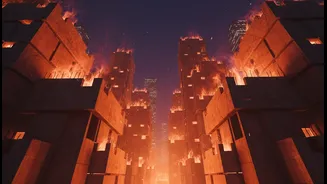
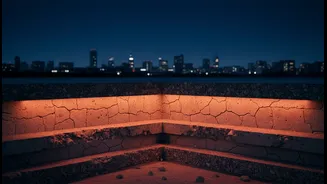
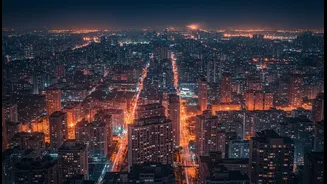
and brick have a high thermal mass, meaning they are excellent at absorbing and storing heat. Think of them as giant thermal batteries or sponges. All day long, they soak up solar radiation, and by the time the sun sets, they have stored a massive amount of thermal energy. This is a key reason why cities are consistently warmer than their surrounding rural areas, a phenomenon known as the urban heat island effect. This effect is often most pronounced not during the day, but at night, when all that stored heat begins to be released.
Trapped in the Urban Canyon
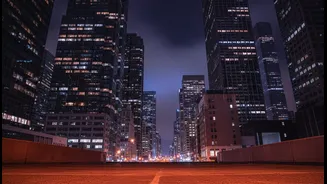
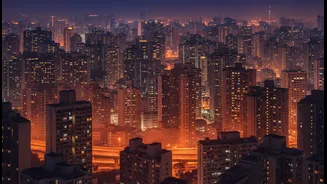
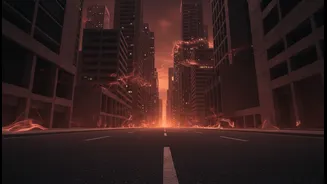
The problem isn't just the materials, but the shape of our cities. Dense clusters of tall buildings with narrow streets between them form what scientists call "urban canyons". This geometry has a profound impact on both heat and airflow. During the day, the tall buildings can trap solar radiation through multiple reflections between their surfaces, increasing the amount of heat absorbed. Then, at night, these same canyons make it difficult for the stored heat to escape. The buildings block the view of the cooler night sky, which would normally help surfaces radiate their heat away. This trapped longwave radiation keeps the air at street level warmer for much longer. Essentially, the city’s structure creates its own enclosed microclimate that is resistant to cooling down.
Where Has the Breeze Gone?
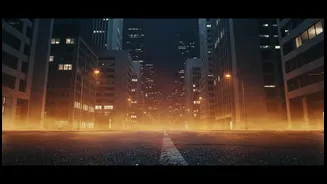
The final piece of the puzzle is the lack of air circulation. In a more open, rural environment, winds can move freely, carrying away the heat that radiates from the ground after sunset. In a dense city, however, the urban canyons disrupt these natural wind patterns. The tall buildings act as barriers, significantly slowing down or blocking wind flow at street level. When the wind does manage to enter these canyons, it can create recirculating vortices that trap air instead of flushing it out. Without a steady, cooling breeze to carry away the heat being released by the concrete and asphalt, the warm air lingers, sustaining those uncomfortably high temperatures well past midnight. This lack of ventilation is what seals the deal, turning our cities into heat traps on calm, clear nights.
Rethinking Our Concrete Jungles
Understanding this cycle of heat absorption, trapping, and poor circulation is the first step toward finding solutions. Cities across India are increasingly looking at strategies to mitigate this nocturnal heat. The solutions are as much about design as they are about materials. Innovations include using "cool pavements" and reflective roofing materials that absorb less solar energy in the first place. There is also a major push for increasing green infrastructure. Planting more trees, creating parks, and installing green roofs not only provides shade but also cools the air through evapotranspiration. Furthermore, smarter urban planning can create ventilation corridors that allow wind to move through the city, breaking up the stagnant pockets of hot air. By varying building heights and avoiding the creation of deep, narrow urban canyons, future developments can be designed to breathe more easily.