








The Backlash Against 'More Is More'
For years, the beauty industry was dominated by a maximalist philosophy, largely popularised by complex Korean skincare routines. Consumers were led to believe that more products equated to better skin, leading to a boom in multi-step regimens. However,
this has led to widespread 'product fatigue'. Many people found their skin was not improving; in fact, it was often becoming irritated, red, and prone to breakouts. Dermatologists have noted that over-layering products, especially with conflicting active ingredients, can overwhelm the skin and damage its natural protective barrier. This has sparked a necessary pivot towards barrier repair and a collective desire for moderation.
The Rise of the Derm-Influencer and Science
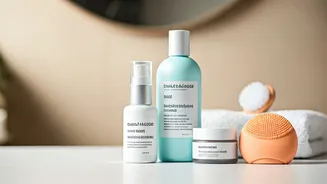
A significant driver of this shift is the growing influence of dermatologists on social media. These experts have built trust by debunking myths and advocating for evidence-based skincare. Their core message is often consistent: you only need a few key steps for healthy skin—a gentle cleanser, a moisturiser, and daily sunscreen. Indian consumers, in particular, are becoming more educated, reading ingredient labels and seeking out dermatologist-formulated products over those that are merely trending. This move towards 'skinimalism'—a blend of 'skin' and 'minimalism'—is about choosing fewer, but more effective, multi-functional products that are backed by science.
Smarter Routines for Smarter Consumers
The 2026 approach is not about neglect, but about being intentional. It's a 'skin-first' philosophy that prioritises long-term skin health and resilience over quick, temporary fixes. The new minimalist routine focuses on a foundation of a cleanser, a targeted serum, a moisturiser, and a non-negotiable SPF. This is especially relevant in India's hot and humid climate, where layering multiple products can lead to congestion and sensitivity. Data shows that a significant majority of consumers—around 75%—now purchase three or fewer skincare products, signalling a massive behavioural change. This pared-back approach is not only better for our skin but also for our wallets and the environment, reducing both consumption and waste.
The New Generation of Products
In response to this consumer-led movement, brands are innovating. The focus is now on creating multi-functional products that combine benefits, such as a moisturiser with built-in sun protection or a serum that hydrates while also targeting pigmentation. We're also seeing a rise in 'longevity' skincare, with products featuring advanced ingredients like peptides and bio-ferments designed to support the skin’s own repair functions at a cellular level. Technology is also playing a role, with AI-powered tools offering hyper-personalised recommendations, ensuring the few products you do use are perfectly suited to your skin's specific needs.