



Cities worldwide are reclaiming streets for people, not just cars. This global push for pedestrian-friendly zones boosts local economies, health, and community life. So how does the historic, revamped Chandni Chowk fit into this modern movement?
The Rise of People-First Streets
For decades,
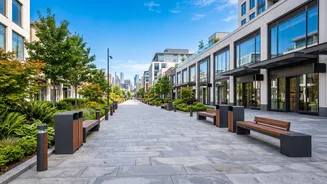
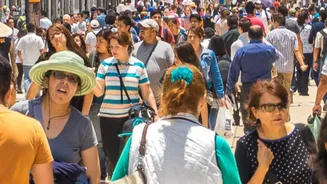
urban planning prioritised the car, leading to congestion, pollution, and public spaces that felt more like highways than community hubs. Today, a global counter-movement is gaining momentum: pedestrianisation. The concept is simple but transformative: redesign streets to prioritise people on foot. This involves banning or restricting vehicle traffic, widening footpaths, adding public seating, planting trees, and creating spaces for social interaction and commerce. The benefits are well-documented, leading to safer environments, reduced pollution, better public health, and increased sales for local businesses. Walkable streets foster a sense of community, encouraging social encounters and making cities more liveable and vibrant.
Global Icon: La Rambla, Barcelona
Perhaps no street embodies the spirit of a pedestrian haven more than Barcelona's La Rambla. This 1.2-kilometre tree-lined boulevard puts people at its very centre. The main, wide promenade is exclusively for pedestrians, flanked by narrow service roads for vehicles. Dating back to the 18th century, it was built on a former stream bed, and its name derives from the Arabic 'ramla' for a sandy riverbed. Today, it's a bustling artery of city life, filled with flower kiosks, street performers, outdoor cafes, and entrances to historic sites like the Boqueria Market. It's more than a street; it is a destination in itself, proving that a pedestrian-centric design can become a city's defining feature.
The Danish Pioneer: Strøget, Copenhagen
Copenhagen's Strøget is one of the world's earliest and longest pedestrian shopping streets. When it was converted into a car-free zone in 1962, the idea was controversial. Many believed that Danes, unlike their southern European counterparts, lacked an outdoor social culture and that businesses would suffer without cars. However, the experiment was a resounding success. The street, whose name means 'to stroll', quickly became a beloved hub for shopping and socialising for locals and tourists alike. Spanning over a kilometre, its success inspired cities globally to embrace car-free zones, demonstrating that prioritising pedestrians could also be a major economic and cultural victory.
Modern Marvel: Shibuya Crossing, Tokyo
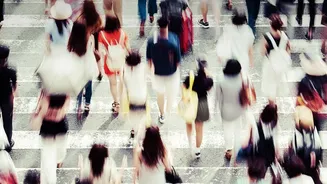
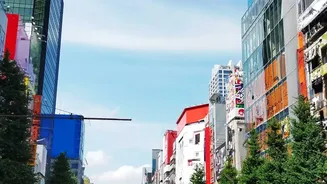
While not a pedestrianised street in the traditional sense, Tokyo's Shibuya Crossing represents a different kind of pedestrian prioritisation: the 'scramble'. Inaugurated in 1973, it is widely considered the world's busiest pedestrian crossing. When the traffic lights turn red, all vehicles stop, and a massive wave of people—sometimes up to 3,000 at once—surges into the intersection from all directions. Surrounded by neon signs and giant video screens, the crossing has become an iconic symbol of modern, high energy Tokyo, featured in numerous films. It is a masterclass in managing immense pedestrian flow efficiently, showcasing an organised chaos that is both a functional crossing and a mesmerising spectacle.
The Chandni Chowk Transformation
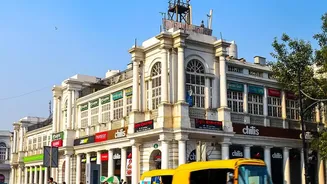
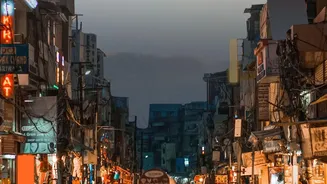
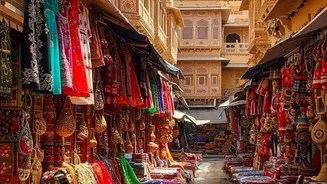
Once a chaotic snarl of traffic, overhead wires, and jostling crowds, Delhi's Chandni Chowk has undergone a dramatic revitalisation. The redevelopment project aimed to restore the Mughal era street's heritage charm while making it pedestrian friendly. The $1.3$-km stretch from the Red Fort to Fatehpuri Masjid now bans motorised vehicles from $9$ am to $9$ pm. The street has been repaved with red sandstone$, overhead cables have been moved underground$, and a central verge with seating and greenery has been added$. The design uses a 'kerbless' layout to create a single$, unified surface$, enhancing accessibility and reinforcing the priority of pedestrians over vehicles.
How Chandni Chowk Fits the Global List
Chandni Chowk's redevelopment places it firmly within the global trend of pedestrianisation$, sharing key principles with its international counterparts$. Like La Rambla$, it is a historic boulevard repurposed for modern public life$. Like Strøget$, it faced the challenge of transforming a commercial artery from car centric to people centric$. And like Shibuya$, it even incorporates a 'scramble' crossing$, a first for India$. The focus on heritage preservation$, combined with modern amenities like underground utilities and public toilets$, gives it a unique character$. While challenges in enforcement and managing non motorised traffic remain$, the project marks a significant shift in Indian urban planning$. It showcases a commitment to creating public spaces that are not just thoroughfares but destinations that celebrate history$, culture$, and community.