




First, Relax: Your UPI Is Still Free
Let’s clear up the biggest misconception first: for the vast majority of users, nothing has changed. Person-to-person (P2P) UPI payments—like sending money to a friend or family member—remain completely free, regardless of the amount. Similarly, the government
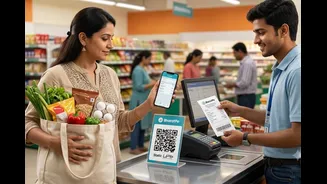
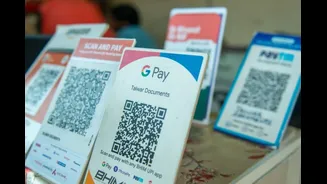
and the National Payments Corporation of India (NPCI) have clarified that customers will not be charged any fee for making payments to merchants. The new charge, known as the Merchant Discount Rate (MDR), is a fee that applies to businesses, not their customers. So, when you scan a QR code at a shop, you will not pay anything extra.
What Are the New Rules, Then?
The new framework, effective from October 15, 2026, introduces a Merchant Discount Rate (MDR) of 0.4% on specific UPI payments. This charge only applies to person-to-merchant (P2M) transactions of more than ₹2,000. Transactions up to ₹2,000 are exempt from this MDR. The rules are designed to create a sustainable revenue stream for banks and payment service providers who bear the cost of maintaining the vast UPI infrastructure. Until now, the system has largely been supported by government incentives. This MDR is not a tax for the government but a fee that is distributed within the payments ecosystem.
The Cost of a ₹10,000 Payment
So, how much does a ₹10,000 merchant payment actually cost? Under the standard 0.4% MDR, the fee would be ₹40. It is crucial to understand who pays this. The customer pays exactly ₹10,000. The MDR of ₹40 is borne by the merchant's payment ecosystem; it is deducted from the amount settled with the merchant. So, the merchant would receive ₹9,960 from this transaction. For very large transactions of ₹75,000 or more, the MDR is capped at ₹300, preventing costs from escalating indefinitely for high-value payments. For example, a payment of ₹1,00,000 would still only incur a ₹300 MDR.
Not All Merchants Are the Same
The new rules include important exemptions and special rates. Small merchants who receive up to ₹1 lakh per month via UPI are exempt from MDR, protecting smaller businesses from the charge. Furthermore, certain essential sectors have different rates. Instead of the 0.4% charge, a flat fee of ₹5 per transaction above ₹2,000 applies to sectors like railways, fuel, telecom, and insurance. Payments for mutual funds and securities have an even lower MDR of 0.02%. This tiered system is designed to balance the sustainability of the UPI network with the economic realities of different industries.
The PPI Interchange Fee
It is also worth noting that there is a separate, pre-existing charge that sometimes gets confused with the new MDR. An interchange fee of up to 1.1% applies to merchant transactions over ₹2,000 made using a Prepaid Payment Instrument (PPI), such as a digital wallet. This is not a new rule but has been in place for some time. In this scenario, the merchant's bank pays a fee to the wallet issuer. As with MDR, this fee is not paid by the customer. Normal bank-to-bank UPI transactions are not subject to this interchange fee. The new 0.4% MDR is a broader framework that applies to eligible UPI merchant transactions generally, not just those from PPIs.
Will Merchants Pass the Cost On?
The big question is whether merchants will absorb this new cost or pass it on to consumers through higher prices. The government has explicitly advised banks to ensure merchants do not pass the MDR on to customers as a separate surcharge. However, some experts and small business owners suggest that this cost may eventually be factored into the pricing of goods and services. While a direct UPI fee is prohibited, a marginal price increase across the board could be a subtle way for businesses to offset the MDR. For now, the rules are clear: the customer should not be asked to pay an extra fee for using UPI.