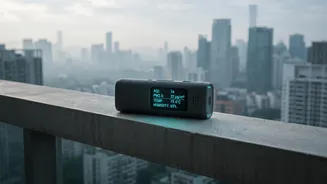








As winter settles across India, parents face a familiar dilemma: how to balance a child’s need for outdoor play with concerns about air pollution. Using the Air Quality Index (AQI) as a daily guide can help you make informed, safer choices.
Why Winter Air Quality Worsens
Every winter,
particularly in northern India, air quality tends to drop. This is due to a combination of factors. Cooler temperatures can trap pollutants closer to the ground in a phenomenon called temperature inversion. This means emissions from vehicles, industry, and construction dust have nowhere to go. Seasonal activities like post-harvest crop-stubble burning in neighbouring states and fireworks during festivals like Diwali add to the pollutant load, creating a thick haze. The geography of the Indo-Gangetic plains, surrounded by mountains, can also prevent polluted air from dispersing, creating stagnant 'airsheds' that linger for weeks.
Understanding the Air Quality Index (AQI)
The AQI is a colour-coded tool that simplifies complex air quality data into a single number, making it easy to understand the health risks. In India, this index measures eight key pollutants, including the dangerous fine particulate matter known as PM2.5 and PM10. These microscopic particles can penetrate deep into the lungs and are especially harmful to children, whose respiratory systems are still developing. You can check the daily AQI for your area on official government platforms like the SAFAR-India app or website.
A Parent's Guide to AQI Levels
Children are considered a 'sensitive group' because they breathe more air relative to their body weight than adults. This makes them more vulnerable to pollution. India’s Central Pollution Control Board (CPCB) and Ministry of Health provide clear advice based on AQI categories. Here’s a simple breakdown for deciding on outdoor play:
- AQI 0-100 (Good/Satisfactory): It's a great day to be active outside. No special precautions are needed.
- AQI 101-200 (Moderate): Children, especially those with asthma, should avoid long or strenuous activities like a full game of football. Shorter, less intense play is okay.
- AQI 201-300 (Poor): At this level, it's best to avoid outdoor physical activity and move playtime indoors.
- AQI 301+ (Very Poor to Severe): All outdoor activity should be avoided. It is recommended to stay indoors, keep windows closed, and keep activity levels low.
Finding the 'Golden Hour' for Play
Pollution levels are not constant throughout the day. They are often highest in the early morning and late evening. During the day, as the sun warms the ground, it helps the air to circulate and disperse some of the trapped pollutants. This means the 'golden hour' for potentially better air quality is typically in the mid_afternoon. On a 'Moderate' AQI day, this sunny window is your best bet for safer, though still gentle, outdoor time. Always check the real_time AQI for a station near you before heading out, as local conditions can vary.
Beyond the Clock: More Smart Strategies
Checking the AQI is the first step, but other measures can also help protect your child. On days with 'Moderate' air quality, opt for play areas away from heavy traffic and construction sites. Encourage less strenuous activities; a gentle cycle around the society is better than a running_heavy sport. For children with asthma or other respiratory conditions, it is crucial to have a plan from your paediatrician, as they are more sensitive even to moderate pollution levels. On 'Poor' or 'Very Poor' days, explore indoor play centres, get creative with activities at home, or focus on schoolwork. While N95 masks can help, ensuring a proper fit for small children can be difficult, making avoidance of polluted air the most effective strategy.