





The AI Revolution in Drug Discovery
Traditionally, discovering new antibiotics was a slow, expensive, and often serendipitous process. Scientists would painstakingly screen thousands of soil and plant samples, hoping to find a compound that could kill bacteria without harming humans. This
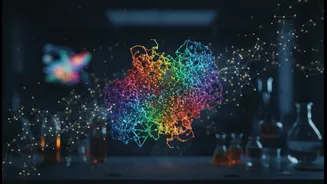
process could take over a decade with no guarantee of success, and the pipeline of new drugs has been running dry for years. AI dramatically changes the scale and speed of this hunt. Instead of manually screening, machine learning algorithms can analyze billions of molecules in a matter of hours, predicting which ones are likely to have antibacterial properties. Generative AI can even design entirely new molecules from scratch—compounds that have never existed in nature—that are specifically built to attack drug-resistant pathogens. This allows researchers to explore a vast, previously inaccessible chemical space for potential cures.
For Health Readers: A New Hope Against Superbugs
The most significant change for the public is the renewed hope for effective treatments against infections that are becoming untreatable. Conditions caused by bacteria like MRSA (methicillin-resistant Staphylococcus aureus) pose a serious threat in hospitals and communities. AI is directly accelerating the discovery of compounds that can fight these specific superbugs. For patients and their families, this means the potential for new, life-saving drugs to reach pharmacies faster than ever before. Some research has already led to candidates for what could be the first new class of antibiotics for certain infections in over 50 years. While the journey from a computer model to a pill is still long and requires rigorous clinical trials, AI is drastically shortening the first, most difficult step of finding promising candidates.
For Scientists: A Powerful New Colleague
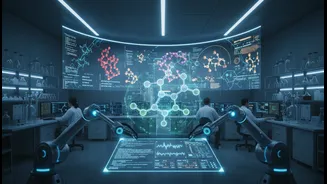
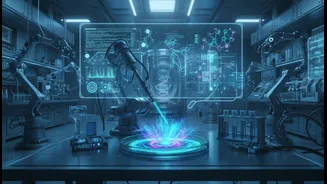
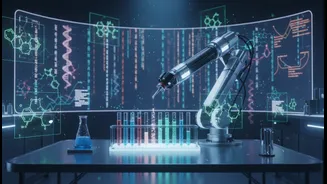
AI is not replacing scientists; it's giving them a powerful new tool. Researchers are describing this new dynamic as a "lab in the loop," where human intelligence and artificial intelligence work in a synergistic cycle. Scientists provide the initial data and biological knowledge to train the AI models. The AI then generates predictions or designs novel compounds, which scientists test and validate in the lab. The results of these experiments are then fed back into the AI, making it smarter and more accurate for the next round of discovery. This frees up researchers from the monotonous task of mass screening and allows them to focus on more complex problem-solving, hypothesis testing, and understanding the biological mechanisms of the new drug candidates.
For Students: The Future of Biotechnology is Interdisciplinary
For biotechnology students, this shift signals a clear message: the future is interdisciplinary. A strong foundation in biology, chemistry, and microbiology remains essential, but it's no longer enough. The biotech industry now has a high demand for professionals who can bridge the gap between life sciences and data science. Tomorrow's leading scientists will need skills in programming (especially with languages like Python or R), data literacy, statistics, and a solid understanding of how machine learning models work. Curriculums are evolving to include bioinformatics, computational biology, and data analysis to prepare students for these new roles. The most valuable graduates will be those who can ask the right biological questions and use computational tools to find the answers.