







Why Green Crackers Were Created
For years, the thick, toxic smog following festivals like Diwali has been a major public health concern in India. Traditional firecrackers release a cocktail of harmful pollutants, including fine particulate matter (PM2.5), sulphur dioxide, and heavy
metals. This annual spike in air pollution leads to severe respiratory issues, especially among children and the elderly. In response to this crisis, and following directives from the Supreme Court, the Council of Scientific and Industrial Research (CSIR) and its National Environmental Engineering Research Institute (NEERI) were tasked with developing a cleaner alternative. The result was 'green crackers', a new class of fireworks designed to have a smaller environmental footprint while preserving the festive spirit.
The Chemical Ban: What's Not Allowed
The most fundamental standard for a green cracker lies in its chemical composition. The Supreme Court has explicitly banned the use of several toxic and highly polluting substances that were common in traditional fireworks. The foremost of these is barium nitrate, a metal salt that produces bright green sparks but is a major contributor to particulate matter pollution. Other prohibited chemicals include arsenic, lithium, lead, and mercury, all of which pose significant health and environmental risks. Instead, CSIR-NEERI developed new formulations known as SWAS (Safe Water Releaser), SAFAL (Safe Minimal Aluminium), and STAR (Safe Thermite Cracker). These formulations use alternative chemicals and often include additives like zeolites or water-releasing compounds that act as dust suppressants, trapping pollutants at the source.
Reduced Emissions and Noise Levels
Beyond the chemical formula, green crackers must meet specific performance benchmarks. The primary goal is a significant reduction in particulate matter emissions. A certified green cracker is expected to reduce PM emissions by at least 30-40% compared to its traditional counterpart. This is a crucial metric, as it directly impacts the density of post-festival smog. Noise is another key area of regulation. While green crackers are not silent, they are designed to be quieter. The permissible noise level for green crackers is generally capped at around 110 to 125 decibels, a noticeable reduction from the ear-splitting bangs of many older firecrackers. This helps mitigate noise pollution, which can be a source of significant distress to people and animals alike.
The Certification Audit: PESO and NEERI
A firecracker cannot be marketed as 'green' just by claiming to be so. It must pass a rigorous certification process. First, manufacturers must use the approved formulations licensed by CSIR-NEERI. Following this, the products are tested and approved by the Petroleum and Explosives Safety Organisation (PESO), the nodal agency responsible for regulating explosives and fireworks safety in India. PESO conducts audits to ensure that the crackers are manufactured according to the approved, less-polluting norms and meet all safety standards under the Explosives Act. Only manufacturers with a valid PESO license for producing green crackers can legally sell them.
How to Identify a Genuine Green Cracker
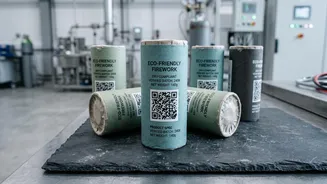
For consumers, the most reliable way to ensure you are buying a legitimate green cracker is to look for the official markings on the box. Every box of authentic green crackers must feature two key things: the distinct CSIR-NEERI green logo and a scannable QR code. When scanned with a smartphone, this QR code should provide details about the manufacturer, its production license, and the specific item. Consumers are advised to be cautious, as counterfeit products with fake QR codes or logos are common. A QR code that leads to a dead link, a generic website, or shows mismatched information is a major red flag. Always buy from reputable sellers and inspect the packaging carefully for these official seals of approval.