




The Ultimate Insurance Policy
Human spaceflight is an unforgiving endeavour. The initial ascent, where a rocket burns millions of kilograms of propellant to fight Earth's gravity, is one of the most dangerous phases of any mission. If a critical failure occurs, there is no option
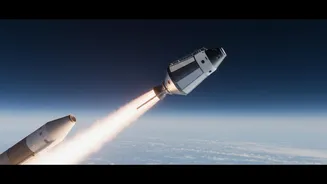
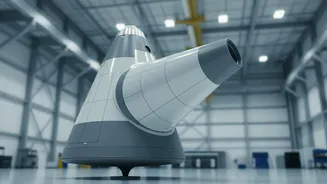
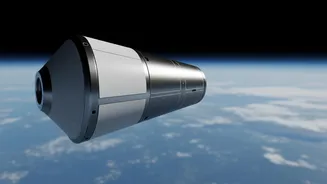
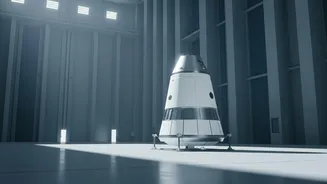
to simply pull over. This is where the Crew Escape System, or CES, comes in. Think of it as the most sophisticated ejection seat ever built. Instead of ejecting a single pilot, the CES is designed to pull the entire Crew Module—the capsule carrying the astronauts—away from a malfunctioning rocket in a fraction of a second. For the Gaganyaan mission, India's ambitious program to send astronauts into orbit, the CES is not just a feature; it is a non-negotiable lifeline and the cornerstone of its safety philosophy.
Anatomy of an Escape
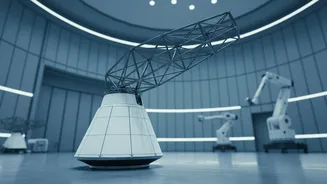
ISRO has opted for a 'puller' type escape system, a design trusted by historic missions like the Apollo and Soyuz. This system is essentially a rocket-powered tower mounted on the very top of the Crew Module. This tower is packed with a series of powerful, fast-acting solid rocket motors. These aren't ordinary motors; they use special propellants that burn at an extremely high rate, generating immense thrust almost instantly. This is crucial because in an emergency, the CES must out-accelerate the main launch vehicle itself to pull the crew to safety. The system is engineered to generate forces up to 10 times that of gravity, wrenching the capsule away from danger before a catastrophic failure can occur.
The Critical Abort Sequence
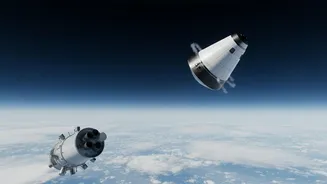
The entire abort process is a marvel of automated, high-speed engineering that unfolds in moments. It begins with the rocket's brain, the Integrated Vehicle Health Management system, a network of sensors that constantly monitors the launch vehicle's performance. If this system detects a critical anomaly, it automatically triggers the abort sequence. Within milliseconds, the Crew Escape System's powerful motors fire, pulling the Crew Module and its occupants clear of the rocket. Once at a safe altitude and distance, the escape tower jettisons itself from the module. The module then begins its descent, but it's falling too fast. To solve this, a series of parachutes deploy automatically. First, smaller drogue parachutes stabilize and begin to slow the capsule, followed by the main parachutes that ensure a gentle splashdown in the sea. The entire sequence, from abort trigger to safe landing, is designed to be fully autonomous.
Trial by Fire: The TV-D1 Mission
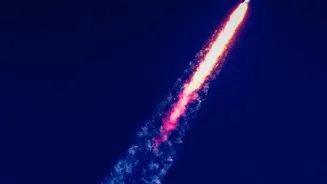
Theories and designs must be proven, and in October 2023, ISRO did just that with the Test Vehicle Abort Mission-1 (TV-D1). This crucial test was designed to simulate a high-altitude abort scenario. A specially designed test vehicle launched an unpressurised version of the Gaganyaan Crew Module to an altitude of around 17 kilometres, travelling at Mach 1.2—1.2 times the speed of sound. At this precise point, the abort was deliberately triggered. The system performed flawlessly. The CES fired, pulling the module away from the rocket. The parachutes deployed as planned, and the capsule splashed down safely in the Bay of Bengal, about 10 kilometres from the coast of Sriharikota. Recovery teams from the Indian Navy were on standby and successfully retrieved the module, validating the entire end-to-end process.
Covering All Contingencies
An abort system must be ready for any scenario, not just at high altitude. ISRO has rigorously tested its CES for various situations. In 2018, the agency conducted a 'Pad Abort Test', which simulated an emergency on the launch pad itself, even before liftoff. In that test, the escape system successfully fired and carried the module to a safe altitude and distance, proving its capability in the most immediate of emergencies. Whether a malfunction occurs moments before launch or several kilometres up in the atmosphere, the system is designed to provide a safe escape route. This comprehensive approach to testing demonstrates an unwavering commitment to ensuring the crew can be brought back to Earth safely, no matter what happens on the way up.