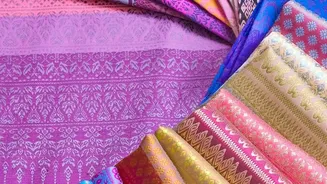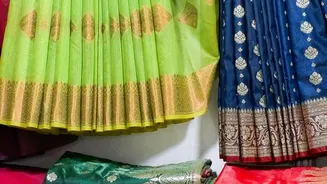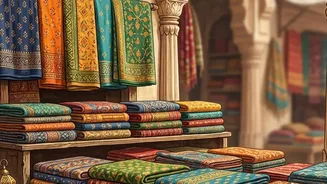





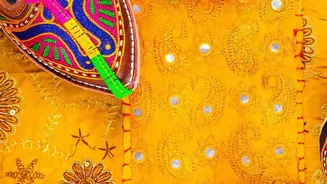
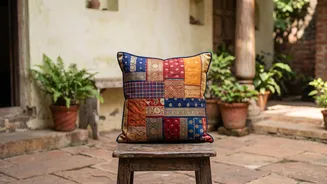
Long before 'upcycling' and 'sustainability' became global buzzwords, women in rural India were already masters of textile recycling. Bengal's Kantha and Bihar's Sujini are two beautiful examples of this age-old wisdom.
Kantha: The Running Stitch of Bengal
Kantha embroidery, originating from
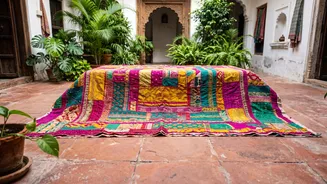
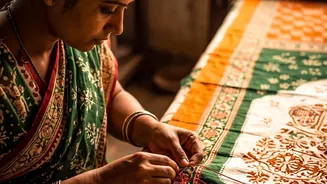
West Bengal and Bangladesh, is a testament to resourcefulness and artistry. The word 'Kantha' itself is believed to derive from the Sanskrit 'kontha', meaning rags. At its heart, this craft was a practical solution: women would layer old, worn-out saris and dhotis, stitching them together to create soft quilts known as 'nakshi kantha', as well as swaddling cloths for babies and other household items. The layers provided warmth, and the process gave a second life to cherished fabrics that were too worn to be used otherwise. The defining feature of Kantha is the simple running stitch. This fundamental stitch is used to create not only the quilting that holds the layers together but also the intricate motifs that adorn the surface. Artisans, working by hand, use the running stitch to draw patterns inspired by nature, mythology, and scenes from daily life, creating a rippling, textured effect across the fabric.
A Canvas for Storytelling
A piece of Kantha is more than just a recycled textile; it is a narrative canvas. Each quilt tells a story, a personal expression woven in thread. Passed down from mother to daughter, the craft became a form of preserving family histories and local traditions. The motifs are a visual language, depicting everything from fish and flowers to deities and folk tales. What began as a domestic necessity evolved into a celebrated art form, one that has found its way onto international fashion runways while still providing economic empowerment for women in rural communities. The commercialisation of Kantha has allowed artisans to earn a livelihood while preserving their invaluable cultural heritage.
Sujini: Bihar's Embroidered Blessing
Travel west to Bihar, and you'll find Sujini embroidery, a craft born from a similar spirit of reuse and care. The name itself, 'Sujini' or 'Sujani', is a combination of 'su' (easy or facilitating) and 'jani' (birth). Traditionally, Sujini was created to make soft quilts for newborn babies. Women would stitch together layers of old dhotis and saris, believing the soft embrace of the quilt was like a mother's touch and that the blessings stitched into it would protect the child. The craft almost faded into obscurity in the 20th century but was revived in the late 1980s through the efforts of organisations like the Mahila Vikas Sahyog Samiti, which recognised its potential to empower rural women. Today, Sujini is a GI-tagged craft, practiced by hundreds of women.
Stitches of Social Commentary
While also using layered old cloth and a running stitch to fill the background, Sujini stands apart in its technique and narrative focus. Designs are first drawn onto the fabric. Artisans then use a chain stitch, often in black or brown thread, to create bold outlines for the motifs, which are then filled with colourful threads. This technique gives Sujini a flatter, more graphic appearance compared to the puckered texture of Kantha. More significantly, modern Sujini has become a powerful medium for social commentary. Alongside traditional themes of mythology and village life, artisans now embroider scenes depicting critical social issues like women's education, gender equality, and environmental concerns, turning a simple quilt into a potent social document.
Two Traditions, One Philosophy
At a glance, Kantha and Sujini share a common soul. Both are born from the ingenuity of rural women transforming waste into wealth, using simple stitches to layer and embroider old cloth. They are both traditions of storytelling, empowerment, and deep-rooted sustainability. Yet, their differences are what make them unique. Kantha uses the running stitch for both quilting and outlining, creating a free-flowing, textural surface. Sujini, in contrast, uses the chain stitch for its bold outlines, resulting in more defined, narrative-driven panels. While Kantha often wraps its stories in mythology and nature, contemporary Sujini has adopted a more activist voice. One whispers tales through ripples in the cloth; the other proclaims them in bold, graphic lines.