


The Challenge of a Barren World
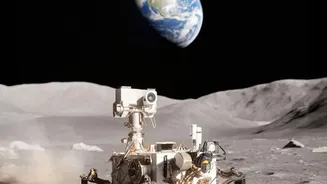
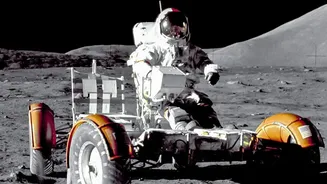
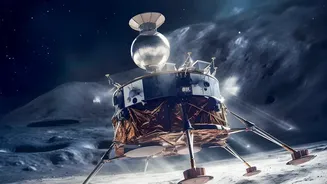
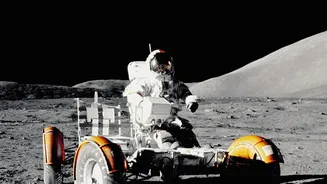
Establishing a long-term human presence on the Moon, a core goal of NASA's Artemis program, is an immense logistical puzzle. Beyond the challenges of construction and radiation, the most fundamental need is air. The Moon has no atmosphere, meaning every
breath an astronaut takes must be brought from Earth. Shipping resources like oxygen across the 384,400 kilometres of space is incredibly expensive and limits the scale and duration of any potential mission. To make a lunar base sustainable, astronauts need a way to live off the land, a concept known as In-Situ Resource Utilization (ISRU). This means finding and using local materials to produce essentials like water, building supplies, and, most critically, oxygen.
Finding Hidden Oxygen in Moon Dust
At first glance, the Moon appears to be a desolate, airless rock. However, its surface is covered in a layer of fine dust and crushed rock called regolith. Scientists have known for decades that this regolith is surprisingly rich in oxygen. By mass, lunar soil is approximately 45% oxygen. The catch is that this oxygen isn't free-floating; it's chemically locked away inside metal oxides, the same compounds that form many rocks and minerals on Earth, like silica and iron oxide. The challenge for scientists hasn't been finding oxygen, but rather figuring out an efficient way to break these powerful chemical bonds and release it in a usable, gaseous form.
Cooking Rocks to Make Air
NASA is tackling this problem with a project called the Carbothermal Reduction Demonstration, or CaRD. The process is a high-tech version of smelting. It uses concentrated solar energy, captured by precision mirrors, to heat lunar regolith inside a specially designed reactor to temperatures exceeding 1,600 degrees Celsius. At these extreme temperatures, the regolith melts. When carbon is introduced, it reacts with the molten oxides, breaking them down and pulling the oxygen atoms away from the metals. This process initially produces carbon monoxide gas. While not breathable, this gas can then be processed further to split it into pure, breathable oxygen and reusable carbon.
A Successful Demonstration on Earth
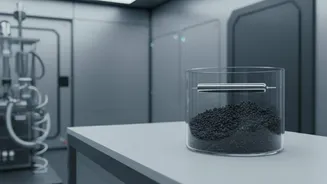
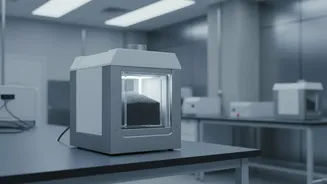
In a series of groundbreaking tests, NASA and its commercial partner, Sierra Space, have successfully demonstrated that the CaRD technology works. Using simulated lunar soil in a vacuum chamber to mimic the Moon's environment, the prototype system successfully heated the material and produced carbon monoxide, confirming that the solar-driven chemical reaction extracts oxygen from the regolith simulant. The integrated prototype brought together a solar concentrator, a reactor, and sophisticated gas analysis systems, proving that the various components can work together as a cohesive unit. This success is a major milestone, moving the technology from theory to a viable and tested engineering solution.
More Than Just for Breathing
The ability to generate oxygen on the Moon has implications far beyond just life support. Oxygen is not only what we breathe; it is also a powerful rocket propellant oxidizer. When combined with a fuel like hydrogen (which could be sourced from lunar ice deposits), this locally produced oxygen could be used to refuel rockets for return trips to Earth or for missions deeper into the solar system. This would dramatically reduce the mass that needs to be launched from our home planet, making space exploration cheaper and more sustainable. The metals left over from the extraction process could also potentially be used for manufacturing and construction, building everything from tools to habitats.