



The Modern Space Pantry
Forget the paste-in-a-tube meals of early spaceflight. Today's astronauts, particularly those on missions like Artemis, have a diverse menu. For shorter missions, the strategy relies on advanced pre-packaged foods. These aren't your average ready-to-eat
meals. They include thermostabilized dishes like barbecued beef brisket and vegetable quiche, freeze-dried options such as macaroni and cheese, and irradiated foods to ensure safety and a long shelf life without refrigeration. Tortillas are a staple because they don't create dangerous crumbs in microgravity. The goal is to provide a variety of nutritious and palatable options to combat 'menu fatigue', a real issue where boredom with food can lead to poor nutrition.
The Challenge of a Lunar Garden
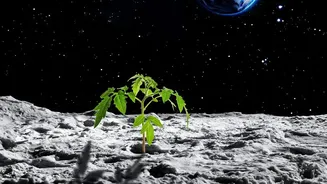
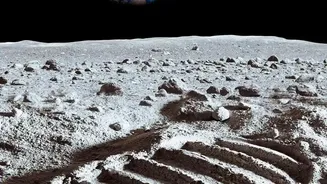
For a permanent lunar base, resupplying food from Earth is not sustainable. The ultimate solution is to grow it locally. However, lunar farming presents immense challenges. The Moon's soil, or regolith, is not like Earth's. It's a fine powder of crushed rock that lacks organic matter and essential nutrients like nitrogen. It also contains toxic heavy metals. Furthermore, plants would have to grow in a protected environment, shielded from extreme temperatures and cosmic radiation, without a natural atmosphere. Early experiments growing plants in simulated and actual lunar regolith have shown that while germination is possible, the plants are often stunted and stressed.
Hydroponics and a Helping of Algae
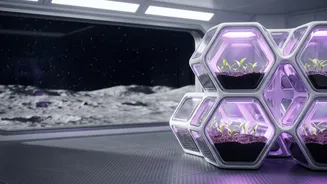
To overcome the poor quality of lunar soil, scientists are focusing on hydroponics and aeroponics—growing plants in nutrient-rich water or mist, without any soil at all. These closed-loop systems allow for precise control over nutrients and water, which would need to be rigorously recycled. Crops like lettuce, radishes, tomatoes, and chilli peppers have already been successfully grown aboard the International Space Station (ISS) using these methods. Another promising area of research involves using microbes or algae to 'detoxify' the lunar regolith, breaking it down and sequestering harmful elements to make it more fertile for plant growth. Some studies are even exploring hardy, fast-growing plants like duckweed as a potential high-protein food source that thrives in recycled water.
More Than Just Fuel
Food in space is about much more than just calories and vitamins; it's a crucial part of psychological well-being. Sharing a meal provides a sense of normalcy and a chance for crew members to bond, which is vital during long periods of isolation. The aroma, texture, and flavour of familiar foods can reduce stress and boost morale significantly. Having access to fresh produce, like a crisp salad grown right there on the Moon, would be a huge psychological boost, offering a connection to Earth and a welcome break from packaged meals. That's why research into a sustainable food system is not just a logistical priority, but a human one, ensuring astronauts are not only well-fed but also mentally resilient.