



The Challenge of Urban Stargazing
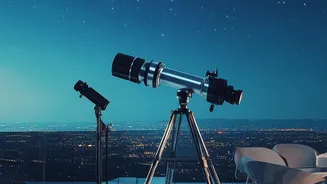
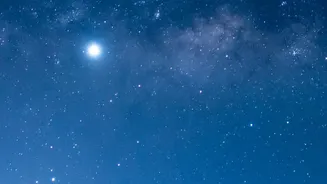
The primary obstacle for any city-based astronomer is light pollution. The glow from streetlights, buildings, and cars creates a bright haze called 'skyglow' that washes out fainter celestial objects. While a trip to the countryside reveals a sky teeming
with stars, urban dwellers usually see only the Moon, a few hardy stars, and the brightest planets. This is where technology steps in. Modern astronomy apps act as a personal guide, using your phone’s location and sensors to show you exactly where to look, cutting through the guesswork and making the invisible visible. Even in a bright city, planets like Jupiter and Saturn are bright enough to be seen if you know where to point your eyes.
Your Pocket Planetarium: Star Walk 2
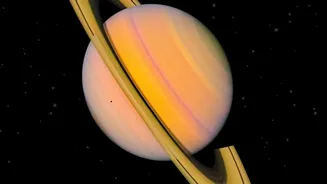
Star Walk 2 is often recommended as one of the best apps for beginners due to its beautiful graphics and intuitive interface. The app uses your phone's sensors to create a real-time map of the sky. You simply point your device upwards, and the app identifies the stars, constellations, and planets you're aimed at. Its most powerful feature for urban stargazing is its Augmented Reality (AR) mode, which overlays the sky map onto your camera's view. This means you can see the name and path of Saturn, for example, hovering exactly where it is in the real sky, even if it's faint. The app also includes a 'Time Machine' feature, allowing you to see what the sky will look like later in the night or on a future date, which is perfect for planning.
Point and Identify: SkyView Lite
For those who want a straightforward, no-fuss experience, SkyView Lite is an excellent choice. Its core function is simple: point your phone at the sky to identify what's there. The app is praised for not overwhelming users with too much information, focusing on the objects you are most likely to see from an area with light pollution. Like Star Walk 2, it features an AR overlay to help you locate objects. A key advantage is that it doesn't require a WiFi or GPS signal to function after the initial setup, making it perfect for taking to a local park or any spot where the signal might be weak. You can also set reminders for celestial events, so you won't miss a good opportunity to spot your target planets.
For a Deeper Dive: Stellarium Mobile
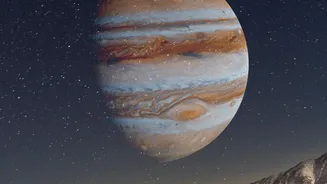
Stellarium is a powerful and highly realistic planetarium app that is popular among both amateur and serious astronomers. The free version is incredibly capable, offering a huge database of stars, planets, and other objects. It presents an accurate simulation of the night sky from your exact location and time. While it also has a point-and-identify function, Stellarium excels at planning. You can easily see the trajectory of Jupiter across the sky, find out when it will rise, and determine the best time to view it. Its interface is clean and allows you to toggle different visual aids, like constellation art or an equatorial grid, to help you better understand the celestial sphere.
When and Where to Look in Late 2026
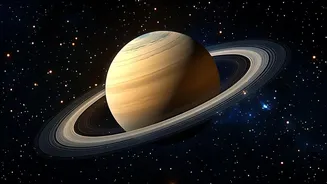
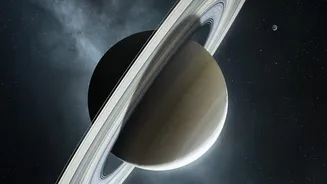
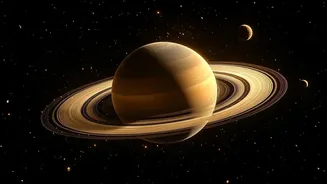
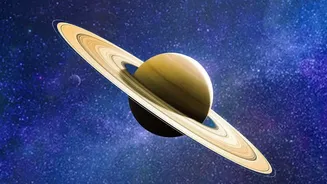
Armed with your app, timing is everything. For September 2026, both Saturn and Jupiter are well-placed for viewing. Yellowish Saturn rises in the east shortly after sunset and is visible for most of the night. It will be the only bright point of light in that part of the sky during the early evening. Meanwhile, the brilliantly bright Jupiter dominates the pre-dawn eastern sky. It rises a few hours before the sun, making it an unmissable morning object. As the month progresses, Jupiter will rise earlier and become even easier to spot. Using an app can help you distinguish these planets from bright stars and track their nightly journey across the sky.
Tips for the Best Urban Viewing
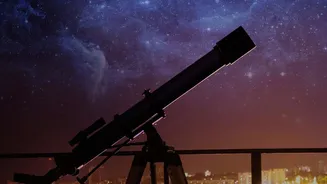
To improve your chances, try to find the darkest spot available. This could be a park, a rooftop, or even just a part of your yard that is shielded from direct streetlights. Give your eyes at least 15-20 minutes to adapt to the darkness; this will help you see fainter objects. Many stargazing apps feature a red-light 'night mode' that preserves your night vision while you use them. Finally, be patient. The best viewing times are often late at night, after 11 p.m., when some city lights may be turned off and air settles. Even a little effort can yield the rewarding sight of another world.