




The Perfect Canvas for a Fringe
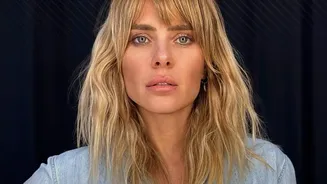
Straight and wavy hair types are exceptionally well-suited for layered bangs because they provide a perfect balance of weight and movement. Straight hair allows the clean lines and distinct layers of the fringe to stand out, creating an effortlessly chic
and polished look. The hair's natural smoothness means the bangs fall predictably, requiring minimal effort to keep them looking sharp. For those with gently wavy hair, layered bangs enhance the natural texture, adding dimension and a soft, romantic feel. Unlike heavier, blunt bangs that can look severe or require constant straightening, layered styles work with the hair's flow, creating a cohesive look that feels both intentional and relaxed. The layers help remove any unwanted bulk, allowing the fringe to blend seamlessly rather than sitting as a separate, heavy block on the forehead.
A Style for Every Face
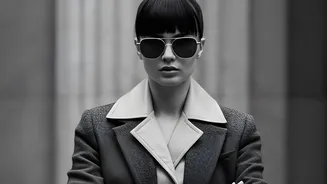
Layered bangs are not a one-size-fits-all solution; they can be tailored to flatter any face shape. For round faces, longer curtain bangs or side-swept styles create vertical lines that help elongate the face’s appearance. Square face shapes benefit from softer, wispy, and feathered bangs, which can offset a strong jawline. Heart-shaped faces are beautifully balanced by curtain bangs or a longer fringe that draws attention downward, away from a wider forehead. Oval faces are the most versatile and can pull off nearly any style of layered bang, from soft and feathered to a more textured, choppy look. The key is customisation; the length and density of the layers can be adjusted to highlight your best features.
Exploring Your Options
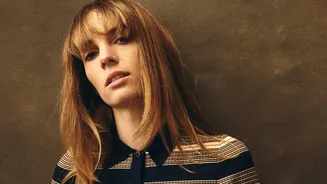
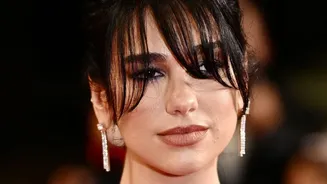
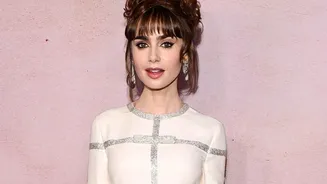
Several popular styles fall under the umbrella of layered bangs, each offering a distinct vibe. 'Curtain bangs' are perhaps the most well-known, parted in the middle and sweeping outwards to frame the face. They are famously low-maintenance and grow out gracefully. 'Wispy bangs' are a much lighter, more delicate option, offering a see-through effect that softens the entire face without the commitment of a heavy fringe. For a more lived-in, modern feel, 'textured' or 'choppy' bangs incorporate varied lengths for a relaxed and casual look that highlights natural movement. 'Feathered bangs' use fine layers to create a soft, blended appearance that melds seamlessly with the rest of your hair.
Styling at Home
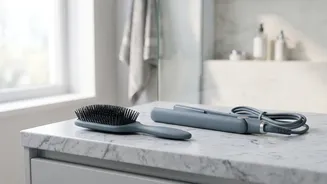
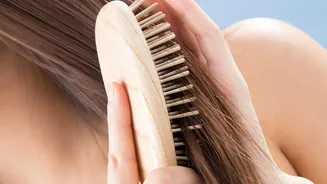
Maintaining your new fringe doesn't have to be a chore. The most crucial tool is often a blow dryer. For a classic curtain bang sweep, use a round brush to blow-dry each side away from your face. For wavy textures, applying a texturizing spray or sea salt spray to damp bangs and scrunching them can enhance their natural movement. You can also use a diffuser on a low heat setting to define waves without creating frizz. A quick tip for all types is to style your bangs even if you let the rest of your hair air-dry; this small effort makes the entire look feel more polished. A little dry shampoo can also be a lifesaver for refreshing bangs between washes, as they tend to get oily faster than the rest of your hair.
Talking to Your Stylist
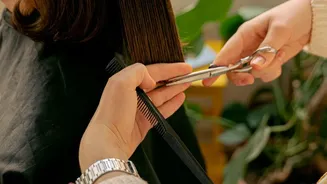
Clear communication is the key to getting the bangs you truly want. Instead of just asking for 'layered bangs', bring several reference photos and be specific about what you like in each one. Use descriptive words like 'soft and wispy', 'face-framing', or 'textured and choppy'. It's also helpful to point out the specific length you're aiming for—for example, 'I'd like the shortest part to hit my eyebrows and the longest part to reach my cheekbones'. Discuss your daily styling routine with your stylist. If you're a wash-and-go person, they can tailor the cut to require less maintenance. Asking for the bangs to be cut or refined while your hair is dry can also help, as it gives a more accurate idea of how they will sit naturally.