



Why Carry-On Is King
The most compelling reason to join the carry-on-only club is simple: cost. Most airlines now charge for checked luggage, and these fees can add up quickly, especially for a family. Beyond the savings, travelling with just a carry-on offers unparalleled
convenience. You can skip the long queues at the bag drop counter, walk straight out of the airport upon arrival without waiting at the baggage carousel, and eliminate the risk of the airline losing your luggage. This streamlined approach to travel reduces stress and gives you more time to enjoy your destination. For many travellers, making the switch to a single bag feels like a travel upgrade, forcing a more minimalist and organised mindset that pays dividends in both time and money.
The Basic Roll: Your Foundation
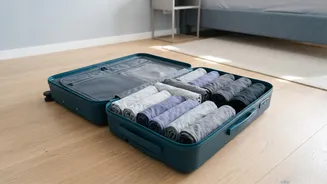
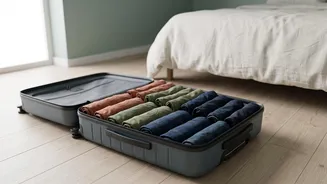
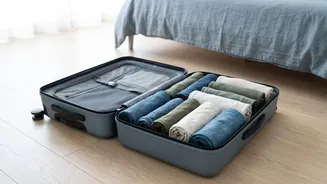
The most fundamental technique is the basic roll, a method celebrated for saving space and reducing wrinkles on many fabrics. For a t-shirt, lay it on a flat surface and smooth out any wrinkles. Fold the sleeves inward to create a neat rectangle. Then, starting from the bottom hem, roll the shirt upwards as tightly as possible until you have a compact cylinder. For trousers or jeans, lay them flat, zip and button them, then fold them in half lengthwise. From there, begin rolling tightly from the cuff end up to the waistband. This simple method transforms bulky stacks of clothes into dense, space-saving logs that can be arranged like a puzzle in your suitcase, making everything visible at a glance.
The Ranger Roll: For Maximum Compression
For even greater space-saving, elevate your packing game with the Ranger Roll. This military-inspired technique creates an even tighter, self-contained bundle that won't unspool in your bag. To roll a t-shirt this way, start by laying it flat and folding the bottom hem inside-out to create a two- to three-inch cuff. Fold the sleeves in, then fold the sides of the shirt toward the middle to create a long rectangle. Now, starting from the collar, roll the shirt down as tightly as you can toward the cuffed end. Once you reach the bottom, take the inside-out cuff you created and flip it back over the entire roll, locking it in place. This method is fantastic for t-shirts, shorts, and other soft garments, compressing them into tight little bundles.
Strategic Packing: Rolling, Folding, and Cubes
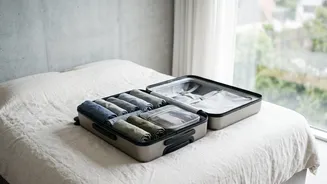
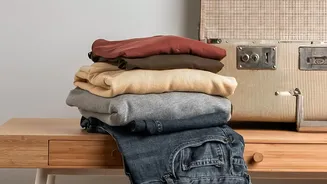
While rolling is highly effective, the best packing strategy often involves a hybrid approach. Rolling is ideal for soft, flexible clothes like t-shirts, activewear, and lightweight trousers. However, for bulky items like sweaters or clothes made from stiff fabrics, traditional folding might be better. Items like blazers or structured dresses are also better off folded carefully. To take your organisation to the next level, use packing cubes. You can group rolled items by category (all shirts in one, all bottoms in another) or by outfit. This not only keeps your suitcase incredibly neat but also allows you to find what you need without rummaging through everything. You can simply pull out the cube you need, which saves time and keeps the rest of your luggage tidy.
Putting It All Together
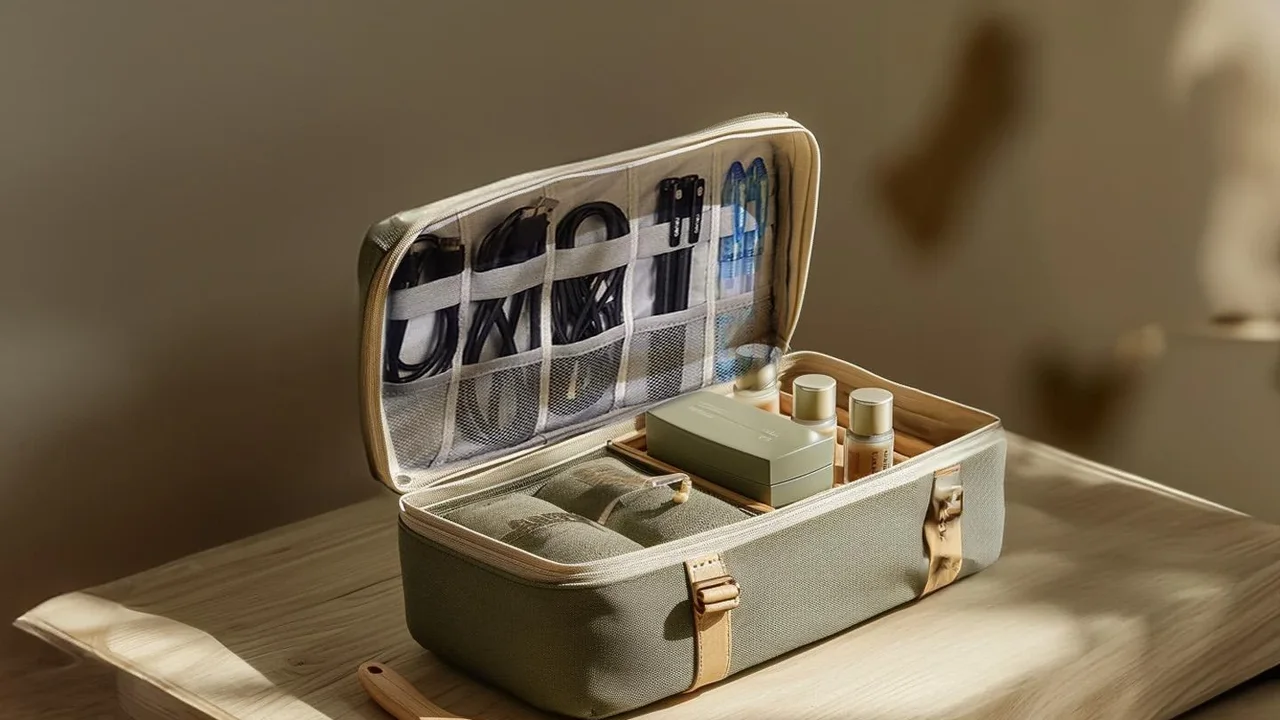
How you arrange your packed items matters. Start by placing heavier, less-delicate items like shoes (stuffed with socks to save more space) and your toiletry bag at the bottom of the suitcase, near the wheels. This provides a stable base and prevents your bag from tipping over. Next, arrange your rolled clothing and packing cubes vertically, like files in a cabinet. This allows you to see everything at a glance without having to unpack layers. Tuck smaller rolled items like socks and underwear into the gaps and corners to maximize every inch of space. Finally, place any folded items or a jacket flat on top. By wearing your bulkiest shoes and jacket on the plane, you'll free up a significant amount of room in your carry-on.