



Cosmic Ghosts in the Graveyard
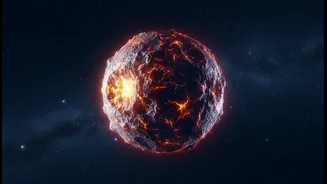
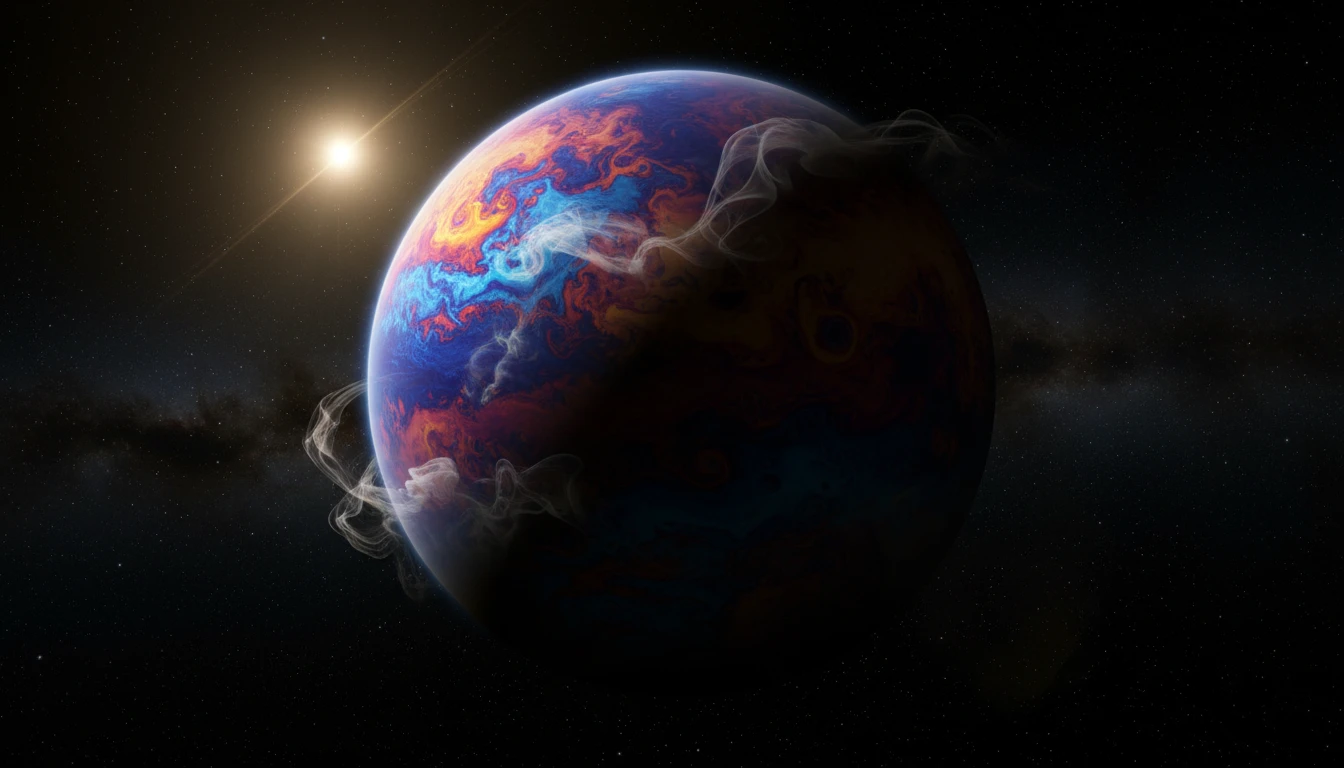
When a star similar to our Sun runs out of nuclear fuel, its life ends not with a bang, but with a quiet fade. After swelling into a red giant, it sheds its outer layers, leaving behind a hot, dense core called a white dwarf. These stellar remnants are
incredibly compact—imagine the mass of our Sun squeezed into an object the size of Earth. They no longer produce new heat through fusion; they are simply the cooling embers of a once-mighty star, destined to glow for billions of years before eventually becoming cold, dark objects. It’s this very long, stable cooling period that makes them such fascinating subjects for studying what happens to planetary systems over immense stretches of time.
A Trail of Planetary Crumbs
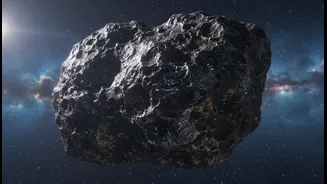
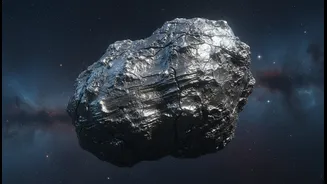
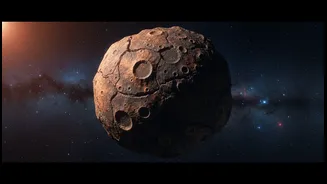
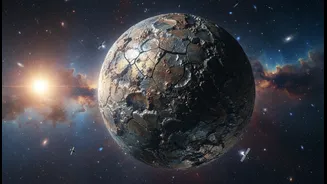
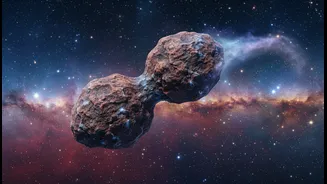
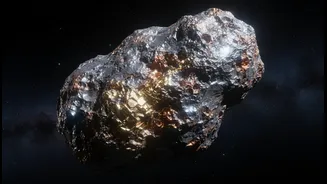
For a long time, scientists wondered what happened to the planets that once orbited these stars. The star's violent red giant phase would destroy any inner worlds. However, surviving planets and asteroids in the outer reaches of the system can be knocked out of their stable orbits. Some of these objects are sent on a collision course with the white dwarf. The star's intense gravity then shreds these unfortunate wanderers into dust and debris, which forms a ring around the remnant star before being pulled onto its surface. Scientists call these 'polluted' white dwarfs, and they are essentially celestial crime scenes. By analyzing the 'pollution', we can piece together what the destroyed object was made of.
Reading the Chemical Fingerprints
The atmosphere of a pristine white dwarf should only contain the lightest elements, like hydrogen and helium. When heavier elements like magnesium, iron, and silicon are detected, it's a clear sign that the star has consumed planetary material. Astronomers use a technique called spectroscopy to break down the star's light and identify the chemical signatures of these accreted elements. This method is so precise that it allows scientists to determine the bulk composition of the asteroids or planetary fragments that fell into the star. It's like performing a chemical autopsy on a planet from light-years away. This has led to a remarkable discovery: the building blocks of planets in other systems appear to be very similar to the rocky bodies in our own solar system, like Earth and Mars.
A Glimpse into Our Own Future
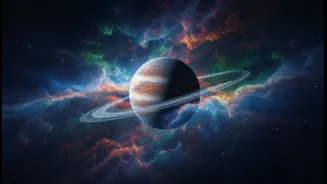
This cosmic archaeology isn't just about distant stars; it's a preview of our own solar system's destiny. In about five billion years, our Sun will also become a white dwarf. Mercury and Venus will certainly be consumed during its red giant phase, and Earth's fate hangs in the balance. The outer planets like Jupiter and Saturn will likely survive, but their gravitational nudges could send asteroids from the asteroid belt hurtling towards the dying Sun. By studying these ancient, polluted white dwarfs, we are essentially looking into a crystal ball, seeing the chaotic final chapter of a solar system. The evidence suggests that even after a star dies, the remnants of its planetary family can continue to interact and evolve for billions of years, providing a natural laboratory for timescales we could never observe directly.