


A Realm of Icy Relics
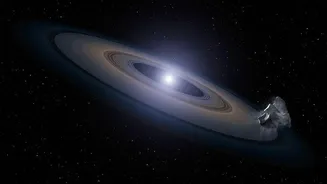
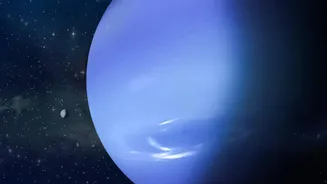
To understand the journey of these dust grains, we first have to travel to their home: the Kuiper Belt. Imagine a vast, doughnut-shaped region of space that begins just beyond the orbit of Neptune, the eighth and most distant planet. This is the Kuiper Belt,
a frigid, dark expanse populated by millions, if not billions, of icy bodies known as Kuiper Belt Objects (KBOs). These aren't just random space rocks; they are considered to be pristine leftovers from the formation of our solar system more than 4.5 billion years ago. Composed of frozen water, methane, and ammonia, KBOs are time capsules from a bygone era. The most famous resident of this region is Pluto, which was reclassified as a dwarf planet after we discovered it was just one of many large objects in this crowded neighborhood.
Fishing for Stardust
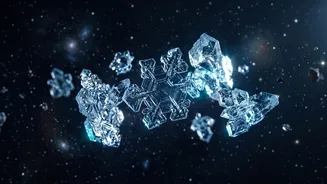
So, if the Kuiper Belt is billions of kilometres away, how does its dust end up here? Over eons, KBOs occasionally collide with one another. These impacts create clouds of smaller fragments and dust. Pulled by the Sun's gravity and pushed by solar radiation, some of this dust embarks on a slow, epic journey toward the inner solar system. Every year, thousands of tonnes of this cosmic dust rain down on Earth. To catch it, NASA employs high-altitude research aircraft, like the ER-2, which fly into the clean, thin air of the stratosphere, more than 20 kilometres up. Sticky collectors, sometimes using silicone oil or specialized dry surfaces, are mounted under the wings to gently capture these interplanetary dust particles (IDPs) before they can be contaminated by the lower atmosphere. It's a delicate and patient process, akin to fishing in the sky for the solar system's oldest secrets.
The Twelve Cosmic Detectives
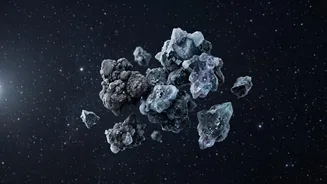
Once collected, the real investigation begins in laboratories on the ground. A single dust particle can be as small as 10 micrometres across, but it holds a universe of information. The headline's 'twelve tiny grains' represent the kind of precious samples scientists work with. Using powerful tools like transmission electron microscopes, researchers can analyze the composition and structure of each grain at a near-atomic level. They look for clues in the grain's chemistry, mineralogy, and isotopic signatures—the 'fingerprints' left by different formation processes. For example, some grains, known as GEMS (glass embedded with metal and sulfides), are believed to be surviving interstellar dust that existed even before our sun was born. Finding these in particles from the Kuiper Belt provides a direct link to the raw materials that built our entire planetary system.
Unlocking the Solar System's Blueprint
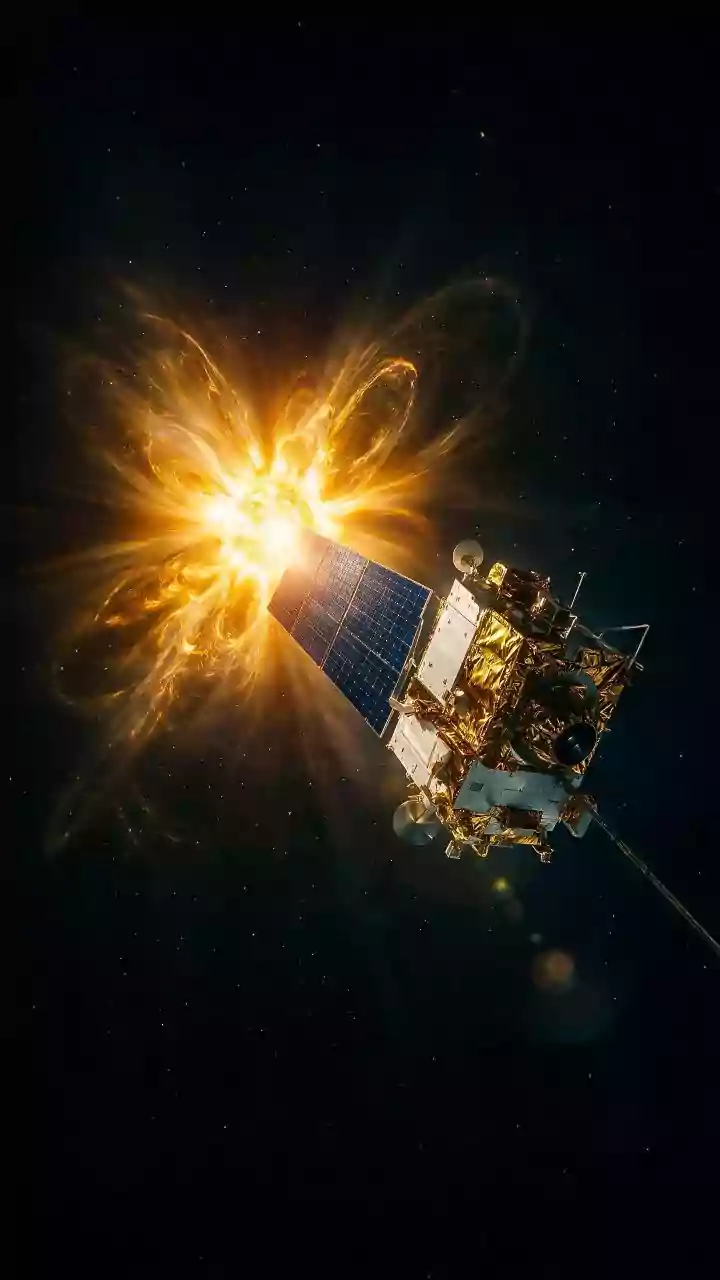
Each grain tells a story. The presence of specific minerals and organic materials can reveal the temperatures and chemical conditions in the early solar nebula. Some dust particles show evidence of having been altered by liquid water in the distant past, suggesting that some KBOs may have had watery interiors. This is a profound discovery, as it hints that the ingredients for life, like water and organic compounds, were distributed throughout the solar system from its earliest days. By comparing the composition of dust from different sources, like comets and asteroids, scientists can piece together a map of how the solar system was organized and how it has evolved. Recent data from the New Horizons spacecraft, which is currently flying through the Kuiper Belt, shows higher-than-expected dust levels, suggesting the belt may be even larger than we thought, adding another layer to the mystery.