


More Than Just a Walk in the Park
At first glance, you might mistake Nordic walking for hiking with poles. But there's a specific and powerful technique at play that transforms a simple stroll into a highly effective, full-body workout. Originating in Finland as a summer training method
for cross-country skiers, Nordic walking uses specially designed poles to engage the upper body, helping you propel yourself forward with each step. Unlike regular walking, which primarily uses the muscles in your lower half, this method actively involves your arms, shoulders, chest, and back. This simple addition doesn't just make your arms do some work; it fundamentally changes the exercise, turning it into a coordinated, rhythmic movement that’s both gentle and surprisingly powerful.
The Full-Body Difference
The real magic of Nordic walking lies in its efficiency. While a brisk walk is great for your legs and heart, research shows that Nordic walking engages up to 90% of your body's muscles, compared to just 50% for conventional walking. By pushing off with the poles, you activate the muscles in your upper body, including your lats, triceps, biceps, and core. This increased muscle engagement has a significant impact. Studies have shown that Nordic walking can burn between 20% and 46% more calories than walking at the same pace without poles. What’s more, most people report that it doesn’t even feel that much harder. You get a superior cardiovascular workout, build upper-body strength, and improve your posture, all without the high impact of jogging or running on your joints.
A Workout for Everyone
One of the most compelling aspects of Nordic walking is its accessibility. This isn't an extreme sport reserved for elite athletes. Because it’s a low-impact activity, it’s gentle on the knees, hips, and ankles, making it an ideal choice for people of all ages and fitness levels. The poles provide extra stability, which can be particularly beneficial for older adults or anyone with balance concerns. It has been shown to improve functional capacity—the ability to perform daily tasks—more effectively than even high-intensity interval training (HIIT) in some groups. This shift towards 'everyday fitness' is what makes it so appealing. It's a workout you can do anywhere, from a local park to a city sidewalk, and it scales easily to your fitness level. You can go for a gentle, restorative walk or increase your pace and power for a more intense session.
How to Get Started
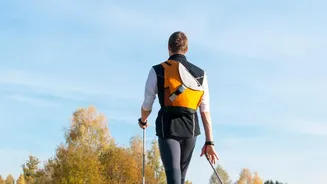
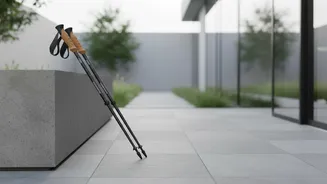
Getting started with Nordic walking is simple, but technique is key to unlocking its full benefits. First, you’ll need the right equipment. Nordic walking poles are different from trekking poles; they have a special glove-like strap system that allows you to push off and propel yourself forward correctly. The basic movement involves walking with an opposite arm-and-leg motion, just like you normally would. As your left leg steps forward, your right arm swings forward to plant the pole. The key is to plant the pole behind you at an angle and push through the strap to propel yourself forward. It can feel a little uncoordinated at first, but most people pick up the rhythm quickly. For the best results, consider watching a tutorial video or finding a local instructor to ensure you nail the proper form from the beginning.