




The Science of a Food Hug
That feeling of relief isn't just in your head—it's backed by science. When we eat comfort foods, especially those rich in carbohydrates, our brains can get a boost in serotonin, the 'happy chemical' that regulates mood. But it goes deeper. Psychologists
call it 'socially-learned caloric conditioning.' We form powerful associations between certain foods and feelings of security, care, and happiness, often starting in childhood. That bowl of dal your mother made when you were sick wasn't just nourishment; it was a physical manifestation of love. When we eat it as adults, our brains tap into that powerful emotional memory, flooding us with a sense of safety and well-being. It’s a culinary time machine, transporting us back to a moment when we felt cared for.
The Ultimate Soother: Khichdi
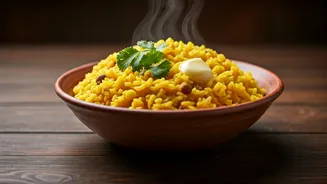
If Indian comfort food had a king, its crown would undoubtedly belong to khichdi. For many, it's the first solid food we ever ate and the meal we turn to when we're unwell. Its power lies in its beautiful simplicity. A one-pot meal of rice and lentils, it's gentle on the stomach and infinitely customisable. Some like it plain with a dollop of ghee, others with a spicy tadka or a side of yogurt and papad. But no matter the version, khichdi represents care. It’s the food someone makes *for* you. It’s a quiet promise that everything will be okay. It doesn't demand anything from you; it just offers pure, unadulterated comfort in every spoonful.
A Sunday in a Bowl: Rajma Chawal
Close your eyes and think of a lazy Sunday afternoon. What’s on the menu? For millions across North India, the answer is unwavering: rajma chawal. This dish is more than just kidney beans and rice; it's a weekly ritual, a taste of home. The slow-cooked, thick, spiced gravy soaking into a mound of fluffy white rice is a study in satisfaction. Rajma chawal is deeply tied to family and togetherness. It’s the centerpiece of countless weekend lunches, a meal that brings everyone to the table. Its nostalgic power is immense, reminding us of childhood, parental love, and the simple joy of a day spent with loved ones. It’s not just food; it's a core memory.
Rainy Day Magic: Chai and Pakoras
Some cravings are triggered by the weather, and nothing says 'monsoon' quite like a plate of crispy, hot pakoras and a steaming cup of adrak wali chai. As the rain lashes against the windowpane, the sound of sputtering batter hitting hot oil is music to our ears. This combination is pure indulgence. The spicy, savoury crunch of the fritters—be it onion, potato, or paneer—is perfectly balanced by the sweet, milky, fragrant tea. It's a multi-sensory experience that feels both spontaneous and traditional. This pairing isn't just a snack; it's an event. It’s about pausing your day to celebrate the simple, cozy pleasure of being warm and dry indoors while a storm rages outside.
The Warmest Indulgence: Gajar ka Halwa
Comfort isn't always savoury. Sometimes, it's a warm, sweet, and utterly decadent bowl of gajar ka halwa. This winter classic, made from grated carrots slow-cooked in milk, ghee, and sugar, is the definition of a labour of love. The time and effort it takes to prepare is part of its charm. Its arrival signals the festive season, family gatherings, and cold nights made cozy. The rich, sweet flavour, combined with the aroma of cardamom and the crunch of nuts, feels like a warm embrace from the inside out. It's the dessert that grandmothers perfect and families cherish, a sweet reminder of celebration, abundance, and the comforting traditions that bind us.