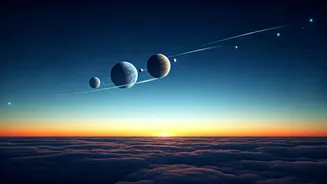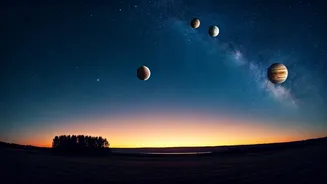




What Is a Planetary 'Parade'?
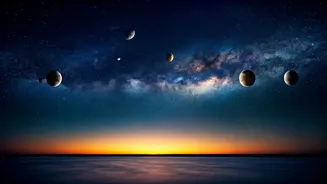
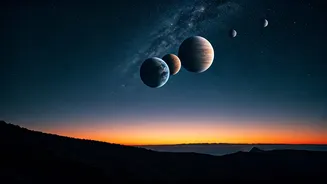
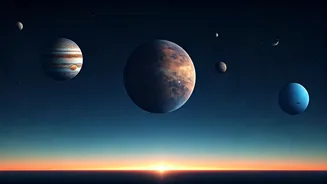
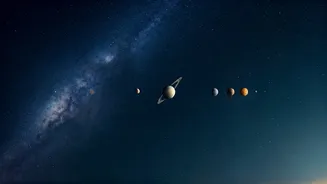
When we talk about a planetary alignment, it doesn't mean the planets will form a perfectly straight line in space—that's incredibly rare and not what’s happening here. Instead, it refers to a phenomenon where several planets appear close together in a small
section of the sky from our vantage point on Earth. Astronomers often call this a planetary 'parade'. It's an optical illusion of sorts, as the planets themselves are still hundreds of millions of kilometres apart, orbiting the Sun on their own vast paths. What makes it special is the shared timing of their orbits bringing them into the same field of view for us on Earth.
The Five Planets on Display Tonight
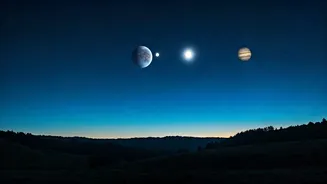
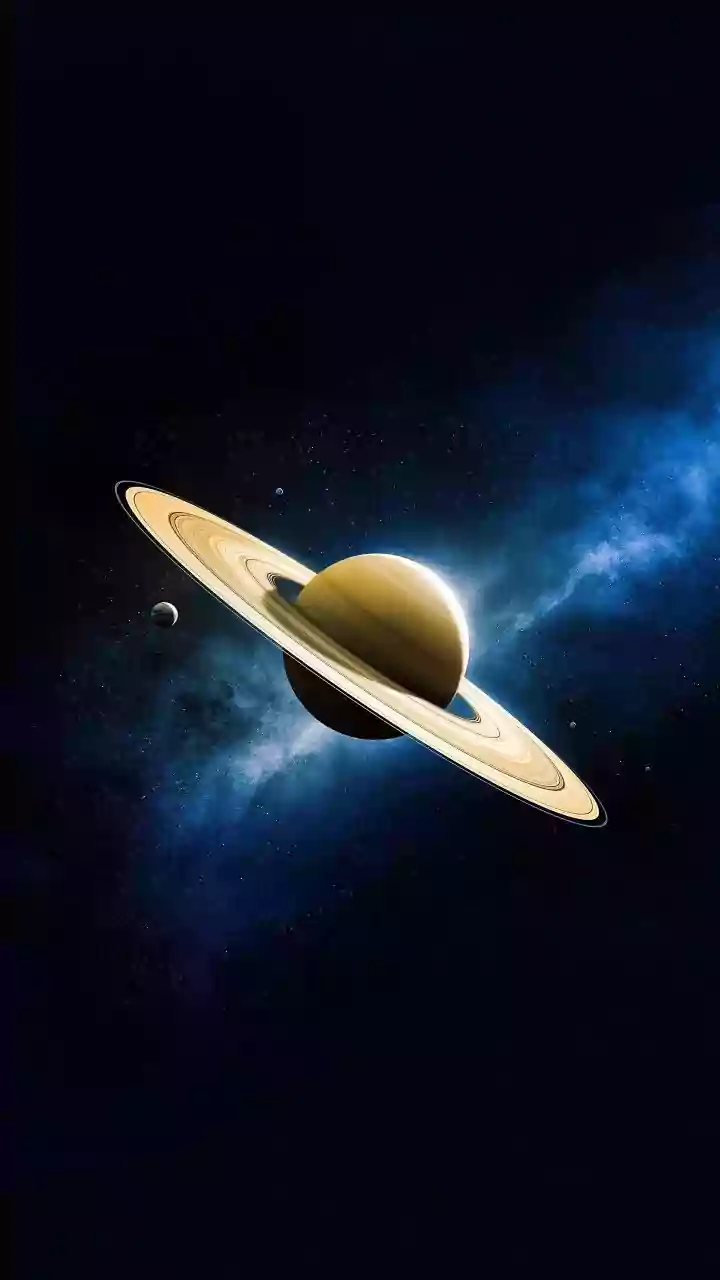
Tonight's celestial event features a cast of five planets. You'll have the chance to spot Mercury, Jupiter, Mars, Saturn, and Uranus. Jupiter will likely be the brightest and easiest to find, shining like a brilliant, steady star. Mars will be identifiable by its distinct reddish hue. Saturn will appear as a fainter, yellowish point of light. The real challenge—and prize—will be spotting Mercury and Uranus. Mercury is always close to the Sun, so it's only visible for a very short window. Uranus is very dim and will be the hardest to see without optical aid.
Your Guide to Watching in India
To catch this cosmic display, timing and location are everything. The best viewing window will open about 30 minutes after sunset and last for roughly an hour. You need to be looking low towards the western horizon, the same direction the Sun just set. Find a spot with an unobstructed view, away from tall buildings or trees. For those in major cities like Mumbai, Delhi, or Bengaluru, light pollution is your biggest enemy. Try to find a darker park, a rooftop, or drive to the outskirts of the city if possible. The darker your surroundings, the more you’ll see.
Do You Need a Telescope?
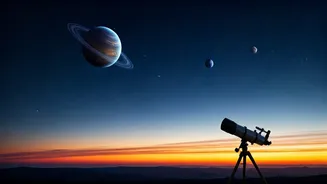
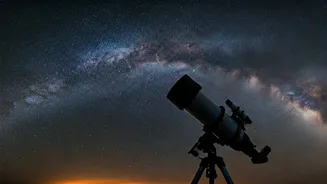
The good news is that you don't need expensive equipment to enjoy the basics of this alignment. Jupiter, Mars, and Saturn will be bright enough to be seen with the naked eye. They will look like exceptionally bright stars that don't twinkle. However, a good pair of binoculars will dramatically improve your experience. Binoculars can help you resolve the faint glow of Saturn and might even give you a fighting chance at spotting Uranus, which will appear as a tiny, pale blue-green dot. For Mercury, which will be very low on the horizon and shrouded in twilight, binoculars are almost a necessity.
Tips for the Best Viewing Experience
First, give your eyes time to adapt. It takes about 15-20 minutes for your eyes to become fully accustomed to the dark, which will help you spot fainter objects. Second, use a stargazing app. Apps like Stellarium, SkyView, or Star Walk can use your phone's GPS and compass to show you exactly where to look for each planet in real time. Simply point your phone at the sky, and the app will overlay the planetary positions. This is especially helpful for locating dim planets like Uranus and confirming that the bright 'star' you're looking at is, in fact, Jupiter.