


The Air Beneath Our Feet
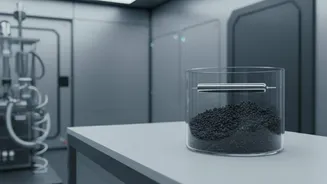
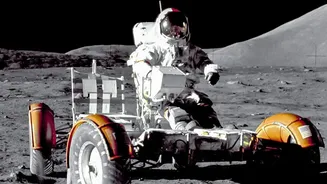
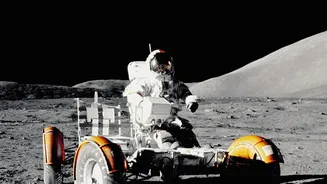
At first glance, the Moon's surface appears to be a desolate, airless wasteland. But the ground itself, a fine layer of dust and crushed rock called regolith, is surprisingly rich in a vital resource: oxygen. Scientists estimate that lunar regolith is composed
of 40-45% oxygen by weight. This isn't free-floating gas, however. It's chemically locked away inside oxide minerals, tightly bonded with elements like silicon, aluminum, iron, and magnesium. The challenge for NASA and its partners isn't finding the oxygen, but rather breaking these powerful chemical bonds to release it in a breathable form. Successfully tapping into this vast reservoir is considered a critical step for enabling long-term human missions and establishing a sustainable presence on the Moon.
Unlocking Oxygen with Heat and Electricity
Several methods are being developed to extract this trapped oxygen, but one of the most promising is molten oxide electrolysis. The process is conceptually straightforward: first, the lunar regolith is heated to an extreme temperature, around 1,600 degrees Celsius, until it melts into a molten liquid. Next, an electrical current is passed through this liquified soil via electrodes. This current does two things: it helps keep the soil molten through resistive heating and, more importantly, it splits the chemical compounds. Oxygen ions in the molten mix are drawn to the positive electrode (the anode), where they combine to form pure, breathable oxygen gas (O2), which can then be collected and stored. This process has been successfully demonstrated in laboratories on Earth using simulated lunar soil.
More Than Just Air
While breathable oxygen is the primary prize, the process of extracting it yields another incredibly valuable resource: a mix of molten metals. As the oxygen is separated and drawn to one electrode, the remaining elements like iron, aluminum, and silicon are collected at the other electrode (the cathode). This process effectively refines the lunar soil, separating it into oxygen and a useful blend of metal alloys. These alloys could be a game-changer for lunar construction. They could be used as feedstock for 3D printers to create tools, spare parts, and building materials directly on the Moon. This ability to create both air and manufacturing materials from the same local resource is a cornerstone of what experts call In-Situ Resource Utilization, or ISRU.
From Lab to Lunar Surface
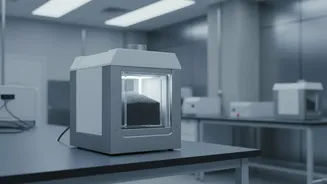
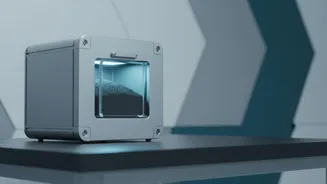
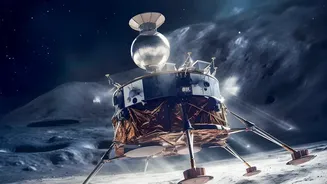
The technology to turn moon dust into oxygen is rapidly maturing. NASA, in collaboration with commercial partners like Sierra Space, has conducted successful prototype tests in vacuum chambers that simulate the lunar environment. The Carbothermal Reduction Demonstration (CaRD) project, for example, used concentrated solar energy to heat the simulated soil and successfully produced carbon monoxide, a key step in a multi-stage process to get to pure oxygen. These Earth-based demonstrations have advanced the technology to a high level of readiness, with the next logical step being a demonstration mission on the Moon itself. Future missions under the Artemis program are expected to carry small-scale reactors to prove that the process works with actual lunar regolith in the harsh lunar environment.
Why This Technology Changes Everything
The ability to generate oxygen on the Moon is not just a convenience; it is a fundamental enabler for the future of space exploration. Every kilogram of supplies launched from Earth comes at an enormous cost. Oxygen is not only needed for life support, but it is also a major component of rocket propellant. By manufacturing oxygen on-site, a lunar base could drastically reduce its dependence on expensive resupply missions from Earth. This makes the entire prospect of a long-term, sustainable lunar settlement—for science, commerce, or as a stepping stone to Mars—far more affordable and logistically feasible. It transforms the Moon from a place we briefly visit into a place where we can live and work, using local resources to sustain ourselves.