








A New Era of Scrutiny
The days of lofty, unsubstantiated claims on food packaging appear to be numbered. In recent weeks, the FSSAI has intensified its crackdown on misleading advertisements and labelling. This isn't just routine paperwork; it's a coordinated push to enforce
the Food Safety and Standards Act, 2006, and its associated regulations. The regulator is systematically targeting brands across various categories—from snacks and dairy to nutraceuticals and beverages—for claims it deems deceptive or scientifically unfounded. Companies are being given a strict window, often just seven days, to explain why action shouldn't be taken against them, signalling a zero-tolerance approach to what the FSSAI calls "clean-washing"—using buzzwords to imply health benefits that aren't real.
The War on Misleading Words
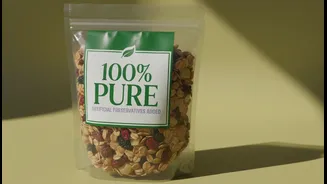
At the heart of the crackdown is the use of specific, powerful words that influence consumer choice. Terms like "100% Natural," "Fresh," "Organic," and "Healthy" are under intense scrutiny. For example, notices have been issued to companies for using "Fresh Paneer" on packaging, a term FSSAI says is inconsistent with its regulations, or claiming a product is "100% Organic" without the necessary certifications. Another key target is the term "health drink," which FSSAI has previously clarified has no standard definition under its rules, leading to notices against major beverage brands. The regulator has also taken issue with a brand marketing "Juice Capsules" with claims like "boost your immune system" and "remove toxins from your body" without providing scientific evidence.
High-Profile Brands on Notice
This regulatory sweep has not been limited to smaller players. Several well-known companies have found themselves in the FSSAI's crosshairs, making it clear that no brand is too big to be questioned. Recent notices have been sent to Lotte India, Heritage Foods, Ferns N Petals, Cipzer Nutraceuticals, and Kubera Foods, among others. Lotte India, for instance, was flagged for issues including a "100% Vegetarian" claim on Choco Pie variants and marketing eclairs with a fruit name despite them containing no fruit. Heritage Foods received a notice for its "Fresh Paneer" product, while Kubera Foods was questioned for labelling a cream bun as "100% Natural" when its own ingredient list declared preservatives and synthetic colours. These public actions serve as a powerful warning to the entire industry.
The Steep Cost of Non-Compliance
For food businesses, ignoring these developments is not an option. The consequences of being found non-compliant are significant and multi-faceted. Under the FSS Act, penalties for misleading advertisements can be severe, with fines potentially reaching up to Rs. 10 lakh for each offense. Beyond financial penalties, the FSSAI has the authority to demand product recalls or even suspend a company's manufacturing and marketing licenses. However, the most damaging consequence is often the erosion of consumer trust. In an age of social media and informed consumers, a public notice from the FSSAI can cause immediate and long-lasting reputational harm that far outweighs any monetary fine.
Proactive Planning Is the Only Path Forward
This heightened regulatory environment demands a fundamental shift from reactive compliance to proactive planning. For food business operators (FBOs), this means making regulatory adherence a core part of their strategy, not an afterthought. The first step is to conduct a thorough internal audit of all product labels, marketing materials, and online claims to ensure they are truthful, unambiguous, and scientifically substantiated. Investing in regulatory expertise, whether in-house or through consultants, is now crucial to navigate the complex web of FSSAI rules. Marketing and product development teams must work in lockstep with legal and compliance departments from the very beginning. The goal is no longer just to avoid penalties but to build a brand founded on transparency and accuracy.