


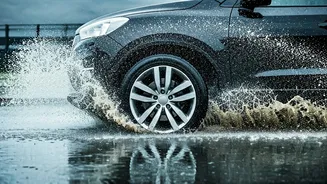
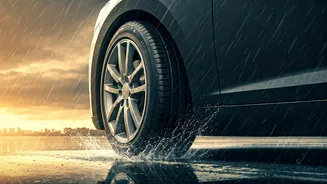



1. Your Car is Your Chariot
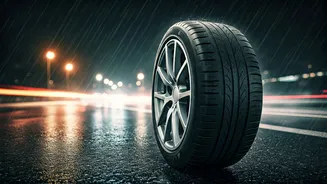
Before you even think about playlists, give your car a thorough pre-monsoon check-up. Your tyres are your first line of defence. Ensure they have adequate tread depth (at least 3mm is recommended for wet conditions) to grip the road and prevent skidding.
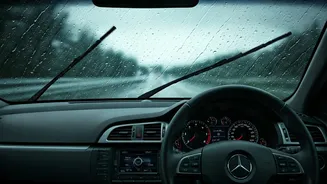
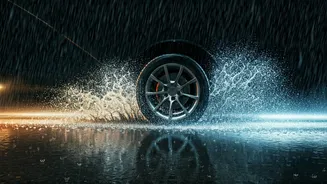
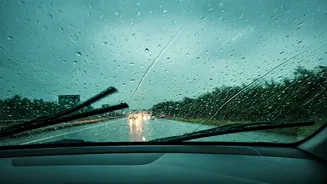
Worn-out tyres are a major risk for hydroplaning. Next, inspect your wiper blades. If they leave streaks or make squeaking noises, replace them immediately. Clear vision is non-negotiable. Finally, check all your lights—headlights, taillights, brake lights, and indicators. In low-visibility conditions, you need to see and be seen. A quick trip to a mechanic for a professional once-over can provide invaluable peace of mind.
2. Drive Like It’s Raining
Monsoon driving requires a different mindset. First, slow down. Your usual cruising speed is too fast for wet roads, as your braking distance increases significantly. Maintain at least a five-to-six second gap from the vehicle in front of you. This gives you more time to react. Be wary of hydroplaning, which occurs when your tyres lose contact with the road and skim over a layer of water. If you feel the steering go light, don't panic. Ease off the accelerator and steer straight until you feel the tyres regain traction. Avoid sudden braking or sharp turns. All your inputs—steering, accelerating, and braking—should be smooth and gentle.
3. Build a Monsoon Survival Kit
Your standard car kit needs a few monsoon-specific upgrades. In addition to a first-aid box and a puncture repair kit, pack a powerful, waterproof flashlight with extra batteries. A fully charged power bank for your phone is essential for communication and navigation. Throw in a tow rope, just in case you or someone else gets stuck in mud. Keep a few old newspapers or microfiber cloths handy to wipe down foggy interiors or muddy shoes. Finally, pack some high-energy, non-perishable snacks like protein bars and nuts, along with a flask of hot water or tea. Getting stuck is inconvenient, but being hungry and cold makes it miserable.
4. Map Your Monsoon Journey
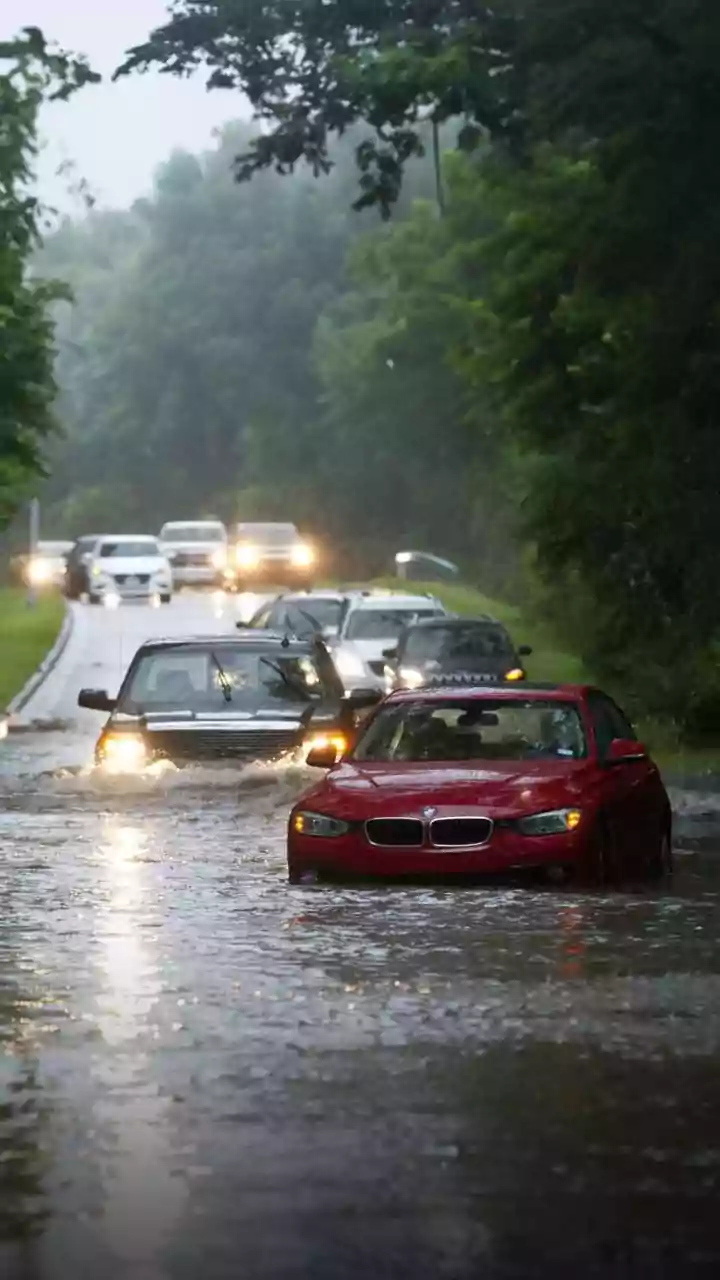
Spontaneity is great, but a little planning goes a long way in the rain. Before you leave, check your intended route on Google Maps or other navigation apps for real-time updates on road closures, waterlogging, or landslides, especially if you're heading to hilly areas. Try to stick to national highways and major roads, which are generally better maintained and have better drainage. Avoid taking shortcuts through unknown smaller roads or low-lying areas that are prone to flooding. It’s also a wise practice to start early in the day to maximize daylight hours and share your live location or estimated time of arrival with a friend or family member.
5. Keep Your Vision Crystal Clear
Fogging is one of the most common and dangerous issues when driving in the rain. The temperature difference between the cool, rain-soaked exterior and the warm, humid interior causes your windows and windscreen to fog up. The quickest way to defog your windscreen is to turn on your car’s air conditioning and direct the airflow towards it. The AC acts as a dehumidifier, clearing the glass in seconds. For your side and rear windows, use a clean, dry microfiber cloth. It helps to clean the inside of your windows thoroughly before your trip, as dirt and oil can attract moisture and worsen fogging.
6. Know When to Pull Over
The most important safety feature in any car is a sensible driver. If the rain becomes a torrential downpour and visibility drops to near zero, your best move is to stop. Don't be a hero and try to push through. Look for a safe place to pull over, like a petrol pump, a restaurant, or a designated lay-by, well away from the main flow of traffic. Avoid stopping under trees, which can have falling branches, or near electricity poles. Turn on your hazard lights to ensure other drivers can see you. A road trip is about the journey, not just the destination. Waiting for 30 minutes for the worst of the storm to pass is always better than risking an accident.