



The Moon's Grand Finale: A Partial Lunar Eclipse
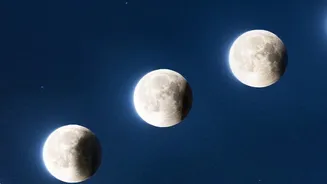
The standout event for the remainder of August is a partial lunar eclipse on the night of August 28th. This occurs when the full Moon passes through part of Earth's dark inner shadow, the umbra. Observers in India will see a portion of the Moon noticeably
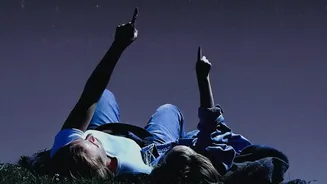
darken, creating a striking visual contrast against the fully illuminated part. The First Quarter Moon will be visible on August 20th, appearing as a half-lit disc in the evening sky. This waxing phase leads up to the Full Moon and its eclipse, which provides a perfect reason to gather friends and family for a night of sky-watching. Unlike solar eclipses, this lunar event is completely safe to view with the naked eye.
A Lingering Shower and Prominent Planets
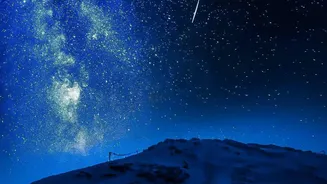
While the spectacular peak of the Perseid meteor shower occurred around August 12-13, some stray meteors may still be visible. The shower remains active until late August, so patient observers in dark locations might still catch a few 'shooting stars'. More reliably, several planets remain on display. Saturn will be a prominent sight, appearing as a steady, golden point of light. Mars will also be visible to the naked eye, distinguished by its reddish hue, and will be high in the sky before dawn. For those with a clear eastern horizon and good timing, Mercury might be spotted low in the sky just before sunrise, though it can be a challenging target. Using a stargazing app can help you pinpoint their exact locations each night.
A Tour of the Summer Constellations
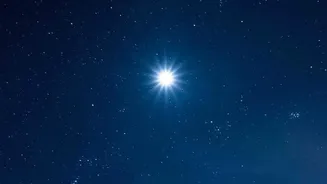
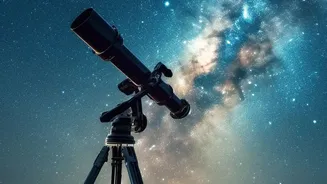
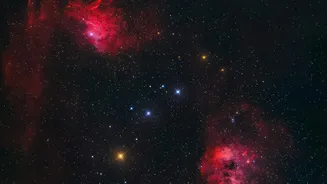
The late summer sky is rich with prominent constellations, offering a roadmap to the cosmos. Look towards the south to find Sagittarius, often identified by its 'Teapot' shape. This constellation is particularly special because it marks the direction of the center of our own Milky Way galaxy. Directly overhead for observers in the Northern Hemisphere, three bright stars—Vega, Deneb, and Altair—form the easily recognizable 'Summer Triangle'. These stars are so bright they can be seen even from light-polluted urban areas. Other constellations to look for include Lyra, the harp, which contains the brilliant star Vega, and Scorpius, with its distinct J-shape low on the horizon.
Tips for the Best Viewing Experience
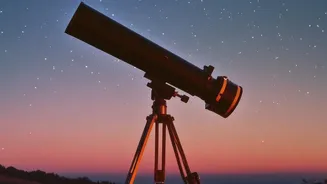
To make the most of these celestial sights, preparation is key. The biggest challenge for many is light pollution. Finding a location away from city lights, such as a rural area or a designated dark-sky park, will dramatically increase the number of stars you can see. Places like Hanle in Ladakh, the Rann of Kutch, and parts of Coorg are renowned for their dark skies. Allow your eyes at least 20-30 minutes to fully adapt to the darkness; this means avoiding looking at your bright phone screen. If you need light, use a torch with a red filter, as red light is less disruptive to your night vision. While most of these sights are visible to the naked eye, a pair of binoculars can enhance the view of star clusters and reveal the moons of Jupiter.