





Khichdi: The Ultimate Cure-All
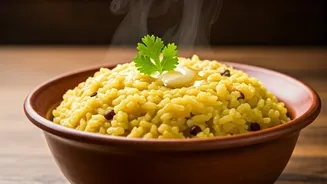
If Indian cuisine has a contender for the chicken-soup-when-you're-sick throne, it's khichdi. At its simplest, it's a humble, one-pot dish of rice and lentils (usually moong dal) cooked together until they break down into a soft, porridge-like consistency.
Often spiced with just a touch of turmeric and salt and finished with a generous dollop of ghee (clarified butter), khichdi is the first food given to babies and the go-to meal for anyone feeling under the weather. It’s gentle on the stomach, endlessly nourishing, and acts as a blank canvas. Families might add vegetables, temper it with cumin seeds and asafoetida, or serve it with a side of yogurt. Its recent surge in popularity in the wellness world as a “detox” food belies its true identity: a simple, unpretentious hug in a bowl.
Dal Chawal: The Daily Ritual of Home
While you’ll find dal on every Indian restaurant menu, the dal served at home is an entirely different experience. Dal chawal—lentils served with rice—is the foundational daily meal for millions. It’s the culinary equivalent of coming home and slipping into your favorite sweatpants. Every household has its own version: a simple tadka dal (tempered with spices bloomed in hot oil), a rich dal makhani slow-cooked for hours, or a tangy sambar in the south. Unlike the heavy, cream-laden versions in many restaurants, home-style dal is often lighter, more nuanced, and perfectly tuned to the family's palate. It represents consistency and reliability, a comforting rhythm that anchors the day.
Rajma Chawal: A Lazy Sunday Tradition
In North India, the smell of rajma (kidney beans) simmering in a thick, spiced tomato-onion gravy is synonymous with weekends. Because the dried beans require a long soak and slow cooking time, Rajma Chawal is traditionally a Sunday lunch affair. It’s a hearty, flavorful, and deeply satisfying meal that brings the family together. The creamy texture of the beans, the aromatic gravy infused with ginger, garlic, and garam masala, and its perfect pairing with simple steamed rice make it a universal favorite. For many who grew up with it, rajma chawal isn't just a dish; it’s the taste of a day off, of family time, and of a long, contented afternoon nap that follows.
Curd Rice: The Cooling Southern Soother
In the sweltering heat of South India, comfort doesn’t always mean hot and heavy. Enter curd rice, or Thayir Saadam. It’s a deceptively simple dish of overcooked, soft rice mixed with yogurt, salt, and often tempered with mustard seeds, curry leaves, and dried red chilies. Sometimes it’s studded with pomegranate seeds or pieces of green mango for texture and tang. Served cool or at room temperature, it’s incredibly soothing for both the palate and the digestive system. It’s the customary end to a multi-course South Indian meal, designed to cool the body and calm the stomach after a spicy feast. For many, it’s a taste of grandmotherly love and the perfect antidote to a hot day.
Aloo Paratha: The Buttery Breakfast Hug
Imagine a warm, flaky flatbread, stuffed with a savory filling of spiced mashed potatoes, pan-fried to golden-brown perfection, and served with a pat of melting butter, a side of tangy pickle, and a cool bowl of yogurt. That’s aloo paratha, the undisputed king of comfort breakfasts in North India. While it takes effort to make—rolling the dough, preparing the filling, and carefully stuffing it without tearing—the reward is immense. It’s a weekend morning treat, a special-request meal, and the kind of food that mothers pack for their kids on long journeys. Every bite is a perfect combination of soft, spicy potato and crisp, buttery bread.