






Tree Pose, or Vrikshasana, is a beautiful posture for building balance, strength, and focus. But if you feel more wobbly than wonderful, you're not alone. This guide explores gentle, accessible ways to find your roots and grow a steady, confident tree.
The Foundation: Understanding Tree Pose
Vrikshasana, from the Sanskrit words 'vriksha' (tree) and 'asana' (pose), mimics the graceful, grounded stance of a tree. It's a foundational balancing pose that strengthens the legs, ankles, and core while calming the mind. The classic version involves balancing on one leg, with the sole of the other foot pressed against the inner thigh and arms reaching overhead like branches. But balance is a journey, not a destination. The key is to find stability and ease, which is where modifications become powerful tools for growth. Remember that wobbling is normal; it's how your muscles learn to make the tiny adjustments needed for stability.
Start with Support: Using a Wall or Chair
If you're new to balancing, a wall or chair is your best friend. This removes the fear of falling and allows you to focus on proper alignment. Stand with your hip or back a few inches from a wall, or place a sturdy chair beside you. As you move into the pose, you can lightly touch the wall or chair for support whenever you feel unsteady. This builds confidence and helps your body learn the mechanics of the pose without the pressure of maintaining perfect balance. The goal is to gradually rely on the support less and less as your strength and stability improve.
Find Your Roots: The Kickstand Variation
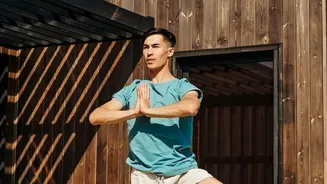
The most accessible version of Tree Pose begins with both feet still connected to the earth. Start by shifting your weight onto one leg. Then, turn the other knee out to the side and place the ball of that foot on the floor, resting your heel against the inner ankle of your standing leg. This 'kickstand' provides a point of stability while allowing you to practice opening the hip and engaging your standing leg. Focus on keeping your hips level and facing forward. Even in this modified shape, you can bring your hands to your heart and practice finding your drishti—a fixed gaze point to steady your focus.
Climb a Little Higher: Foot to Calf
Once you feel steady in the kickstand position, you can lift your foot higher. The next step is to place the sole of your foot on the inner calf of your standing leg. This variation increases the balance challenge while still being very accessible. The most important rule in any tree variation is to never place your foot directly on the side of your knee. The knee joint is not designed to handle sideways pressure. Always position your foot either above or below the knee. At this stage, continue to press the foot into the calf and the calf back into the foot to create a stable connection.
The Full Expression: Foot to Inner Thigh
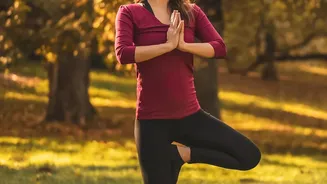
For the classic version of Tree Pose, you'll place your foot on your inner thigh. You might need to use your hand to guide your foot into position. Press your foot firmly into your thigh and, just as importantly, press your thigh back into your foot. This active engagement creates stability through your midline. Keep your standing leg strong but avoid locking the knee. Ensure your hips remain square to the front, even as your bent knee opens to the side. Don't be discouraged if you can't hold this for long at first; consistent practice is what builds endurance.
Branch Out: Exploring Arm Variations
Where you place your arms can significantly impact your balance. The most common position is bringing the palms together at the heart in Anjali Mudra (prayer position). This helps centre your energy and focus. For a greater challenge and a heart-opening stretch, you can extend your arms overhead, either with palms together or shoulderward apart. If you feel wobbly, placing your hands on your hips can also provide a sense of stability. Experiment with what feels best for you on any given day.