





The Small-Space Renter's Dilemma
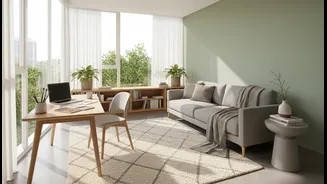
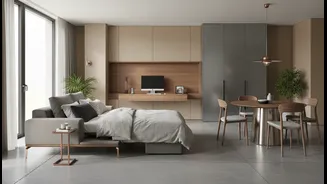
In many Indian cities, compact apartments are the norm. While cosy, they present a dual challenge for renters: limited floor space and strict lease agreements that often forbid drilling holes into walls. This can make a space feel impersonal and cluttered,
with belongings piling up and bare walls that don't reflect your personality. The fear of losing a security deposit over a few nail holes is real, leaving many feeling stuck with the layout they inherited. But effective design isn't about having more square footage; it's about using the space you have more intelligently. The solution often lies not on the floor, but on the walls.
Thinking Vertically: The Floating Shelf Advantage
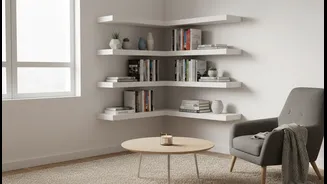
When floor space is at a premium, the only way to go is up. Floating shelves are a designer's secret weapon for small spaces. Unlike bulky bookcases, they have a minimal physical and visual footprint. By drawing the eye upward, they create an illusion of height and openness. They transform empty walls into functional storage for books, plants, and decor, or practical surfaces in a kitchen or bathroom. The key for renters is harnessing this advantage without leaving a trace. Damage-free concepts make this possible, turning vertical space into a personalisable and practical asset.
The Magic of Adhesive Shelving
The most popular damage-free solution involves high-strength adhesive strips, like those from Command. These products allow you to mount lightweight shelves directly onto smooth walls. Brands now offer picture ledges and small shelves designed specifically for this purpose, often with weight limits around 5 to 15 pounds. The key is to choose a lightweight, often hollow, shelf and pair it with strips rated for a higher weight than what you plan to display. Always clean the wall with rubbing alcohol first to ensure a strong bond, and let the adhesive cure for the recommended time before placing items on the shelf. These are perfect for displaying photos, small plants, or skincare products, but are not suitable for heavy items like a row of books. They work best on smooth, painted drywall or tiles and should be avoided on textured or wallpapered surfaces.
Leveraging Tension and Pressure
For heavier-duty needs without drilling, tension rods offer a clever alternative. These systems use pressure to wedge themselves securely between two parallel surfaces, like two walls or the floor and ceiling. While traditionally used for shower curtains, tension rods can be used to create makeshift shelving frames in narrow nooks, closets, or laundry areas. You can place lightweight boards across two parallel rods to create a shelf or use specialised tension pole shelving units for more substantial storage of pantry items or toiletries. This method is completely reversible and leaves no marks, making it an excellent choice for renters needing more robust storage solutions than adhesives can offer.
Smart Styling for Maximum Impact
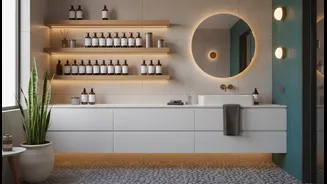
How you style your floating shelves is just as important as how you hang them. To avoid a cluttered look, practice intentional arrangement. Group items in odd numbers, typically threes or fives, and vary their height and texture. Mix books with decorative objects like vases or small sculptures. Don't feel the need to fill every inch of space; leaving some empty areas gives your arrangements room to breathe and feels more minimalist and calming. Consider a theme for each shelf, whether it's by color, function, or style. For example, a small entryway shelf could hold a decorative bowl for keys, while a bathroom shelf might feature neatly arranged toiletries and a small succulent.
Beyond the Living Room
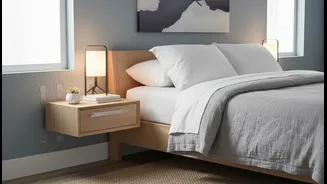
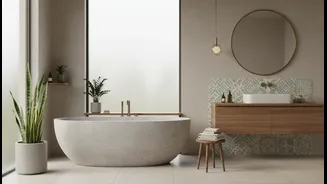
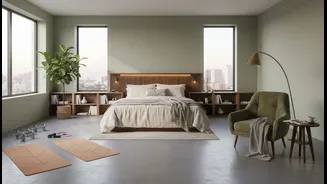
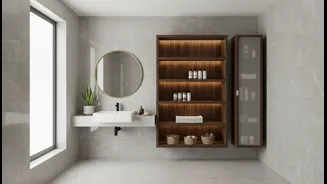
Damage-free shelving concepts can optimize nearly any room in a small flat. In the kitchen, a narrow adhesive ledge on a tiled backsplash can hold spices and oils, keeping countertops clear. In the bathroom, adhesive corner caddies or slim shelves are perfect for toiletries, freeing up limited sink space. In the bedroom, a small stick-on shelf can serve as a minimalist bedside table for your phone and a glass of water, which is ideal when there's no room for a nightstand. By applying these concepts throughout your home, you systematically increase your storage and display space without violating your lease.