


A Rare Spectacle Over Europe
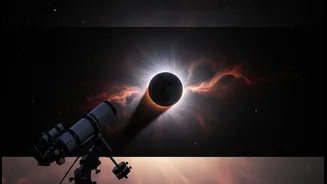
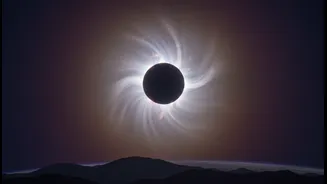
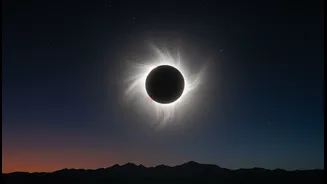
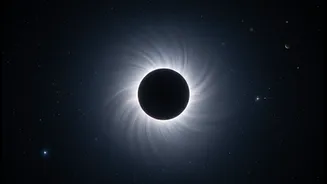
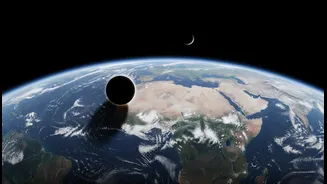
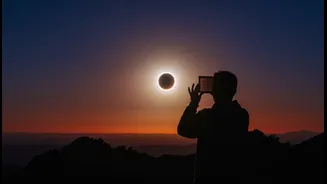
For the first time since 1999, a total solar eclipse will grace mainland Europe, with the path of totality sweeping across Greenland, Iceland, and northern Spain. For a few precious minutes—less than two and a half at its peak—the Moon will completely
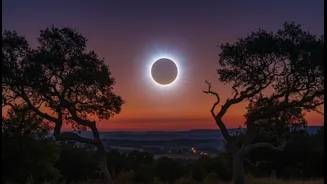
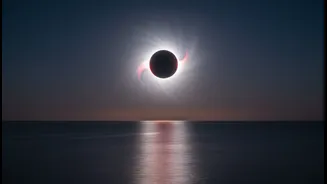
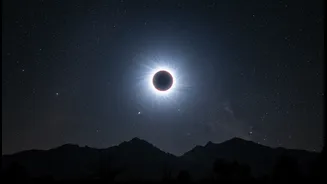
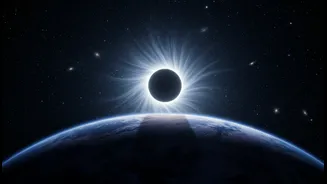
obscure the Sun, plunging daytime into an eerie twilight and making the Sun's ghostly outer atmosphere, the corona, visible to the naked eye. This event is particularly special as it occurs late in the day for observers in Spain, creating the dramatic possibility of an eclipsed sunset over the Atlantic horizon. While India won't witness the totality, the event captures global attention for its scientific promise and sheer celestial beauty.
Unlocking the Sun’s Fiery Secrets
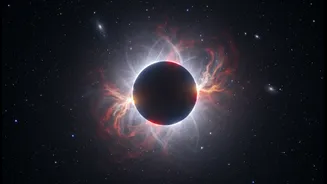
The primary scientific goal of any total solar eclipse is to study the Sun's corona. This superheated plasma atmosphere is millions of degrees hotter than the Sun's surface, a mystery known as the coronal heating problem that has puzzled astrophysicists for decades. During totality, with the blinding glare of the Sun's disk gone, scientists can get a rare, clear view of the corona's intricate structure, temperature, and magnetic fields. This data is crucial for understanding space weather, including solar flares and coronal mass ejections that can impact satellites and power grids on Earth. The 2026 eclipse offers a vital chance to gather ground-based data that complements observations from spacecraft like NASA's Parker Solar Probe.
A Legacy of Scientific Proof
Solar eclipses hold a legendary status in the history of science. The most famous example is the 1919 eclipse, which provided the first observational evidence for Albert Einstein's theory of general relativity. An expedition led by Sir Arthur Eddington photographed stars near the Sun during totality, showing that their light was indeed bent by the Sun's immense gravity, just as Einstein had predicted. This single event catapulted Einstein to global fame and fundamentally changed our understanding of the universe. For centuries, eclipses have also allowed astronomers to discover new elements like helium and to precisely measure the slowing rotation of the Earth, transforming them from feared omens into powerful scientific tools.
The Big Questions It Won't Answer
Despite its power, the 2026 eclipse will not be a silver bullet for all of science's biggest questions. The term 'global totality' in the headline hints at a complete, unified understanding, but science progresses in steps, not giant leaps. This eclipse alone will not solve the coronal heating problem; it will provide a critical snapshot, but understanding the dynamic processes requires continuous observation from multiple vantage points. Furthermore, it won't offer insights into other great cosmic mysteries like the nature of dark matter or dark energy. It is also important to debunk internet hoaxes; contrary to some viral claims, the eclipse will have no measurable effect on Earth's gravity. Its focus is squarely on our solar system's star.
A Piece of a Much Larger Puzzle
The true value of the August 12 eclipse lies in its role as part of a larger, ongoing scientific endeavour. Data gathered during those brief minutes of totality will be combined with a constant stream of information from sophisticated solar observatories in space. While an eclipse gives us a unique view from Earth, satellites provide the long-term, multi-wavelength perspective needed to build and refine complex models of the Sun's behaviour. This celestial event is not an end in itself but a crucial calibration point, a moment where Earth-based and space-based observations can work in synergy to create a more complete picture of the Sun. It helps us interpret the data we receive every other day of the year.