
A Cosmic Detective Story
In a discovery that feels like cosmic archaeology, astronomers re-examining 25-year-old data from the Hubble Space Telescope have uncovered a startling clue around a distant star. The star, a white dwarf named HS 0209+0832 located about 270 light-years
away, shows a surprising chemical signature in its atmosphere. This signature points to a fascinating possibility: a 'second-generation' planet, a world that formed not at the star's birth, but long after its death. The discovery was led by a team from the University of Warwick, who identified unusual amounts of heavy elements that have no business being there.
The Ghost of a Star
To understand why this is so unusual, we first need to know what a white dwarf is. It's the ultra-dense remnant of a star, like our own Sun, that has exhausted its nuclear fuel. After swelling into a red giant and shedding its outer layers, all that's left is the collapsed core. A white dwarf's immense gravity is like a cosmic purifier; it should quickly pull any heavy elements down, leaving a clean, pristine atmosphere of only the lightest elements, like hydrogen or helium. Finding anything heavier on the surface is a sign that the star is actively 'polluting' itself by pulling in material from a nearby source, like debris from a shattered asteroid.
The Tell-Tale Elements
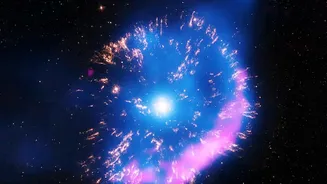
The atmosphere of HS 0209+0832 wasn't just polluted; it was polluted with a very strange mix of elements. Scientists found high levels of zinc, copper, and most notably, niobium. The amount of niobium was over 1,000 times higher than what's found in our Sun. This is the first time niobium has ever been detected in a white dwarf's atmosphere. These specific heavy elements are created through a process that only happens inside dying, bloated stars. Their presence is a chemical fingerprint, a 'signpost' of the star's own death throes, suggesting the material didn't come from an old, first-generation planet but from the star's own ashes.
A Planet from the Ashes
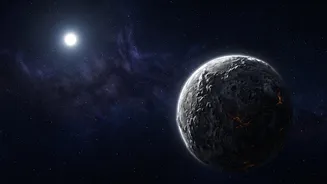
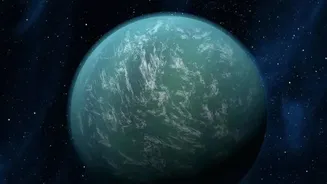
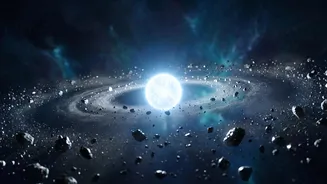
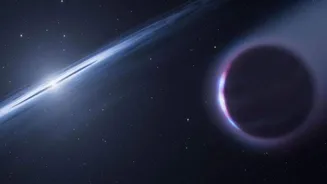
This strange chemical soup leads to a groundbreaking hypothesis. The material polluting the white dwarf is likely coming from a giant planet that formed after the star died. The theory is that when the original star expanded and died, it threw off massive amounts of gas and dust enriched with these newly forged heavy elements. Some of this material, instead of dispersing into space, may have settled into a disk around the white dwarf and eventually coalesced into a new, second-generation planet. Data from NASA's TESS satellite also detected a faint, repeating change in the star's brightness every 4.4 days, which could be the signature of a Jupiter-sized planet orbiting incredibly close to the white dwarf.
A New Chapter in Planetary Science
If confirmed, this would be the first example of a second-generation planet found orbiting a white dwarf, a much more common stellar remnant than the pulsars where such planets were previously suspected to exist. It completely changes our perspective on the lifecycle of planetary systems. It suggests that the end of a star's life might not be the end for planet formation. Instead, it can be the beginning of a new chapter, where the recycled remains of a dead star provide the building blocks for new worlds. This raises the tantalising question of how many other 'phoenix' planets might be out there, waiting to be discovered in the graveyards of the cosmos.