
The Fiery Heartbeat of the Streets
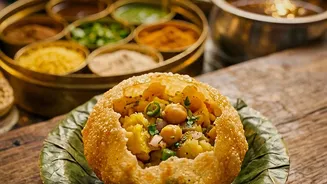
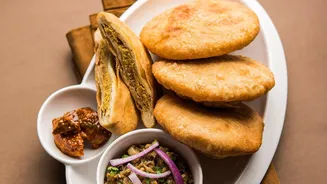
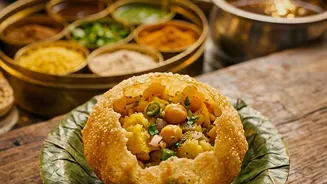
To understand Rajasthan's culinary identity, one must begin on its streets. Here, the food is loud, unapologetic, and designed for immediate gratification. Take the legendary Pyaaz Kachori, a deep-fried pastry with a flaky crust that shatters to reveal
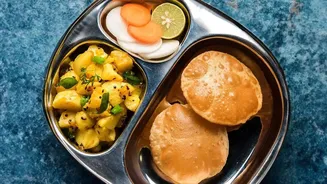
a spicy, caramelised onion filling. Or consider Jodhpur's famous Mirchi Vada, a large, mild green chilli stuffed with a spiced potato mix, battered in gram flour, and fried to golden perfection. These snacks are not mere appetisers; they are a cherished part of daily life, enjoyed with a cup of chai or as a quick, satisfying meal. The flavours are bold and direct, often featuring a generous use of asafoetida, cumin, and chilli, perfectly suited to the region's climate.
A Meal Born From History: Dal Baati Churma
No discussion of Rajasthani food is complete without mentioning its most iconic dish: Dal Baati Churma. While often found in restaurants, its essence is that of a hearty, rustic meal. The 'baati' is a hard, unleavened wheat roll, traditionally baked in the embers of a fire, a method born out of the needs of Rajput warriors who required food that could last for days. These dense rolls are cracked open and drenched in ghee before being eaten. The dal, a flavourful stew of mixed lentils, provides a spicy, soupy counterpoint. The meal is completed with 'churma', a coarsely ground wheat dessert made by crushing baatis and mixing them with ghee and jaggery or sugar, providing a sweet finish to the savoury feast. This trio is more than a dish; it is a complete culinary experience, representing the ingenuity of a cuisine shaped by a harsh landscape and a rich history.
The Elegance of the Royal Thali
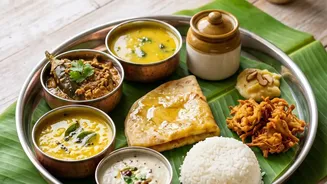
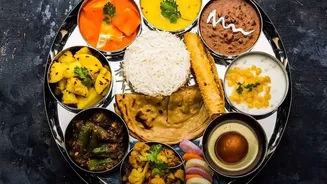
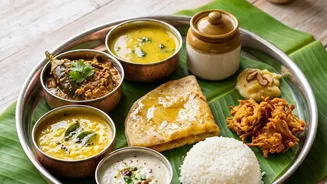
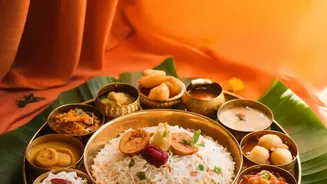
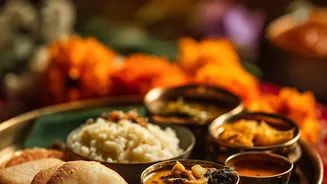
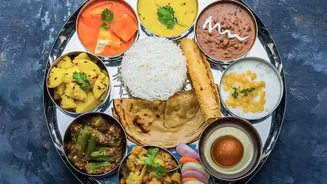
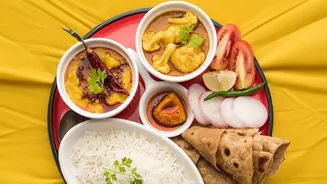
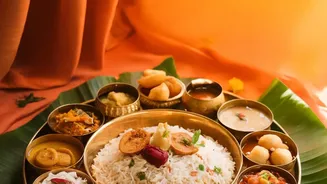
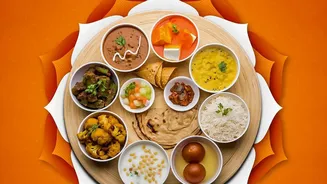
At the other end of the spectrum is the royal vegetarian thali, a testament to the opulence and artistry of the palace kitchens. Where street food is about singular, explosive flavours, the thali is a carefully orchestrated symphony. Served on a large platter, it presents a dazzling array of bowls (katoris), each containing a distinct preparation. This is not just a meal but a display of hospitality and culinary heritage, reflecting the principle of 'Atithi Devo Bhava' (The guest is God). The experience is about balance—a variety of textures, temperatures, and tastes from sweet and sour to spicy and savoury, all arranged for a holistic gastronomic journey. The sheer variety ensures that every bite is a new discovery.
Deconstructing the Royal Platter
A typical vegetarian thali is a showcase of dishes born from necessity and perfected through royal patronage. You will likely find Gatte ki Sabzi, steamed and pan-fried gram flour dumplings in a tangy yoghurt-based gravy. Another centrepiece is Ker Sangri, a unique dish made from dried desert berries and beans, offering a tangy and spicy flavour that is quintessentially Rajasthani. These are accompanied by a variety of breads, from the simple Bajre ki Roti (millet flatbread) to the richer Missi Roti. Small portions of chutneys, pickles, papad, and a cooling raita provide contrasting notes, while a decadent dessert like Ghewar or Malpua brings the royal feast to a close.
A Cuisine of Ingenuity and Grandeur
What makes Rajasthan a premier destination for food lovers is this incredible duality. The cuisine was shaped by the state's arid geography, which necessitated the use of lentils, gram flour, and preserved ingredients. This constraint led to incredible creativity, evident in dishes like Gatte ki Sabzi and Ker Sangri, which turn humble components into delicacies. The Marwari community's vegetarian traditions and the lavish culinary pursuits of the Rajput royals further enriched this landscape. The result is a food culture that is both resourceful and regal. It celebrates the simple, fiery joy of a street-side snack with the same passion it brings to a meticulously prepared 20-dish thali. This unique blend of rustic survival and royal splendour offers a culinary adventure unlike any other.