





When we picture an asteroid hurtling through space, we think of gravity as the undisputed director of its path. But for some objects, a force as gentle as sunlight might be subtly changing the cosmic choreography, with big implications for us.
Meet the Speedy Space Rock
The subject
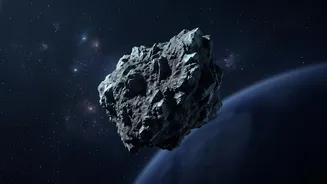
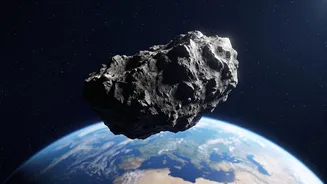
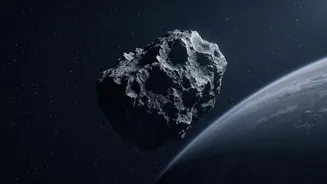
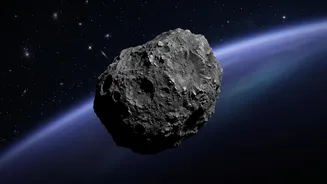
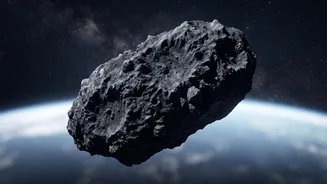
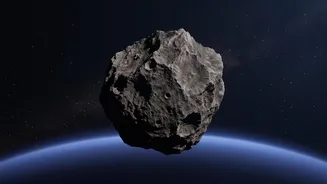
of this cosmic puzzle is 1998 KY26, a near-Earth asteroid that is, in astronomical terms, quite small. Measuring only about 30 metres in diameter, it’s comparable in size to a small office building or a large bus. What makes it particularly noteworthy is its incredible speed of rotation. It spins on its axis once every 10.7 minutes, which is exceptionally fast for an object of its kind. Discovered in 1998, this tiny object has an orbit that brings it close to Earth, making it an object of interest for scientists studying planetary defense. While it poses no imminent threat, its unusual characteristics make it a perfect natural laboratory for understanding the forces that guide small bodies through the solar system.
An Invisible Push from the Sun
The headline force at play is solar radiation pressure, but it's part of a more complex phenomenon known as the Yarkovsky effect. It sounds like something from science fiction, but the physics is straightforward, if subtle. Sunlight, or photons, carries momentum. When these photons strike an asteroid, they exert a tiny, continuous push. This direct pressure is very weak. More significantly, as an asteroid rotates, its 'day' side heats up from absorbing sunlight. As this heated surface rotates into the 'night' side, it radiates that heat away as infrared energy. This emission of thermal radiation acts like a miniature, natural thruster, providing a gentle but persistent nudge. Over millions of years, this tiny force can dramatically alter an asteroid's orbit.
Why Size and Spin Matter
The Yarkovsky effect doesn't impact all asteroids equally. On massive, kilometre-wide asteroids, the force is negligible compared to their immense inertia. But for smaller bodies like 1998 KY26, which have a large surface area relative to their mass, the effect is much more pronounced. The rapid spin of 1998 KY26 is also a critical factor. The constant and quick rotation creates a more consistent and predictable thermal thrust. Recent scientific models suggest that the orbit of 1998 KY26 shows a strange acceleration that cannot be explained by gravity alone. Previously, some scientists theorised it could be a 'dark comet' venting hidden gases, but recent studies suggest the asteroid is too warm to hold onto the ice needed for such activity. This leaves the Yarkovsky effect, driven by solar radiation, as a leading explanation for its unusual movement.
Recalculating Risk for Planetary Defense
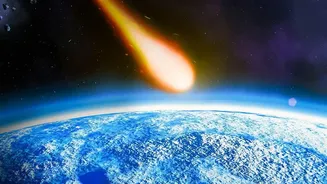
Understanding these non-gravitational forces is crucial for planetary defense. The primary goal of planetary defense is to find, track, and characterise near-Earth objects to predict if any pose a future impact risk to Earth. For decades, these predictions have relied almost entirely on the powerful and predictable force of gravity. However, the case of 1998 KY26 highlights that for smaller asteroids—objects large enough to cause significant regional damage, like the 2013 Chelyabinsk event—subtle forces can change everything. If our longterm orbital forecasts don't account for the Yarkovsky effect, our predictions could be off by thousands of kilometres over the course of decades, potentially turning a predicted nearmiss into a direct hit. Incorporating these tiny pushes into our models is essential for making more accurate, longterm threat assessments.