




The Grand Tour to Ancient Asteroids
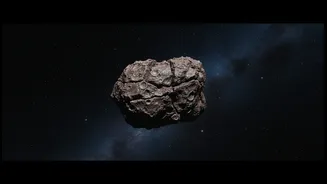
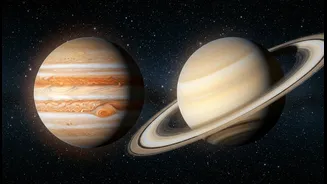
Launched in 2021, NASA's Lucy spacecraft has an ambitious 12-year mission ahead of it. Its primary goal is to be the first to explore the Trojan asteroids, two large swarms of space rocks that share Jupiter's orbit around the sun. These asteroids are considered
pristine 'fossils' from the formation of our solar system over four billion years ago. By studying these ancient bodies up close, scientists hope to unlock secrets about how the giant planets formed and how our cosmic neighbourhood evolved. Named after the famous fossilized human ancestor, the Lucy mission aims to revolutionize our understanding of planetary origins, just as its namesake did for human evolution. The plan involves flying by a record-breaking number of asteroids, a complex journey that requires pinpoint precision.
An Unexpected Pit Stop
To prepare for its main encounters, the Lucy team needed to test the spacecraft's autonomous tracking system. This system allows Lucy to lock onto a target and keep its instruments pointed correctly as it flies past at incredible speeds—over 16,000 kilometres per hour. The team chose a small, unassuming asteroid in the main belt named Dinkinesh as a perfect practice target. The flyby, scheduled for November 2023, was primarily an engineering test. It was a low-stakes opportunity to ensure the tracking system was ready for the more challenging and scientifically crucial flybys of the Trojan asteroids years later. Nobody expected this routine check-up to deliver one of the mission's first major surprises.
A Surprise in the Data
As Lucy approached Dinkinesh, mission scientists noticed something odd in its brightness readings, hinting that the asteroid might not be alone. The first images sent back after the flyby confirmed their suspicions in spectacular fashion: Dinkinesh had a tiny moon. It was a thrilling discovery, as seeing a binary system of such small asteroids up close is rare. The main body of Dinkinesh measured about 790 meters across, with its newfound satellite just 220 meters in size. But as the team downloaded more images taken in the minutes after the closest approach, the story got even stranger. The perspective shifted, and the little moon revealed a secret of its own.
Not Just One Moon, But Two Fused Together
The object orbiting Dinkinesh wasn't a single moon, but a 'contact binary'—two smaller objects that are touching. Now named Selam, it is the first contact binary ever discovered orbiting another asteroid. This bizarre configuration, with two lobes fused together into a peanut-like shape, stunned scientists. Contact binaries are thought to be common in the solar system, but seeing one acting as a satellite was a first. This discovery provided a new puzzle for scientists, forcing them to rethink how such systems form. Further analysis suggests Selam itself was built from several smaller 'moonlets' that collided at low speeds and stuck together over time.
Lessons for the Road Ahead
The Dinkinesh flyby was far more than just a successful engineering test. The surprising discovery of Selam provided invaluable scientific data on how small asteroids form, evolve, and interact. It showed that nature can form moons in more creative ways than previously imagined and revealed a complex history of breakups and reassembly for Dinkinesh itself. From a technical standpoint, the fact that Lucy successfully tracked this unexpectedly complex two-for-one target gave the team immense confidence in the spacecraft's capabilities. This serendipitous encounter not only added a new, fascinating chapter to our knowledge of asteroids but also proved that the Lucy spacecraft is ready for the even greater mysteries that await it in the Trojan swarms starting in 2027.