



The Limits of the Lab
For decades, much of what we thought we knew about dog behaviour came from a relatively narrow slice of the canine world. Studies largely focused on pet dogs in Western, Educated, Industrialized, Rich, and Democratic (WEIRD) societies. This research,
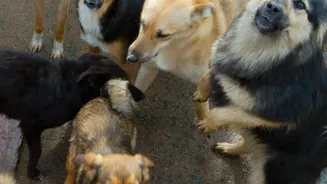
often conducted in controlled lab settings, gave us valuable insights but also created a skewed perspective. It treated the experiences of a Golden Retriever in a suburban home as the universal canine experience, overlooking the vast majority of dogs living worldwide. Most of the world's dogs are not pampered pets but free-ranging or 'village' dogs who navigate complex social lives with minimal human supervision. By focusing only on a small, homogenous group, science risked embedding cultural assumptions into its understanding of a species that is incredibly diverse.
A World of Different Dogs
A new wave of researchers is challenging this paradigm by studying dogs in their natural and varied environments. Scientists like Dr. Anindita Bhadra in India are leading the way by focusing on the behaviour of free-ranging dogs on the streets of Kolkata. These dogs, which are not owned as pets, offer a glimpse into the intrinsic nature of canine social structures and communication. This global approach reveals that a dog's environment and its 'job'—whether it's herding, guarding, or simply surviving—dramatically shape its behaviour and relationship with humans. Studies comparing pet dogs to free-ranging dogs in places like Morocco have found significant differences in problem-solving and persistence, suggesting that a dog's life experience heavily influences its cognitive skills.
Rethinking Barks, Growls, and Trust
This broader perspective is upending long-held beliefs. For example, the common assumption that dogs primarily seek out humans for food is being questioned. Dr. Bhadra's research has shown that free-ranging dogs can form bonds with humans based on petting and positive attention alone, sometimes even valuing affection over food. This suggests that the foundation of the dog-human relationship may be more rooted in social connection than simple bribery. Similarly, what a bark means can vary wildly. A cross-cultural study found that the function a dog serves in a society—such as for hunting or guarding—predicts how humans treat and perceive them. A dog in a society where it is primarily a hunter is more likely to be given a name and seen as a family member than in a society where it is not. This means a single behaviour can't have a universal meaning; context is everything.
From Assumption to Observation
The move toward global, diverse research signals a maturation of canine science. Instead of projecting human ideas onto dogs, scientists are observing what dogs actually do in their own worlds. This has led to a better understanding of how dogs themselves process communication. Recent research shows that dogs can pick out relevant words from a stream of human chatter, even when not being directly addressed, showing they eavesdrop on our conversations. Other studies are exploring how dogs use soundboards to 'talk,' revealing that they can comprehend the words themselves, not just react to their owner's cues. This shift encourages a more humble and observant approach, forcing us to recognize that the life of a pet dog is just one of many ways to be a dog.