








The Dangerous Disconnect
For any traveller, a boarding pass is non-negotiable. It's the one document you check, double-check, and guard with your life. Without it, your journey ends before it begins. Yet, for many Indian travellers, a weather alert from the India Meteorological
Department (IMD) is treated as little more than a suggestion—an optional advisory that can be easily dismissed in the pursuit of a pre-booked holiday. This is the dangerous disconnect. We meticulously plan our itineraries, but often ignore the one variable that can upend everything: nature. An IMD Red or Orange alert isn't just a forecast for rain; it's a critical safety warning, a signal that conditions are hazardous and travel may be perilous. Ignoring it is like trying to board a flight without a pass—a gamble against overwhelming odds.
A Cascade of Consequences
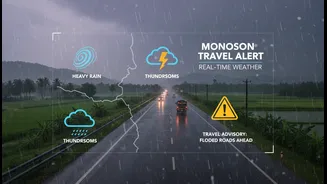
Recent events paint a grim picture of what happens when these warnings are overlooked. Across India, the monsoon has been relentless. In early July, nearly 100 tourists were stranded near Lonavla after a landslide blocked a key road, a direct consequence of incessant rains for which the IMD had issued a red alert. Similarly, tragic landslides in Wayanad, Kerala, which claimed lives, occurred amidst torrential downpours and official warnings. In Uttarakhand, authorities have been forced to close schools and issue strict travel advisories for Char Dham routes due to the risk of landslides. These incidents are not isolated. They form a pattern where travellers venture into high-risk zones, get trapped by landslides or flash floods, and trigger massive rescue operations that strain local resources and put more lives at risk. The reality is stark: a cancelled or postponed trip is an inconvenience, but being stranded in a disaster zone is a life-threatening crisis.
IMD Is Not Crying Wolf
Skepticism about the accuracy of weather forecasts is a common refrain, but it's an outdated one. The IMD has made significant strides in its forecasting capabilities, leveraging advanced numerical models and real-time data to provide district-level and even village-level warnings. Their colour-coded system is designed for clarity: Green means all is well; Yellow advises you to 'Be Aware'; Orange means 'Be Prepared' for potentially disruptive, bad weather; and Red demands you 'Take Action' to protect yourself from significant risk. These aren't arbitrary. They are based on scientific data predicting heavy rainfall, high winds, or other severe phenomena that can lead to flash floods and landslides. The department now issues bulletins multiple times a day, accessible via apps like 'Mausam' and 'Damini', providing actionable intelligence that is crucial for safe travel. Ignoring this readily available, life-saving information is a risk no one should be willing to take.
From Mindless Scrolling to Mindful Planning
In an age of social media, the pressure to capture the perfect vacation photo can sometimes overshadow practical sense. The desire for a 'gram-worthy' shot of a roaring monsoon waterfall or a misty mountain peak can lead travellers to ignore advisories and venture into dangerous areas. But no picture is worth your life or the safety of your family. Responsible tourism requires a shift in priorities. It means valuing safety over sightseeing and flexibility over a rigid itinerary. This monsoon, instead of just scrolling through hotel reviews, travellers must make checking IMD's district-wise warnings a core part of their planning. It's about making an informed risk assessment, not based on hope, but on data. If a red alert is in effect for your destination, the responsible choice is simple: do not travel. Wait for conditions to improve. The mountains and beaches will still be there.
Making the Alert Your New Boarding Pass
Integrating weather alerts into your travel routine is simple. Start by downloading the official IMD apps, 'Mausam' and 'UMANG', before you even book your tickets. Use the long-range forecast to guide your destination choice. In the week leading up to your trip, monitor the 5-day forecast. In the 48 hours before departure, pay close attention to any yellow, orange, or red alerts for your destination district. Have a backup plan. Talk to your hotel about flexible booking options in case of a weather warning. If you are on the road, follow local traffic advisories and use the 'Nowcast' feature for 3-hourly updates on localised weather. This isn't about creating travel anxiety; it's about being empowered with information. A smart traveller is a safe traveller.