




Why a Planned Warm-Up Matters
Think of a warm-up as the bridge between your daily life and your workout. Its purpose is far more than just 'getting warm'. A well-designed warm-up gradually increases your heart rate and core body temperature, sending more oxygen-rich blood to your muscles.
This makes them more pliable and less prone to strains. Beyond the physical, a structured 10-minute routine primes the connection between your brain and your muscles, improving coordination and helping you mentally shift into training mode. It’s not wasted time; it’s an investment in a safer, more effective workout.
Phase 1: General Movement
The first step is to gently raise your body temperature and get your blood flowing. This is the 'general' part of your warm-up, involving low-intensity cardiovascular exercise that engages large muscle groups. This phase should last for about three to five minutes. The goal is to start breathing a little heavier without causing fatigue. Simple and effective options include brisk walking, light jogging on the spot, using a stationary bike or rower, or a few minutes of jumping jacks. This initial step eases your body out of a resting state and prepares it for more dynamic work.
Phase 2: Dynamic Stretching and Mobility
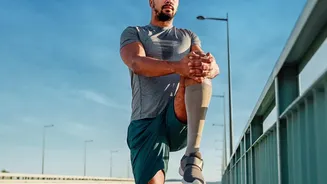
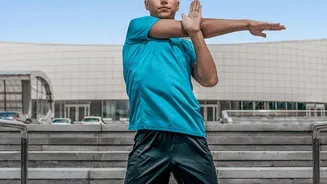
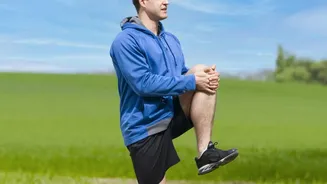
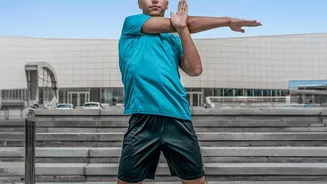
Once your body is warm, it's time to focus on mobility. This is where dynamic stretching comes in—actively moving your joints and muscles through their full range of motion. Unlike static stretching (holding a stretch for a long time), which is better suited for a cool-down, dynamic movements prepare your body for action. Incorporate exercises like leg swings (forward-and-back and side-to-side), arm circles, and torso twists. Movements like walking lunges or high knees also fit perfectly here, as they activate key muscle groups while improving your range of motion.
Phase 3: Activation Exercises
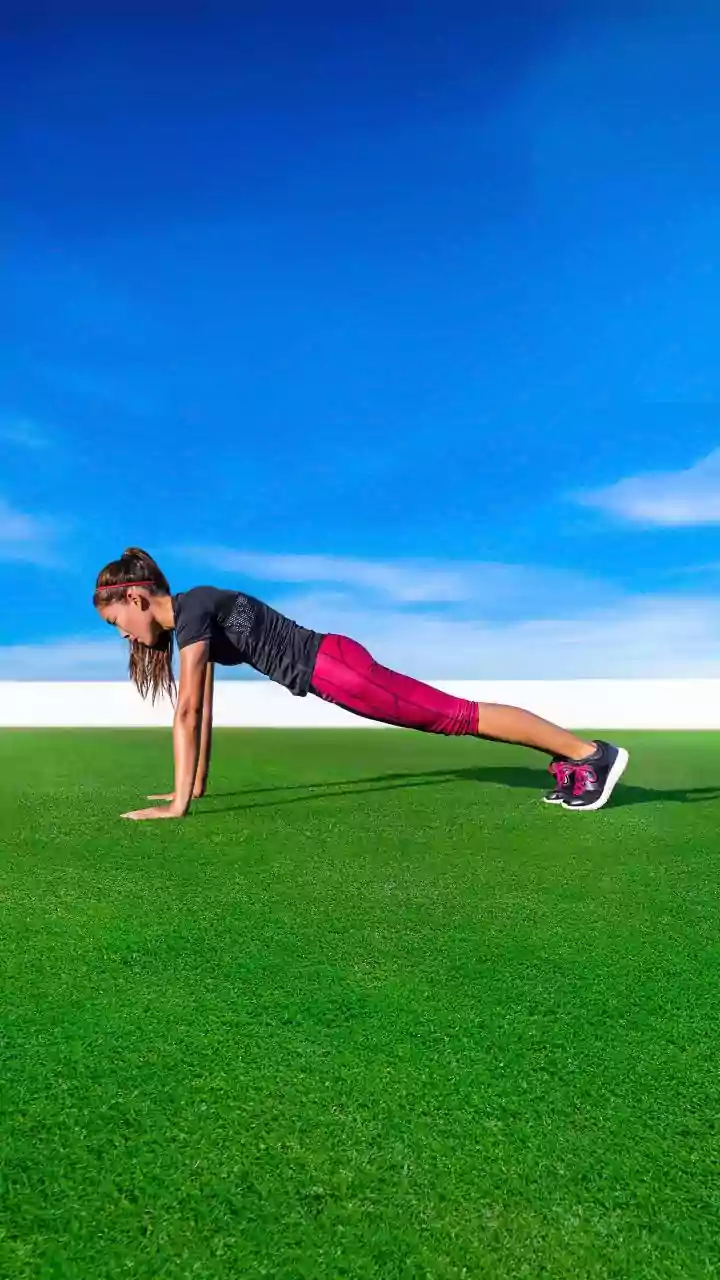
Many of us spend hours sitting, which can cause key stabilising muscles, like the glutes and core, to become sleepy or underactive. Activation exercises are designed to wake them up. This is a crucial step for injury prevention, as these muscles provide stability for your joints during more intense movements. Focus on targeted, low-intensity movements. Glute bridges are fantastic for firing up the hips and hamstrings. Planks and bird-dogs are excellent for engaging the entire core. This phase ensures that the right muscles are ready to do their job, rather than letting other, less-equipped muscles take over.
Phase 4: Exercise-Specific Preparation
The final phase makes your warm-up specific to the workout you're about to perform. The goal is to groove the movement patterns you'll be using, but with a much lighter load. If you're going to be squatting, this means performing a set of bodyweight squats, perhaps followed by a set of light goblet squats. If you have a day of overhead pressing, you might do some wall slides or a few reps with an empty barbell. For runners, this could include drills like A-skips or butt kicks. This step not only prepares the exact muscles and joints for the task ahead but also allows you to rehearse perfect form before adding weight or intensity.