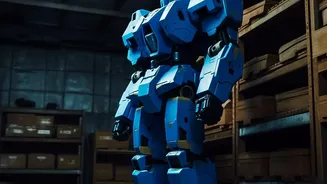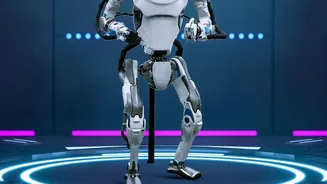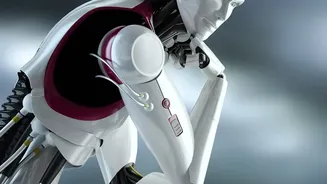



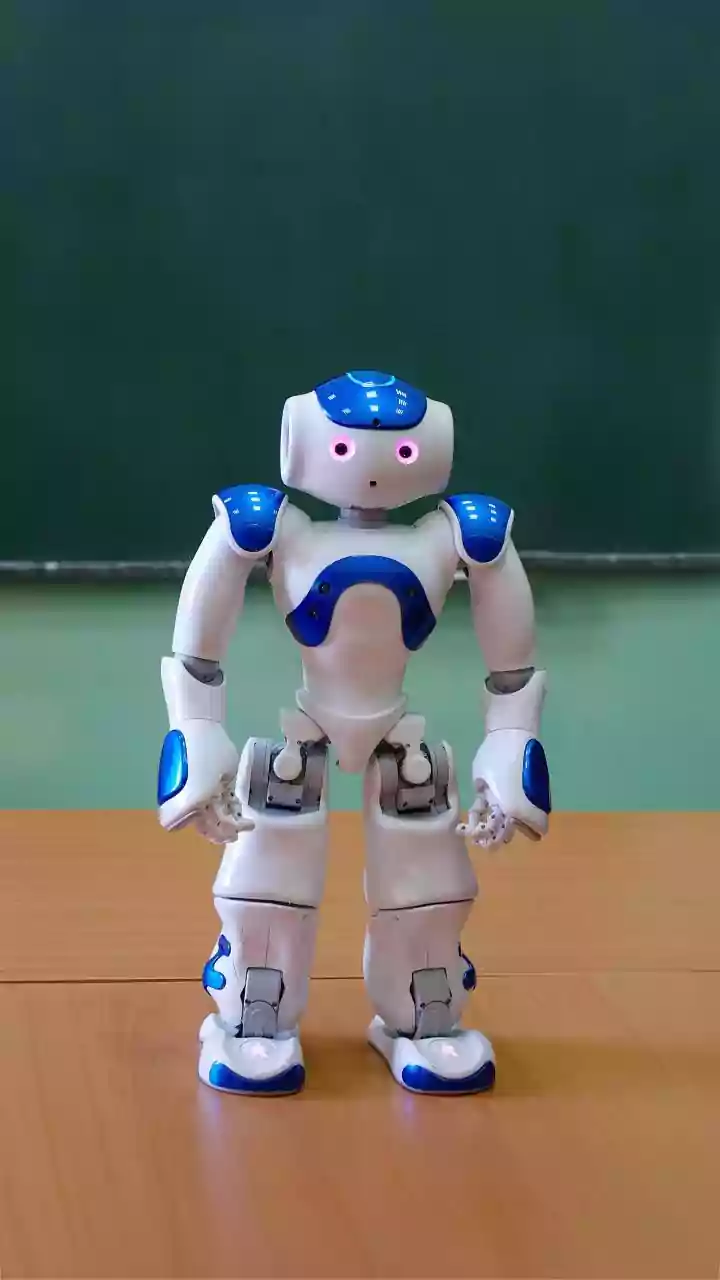



The age of humanoid robots is no longer science fiction. Impressive videos show them folding laundry and working in factories, but a huge gap remains between a flashy demo and a profitable, reliable employee that can work alongside humans.
The Promise on Full Display
In 2026, the
robotics world is buzzing with activity. Companies like Tesla, Boston Dynamics, and Figure AI are showcasing humanoids with increasingly impressive abilities. We've seen Tesla's Optimus begin early production, with reports of manufacturing lines running multiple shifts. Simultaneously, Boston Dynamics has started shipping its production-ready electric Atlas robot to partners like Hyundai and Google DeepMind for industrial tasks. These robots are designed to operate in spaces made for people, navigating stairs and using human tools, which could eliminate the need for costly facility redesigns. The most significant real-world test so far involved Figure AI's robots, which spent 11 months in a BMW manufacturing plant in the US, contributing to the assembly of over 30,000 vehicles by handling sheet metal parts. This pilot demonstrated that humanoids are capable of performing precise, physically demanding work in a live production environment.
The Billion-Dollar Question of Cost
For all their capabilities, the commercial viability of humanoid robots hinges on simple economics: are they cheaper than human labour? The answer is becoming a qualified 'yes'. While early prototypes cost hundreds of thousands of dollars, prices are falling. Tesla has stated a long-term target price of $20,000 to $30,000 for its Optimus robot. At that price point, the payback period for a robot replacing a single manufacturing worker could be just a few months. Current estimates for other robots, like Agility Robotics' Digit, suggest a five-year cost of around $400,000, including the unit, deployment, and maintenance. Even at these higher prices, the return on investment can be compelling. A humanoid robot can operate for 20 hours a day, doesn't take breaks, and doesn't require benefits. When factoring in a robot's ability to cover two or three human shifts, some analysts project a payback period of 12 to 18 months even with today's costs.
A Reality Check on the Factory Floor
Despite successful pilots, major hurdles remain before humanoid robots become a common sight in workplaces. The biggest challenges are no longer just about walking, but about reliability, dexterity, and intelligence in unpredictable environments. Industrial customers expect uptime of 95-99%, but many current robots struggle to operate for more than a few hours without needing a recharge or experiencing a fault. Battery life is a significant hardware bottleneck, with most humanoids limited to between one and four hours of active operation. Hands have also become a key constraint; while robots can grip objects, reliably managing delicate tasks or adjusting to slipping items over thousands of repetitions is still a massive challenge. Furthermore, while AI has advanced, robots still struggle to generalize their skills. A robot trained for one specific task on a production line may fail if the lighting changes or an object is in a slightly different position.
Safety, Software, and Scalability
Beyond the hardware, deploying fleets of thousands of robots introduces new layers of complexity. Safety is a primary concern. A 90kg robot moving autonomously through a busy warehouse poses inherent risks, and clear safety standards for this new class of machine are still being developed. Integrating these robots into existing company software for inventory and workflow management is another crucial step that requires significant engineering. The biggest challenge of all may be scaling production. Companies like Tesla and Hyundai are building new factories with the capacity to produce thousands of robots per year, but the specialised supply chains for components like high-performance actuators are not yet mature. One analysis notes that actuators alone can account for half a robot's total cost, making supply chain optimisation critical for bringing prices down. The path from producing a few dozen robots to tens of thousands is a steep one that no company has yet fully climbed.