





Plan Ahead, Book in Advance
The single most effective way to save money on train travel is to book your tickets early. Indian Railways opens reservations up to 120 days in advance, and fares are significantly lower when you book at the beginning of this window. Last-minute plans
often mean relying on the 'Tatkal' quota, which comes with a premium charge for a confirmed seat. By planning your trip two to three months ahead, you not only secure the lowest possible fare but also increase your chances of getting a confirmed berth in the class of your choice, avoiding the uncertainty of waitlisted tickets. This is especially crucial during festival seasons and long weekends when demand skyrockets and budget-friendly classes sell out first.
Choose the Right Class for Your Journey
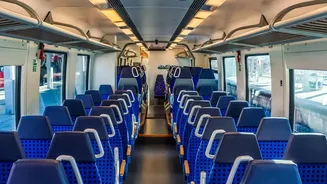
Indian Railways offers a wide range of travel classes, each with a different price point and level of comfort. For the ultimate budget experience, Sleeper Class (SL) is the go-to for overnight journeys. It provides a berth to sleep on without air-conditioning, offering a truly authentic Indian travel experience at a fraction of the cost of AC classes. For daytime trips, Second Sitting (2S) offers a reserved seat and is extremely economical. If you require air-conditioning, Third AC (3A) and the slightly cheaper Third AC Economy (3E) provide a comfortable, climate-controlled environment without the high cost of Second AC (2A) or First AC (1A). Choosing the lowest comfortable class for your journey is a core principle of railway budget travel.
Embrace the Hub-and-Spoke Model
Instead of planning a long, continuous journey with multiple stops, consider a 'hub-and-spoke' approach. Base yourself in a major city with excellent rail connectivity, such as Delhi, Mumbai, Chennai, or Kolkata. Use this city as your 'hub' and take shorter, return journeys to nearby 'spoke' destinations. This strategy allows you to book cheaper, shorter train routes and avoid the complexity of multi-leg bookings. The concept, which is being explored by Indian Railways for operational efficiency, can be adapted by travellers for cost-effective planning. You can settle into one affordable accommodation at the hub and explore the surrounding region through a series of day trips or short overnight stays, returning to your base before heading to the next destination.
Leverage Overnight Trains
One of the classic tricks for budget backpacking is to use overnight trains as a moving hotel. By booking a Sleeper or Third AC berth on a train that travels through the night, you save the cost of a night's accommodation. This strategy is incredibly efficient; you cover long distances while you sleep and wake up in a new city, ready to explore. Not only does this save a significant amount of money, but it also saves precious daylight hours that would otherwise be spent in transit. A long-distance overnight journey in a budget class can cost just a few hundred rupees, making it one of the most economical ways to travel across the country.
Unlock Savings with Circular Journey Tickets
For travellers planning a multi-city tour that begins and ends at the same station, the Circular Journey Ticket is a little-known but powerful tool. This special ticket covers up to eight break journeys and allows you to travel in a circuit. The main advantage is that fares are calculated on 'telescopic rates', which are considerably lower than the sum of individual point-to-point tickets for the same route. While it cannot be booked online and requires you to approach a Divisional Commercial Manager at a major station to get the route approved and fare calculated, the potential savings of over 25% make it worth the effort for extensive trips.
Manage Your Food Budget Smartly
Food expenses can add up quickly on a long trip. While trains offer onboard catering, it's often more affordable to pack your own snacks and meals. Railway stations are also hubs of affordable and delicious local food. You can buy meals from vendors on the platform during halts. Furthermore, IRCTC's eCatering service allows you to pre-order food from a wide range of FSSAI-approved restaurants to be delivered directly to your seat at your chosen station. This gives you more control over your food choices and budget, preventing impulse buys of pricier onboard items.