




A Quick Refresher on the Mission
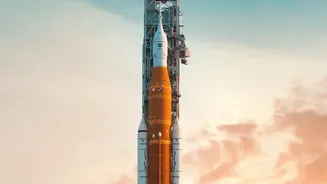
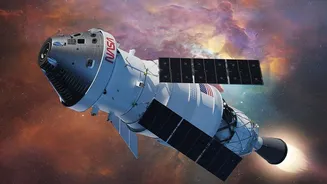
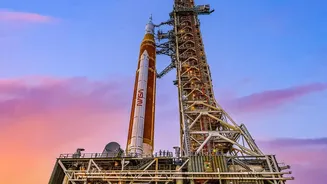
Artemis II was the first crewed mission of NASA's new lunar program, a critical test flight designed to prove the Orion spacecraft could safely carry astronauts on a nearly 10-day journey into deep space and back. While primarily an engineering shakedown,
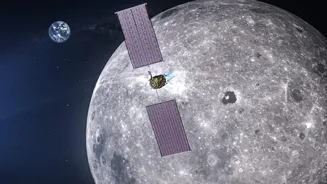
the mission was also a dense scientific opportunity. The four astronauts weren't just passengers; they were active researchers, turning their spacecraft into a mobile laboratory as it swung around the far side of the Moon. Their primary science goals focused on two key areas: understanding the deep space environment and using the human eye to complement robotic observations of the Moon.
Finding 1: A New View of Space Radiation
One of the biggest risks for astronauts leaving Earth's protective magnetic bubble is space radiation. The Orion spacecraft was outfitted with an array of advanced radiation sensors, and the crew also wore personal dosimeters to measure their exposure. The findings confirmed that the spacecraft's shielding performed as expected, but also revealed new complexities. Data from the trip around the Moon's far side showed slight but significant variations in galactic cosmic rays that didn't perfectly match existing models. This information is invaluable, as it will allow engineers to refine shielding for the future Gateway space station and long-duration lunar habitats, making life on the Moon safer for the Artemis III astronauts and beyond.
Finding 2: The Human Eye as a Scientific Tool
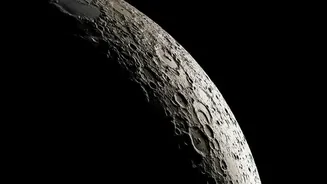
Robotic orbiters like the Lunar Reconnaissance Orbiter have mapped the Moon in incredible detail, but nothing can fully replace the interpretive power of the human brain and eye. During their flyby, the crew was tasked with a 'Lunar Observations and Imaging Campaign'. They provided detailed descriptions of geological features, noting subtle color and texture variations that are difficult for automated systems to capture. The crew reported seeing hues of grey, brown, and even green, corresponding to different mineral compositions. These direct human observations, especially of the far side and the perpetually shadowed regions near the poles, will help scientists better target landing sites and areas of interest for future robotic and human explorers looking for resources like water ice.
Finding 3: Our Bodies in Deep Space
The astronauts themselves were a key science experiment. The mission carried several 'organ-on-a-chip' experiments, tiny devices containing human cells to study the effects of radiation and microgravity at a biological level in real time. One project, AVATAR, used bone marrow organ chips to track cellular impacts throughout the flight, offering a much more detailed picture than simple before-and-after blood draws. In another clever adaptation, astronauts used 'dry saliva books' to collect biological samples without needing refrigeration. This data is helping scientists understand how the human immune system and other biological functions respond to the unique stresses of deep space, which is crucial for planning eventual missions to Mars.
Why These Findings Are a Game-Changer
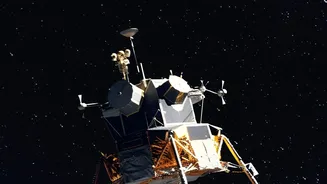
The results from the April flyby are more than just academic curiosities. They are foundational pieces of a much larger puzzle. The refined radiation data directly impacts the design and safety protocols for the Artemis III landing mission and the construction of a permanent lunar outpost. The crew's geological observations provide crucial context for the immense data sets from our robotic orbiters, helping to pinpoint the most scientifically interesting and resource-rich locations. And the human health findings are the first step in learning how to keep people safe and productive on journeys that will eventually take us far beyond the Moon. Artemis II proved the hardware works; these scientific findings are now charting the course for where we go next.