




The Challenge with Current Batteries
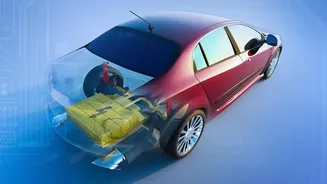
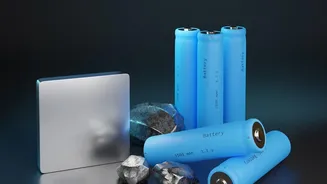
For decades, lithium-ion batteries have been the engine of the portable electronics revolution and the rise of electric vehicles (EVs). They pack a lot of energy into a small space. But this technology has two significant drawbacks: safety and cost. The core
of a conventional lithium-ion battery contains a flammable liquid electrolyte that shuttles ions between the positive and negative electrodes. If the battery is damaged, overheats, or is overcharged, this liquid can ignite, leading to a dangerous event called thermal runaway—a chain reaction that can result in fire and explosions. Furthermore, the materials used, such as cobalt and lithium, are expensive and have complex supply chains, which keeps the cost of battery packs high and, by extension, the price of EVs.
The Solid-State Solution
Solid-state batteries represent a fundamental shift in design. As the name suggests, they replace the flammable liquid electrolyte with a solid material, often made of ceramic, polymer, or glass. This simple but profound change addresses the core weaknesses of their liquid-based predecessors. The solid electrolyte is non-flammable and far more stable, acting as an inherent firebreak within the cell itself. This structural integrity not only prevents leakage but also makes the battery more resilient to physical damage. By eliminating the volatile liquid, the primary fuel for a battery fire is removed, fundamentally enhancing the battery's safety profile and paving the way for a future with virtually zero risk of thermal runaway.
Dismantling the 'Zero Risk' Claim
While the term 'zero risk' is a powerful promise, the reality is more nuanced. No energy storage device is completely free of risk under extreme conditions. However, solid-state technology dramatically reduces the likelihood and severity of failure. Research shows that while thermal runaway can still be induced in solid-state cells under lab-simulated crash conditions, the reaction is significantly slower and less violent. Heat generation during such an event is estimated to be only 20-30% of what occurs in a conventional battery. The absence of flammable liquid means there is no fuel to sustain a fire, making them inherently and significantly safer than any lithium-ion battery on the market today.
Paving the Road to Cheaper Packs
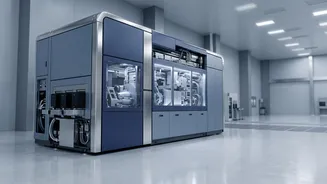
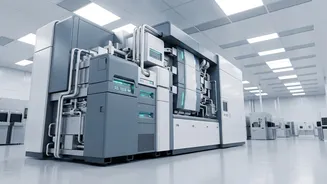
Initially, the production of solid-state batteries is more expensive than for established lithium-ion technologies. This is due to new materials and complex manufacturing processes that have not yet achieved mass-production scale. However, the long-term forecast points toward significant cost reductions. Solid-state designs can enable the use of higher-energy anodes like lithium metal or silicon, which store more power in less space. This increased energy density means fewer cells are needed for the same range, reducing material volume. They also simplify battery pack construction by requiring less bulky cooling and safety monitoring systems. As companies refine roll-to-roll manufacturing techniques and achieve economies of scale, costs are expected to fall dramatically.
The Race to Commercialization
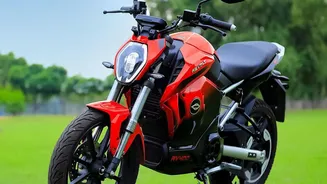
The transition from laboratory prototypes to factory production lines is the final frontier for solid-state technology. As of 2026, the industry is at a tipping point, moving from research into real-world production. Automotive and battery giants like Toyota, CATL, and BYD are heavily invested, with roadmaps targeting small-scale production between 2027 and 2028, and mass production around 2030. Companies like ProLogium are already claiming to be moving toward gigawatt-scale production. Challenges remain in ensuring the stability of the interface between the solid electrodes and electrolyte, and in scaling up manufacturing without defects. The first applications may appear in consumer electronics or electric motorcycles before they become standard in passenger EVs.