
A New Eye on the Early Universe
At the forefront of this new era of discovery is the James Webb Space Telescope (JWST). Launched in late 2021, its unparalleled sensitivity to infrared light allows it to peer back in time to the universe's dawn, just a few hundred million years after
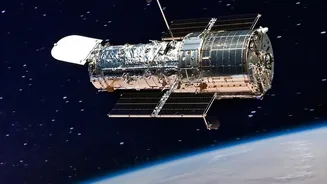
the Big Bang. Unlike its predecessors, such as the Hubble Space Telescope, Webb is designed specifically to capture the faint, stretched-out light from the most distant objects in the cosmos. This infrared capability allows it to cut through cosmic dust clouds that obscure visible light, revealing the hidden nurseries of stars and the building blocks of the very first galaxies. It's like having a new set of eyes that can see the previously invisible, giving us a front-row seat to the formation of the universe.
Rewriting the First Cosmic Chapters
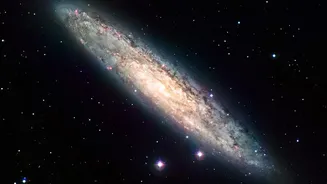
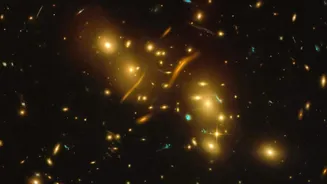
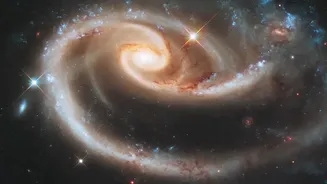
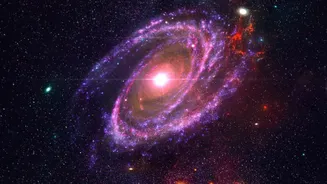
The initial findings from JWST have been nothing short of staggering, forcing astronomers to rethink long-held theories about cosmic evolution. One of the biggest surprises is the discovery of massive, well-structured galaxies that appear far earlier in cosmic history than models predicted. These galaxies, seen when the universe was less than a billion years old, seem too mature and luminous for their age, challenging our understanding of how quickly galaxies could form and grow. Furthermore, JWST has identified a surprising number of supermassive black holes at the hearts of these early galaxies. The presence of such massive objects so soon after the Big Bang raises new questions about how they formed and grew so rapidly, with some appearing to exist even before their host galaxies were fully formed.
Mapping the Invisible Scaffolding
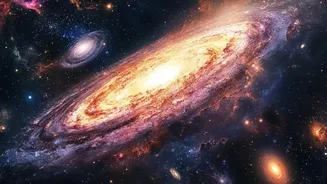
Beyond individual galaxies, advanced imaging is also revealing the grand architecture of the cosmos: the cosmic web. This vast, interconnected structure of dark matter filaments and gas sheets is believed to be the scaffolding upon which galaxies form and evolve. For the first time, astronomers have captured direct, detailed images of these immense filaments of gas stretching between galaxies, acting like cosmic highways that funnel fuel for star formation. By mapping this web in unprecedented detail, scientists can better understand how galaxies are fed, how they interact, and how the overall structure of the universe took shape over billions of years. These observations provide tangible evidence for a structure that was previously only understood through computer simulations.
New Mysteries and the Path Forward
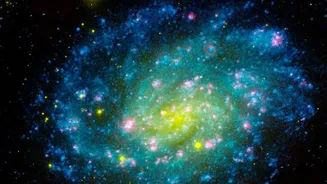
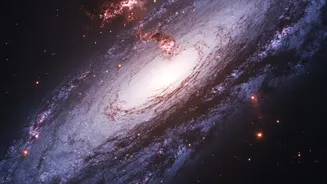
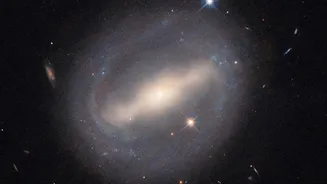
With every stunning image and piece of data, new mysteries emerge. Astronomers are now grappling with strange objects nicknamed "Little Red Dots," which appear to be very distant, compact galaxies, possibly powered by early supermassive black holes. Understanding these objects is a key piece of the puzzle. Similarly, by observing how galaxies developed distinct 'thick' and 'thin' disks over time, scientists are piecing together a more sequential story of galactic formation, where chaotic, thick disks formed first, followed by more orderly, thin disks like the one in our own Milky Way. Each discovery opens up new avenues for research, prompting scientists to refine their models and ask questions that were previously unanswerable. The goal is to build a more complete and coherent picture of our cosmic origins, from the first stars to the complex galaxies we see today.