





The Challenge of Building Big in a Vacuum
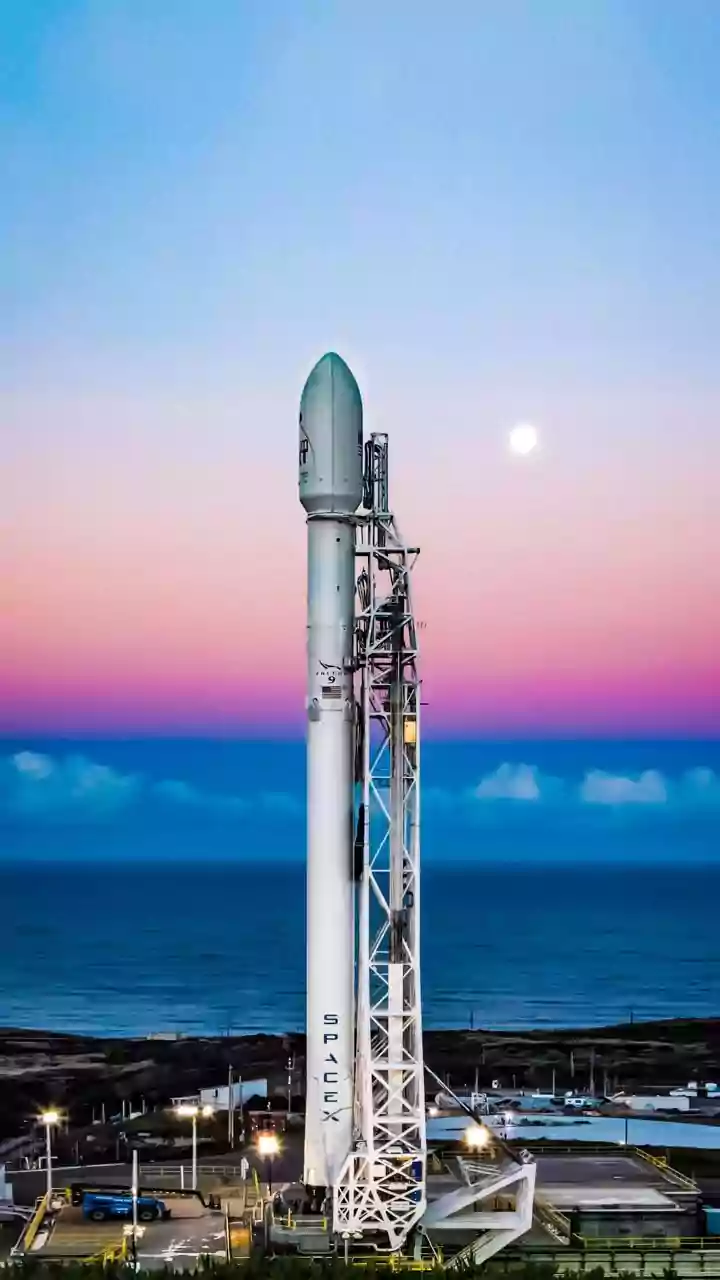
For decades, every kilogram and cubic metre launched into orbit has been meticulously planned and incredibly expensive. The size of any space station component is strictly limited by the payload fairing of its launch rocket—the nose cone that protects
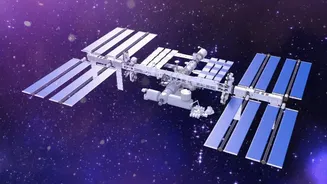
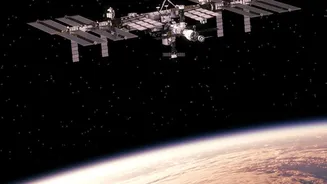
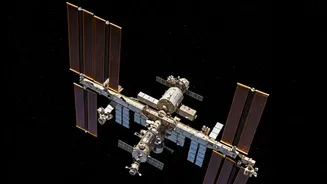
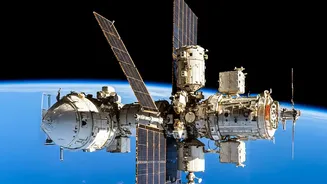
it on the way up. This has meant that space stations, including the venerable International Space Station (ISS), are assembled from a series of rigid, metal modules launched one at a time. This approach is reliable but incredibly costly and logistically complex, resulting in interior spaces that are functional but often cramped. As humanity looks toward a future of commercial research, in-space manufacturing, and even tourism, the need for larger, more affordable, and more versatile orbital outposts has become critical. The traditional method of building with rigid aluminium cans simply won't scale for the ambitions of the new space economy.
An Elegant Solution: Just Add Air
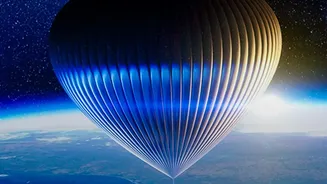
Inflatable habitats offer a paradigm-shifting solution. Instead of launching a full-size rigid structure, these modules are built from advanced flexible fabrics that can be tightly packed for launch. Once in orbit, the module is inflated, expanding to its full volume, which can be many times larger than its launch configuration. The concept isn't new—NASA explored it with the TransHab project in the 1990s—but advancements in material science have finally made it a practical reality. The first successful on-orbit test, the Bigelow Expandable Activity Module (BEAM), was attached to the ISS in 2016. Originally a two-year experiment, BEAM performed so well that it remains attached to the station, serving as a valuable cargo storage area and proving the long-term viability of the technology.
Stronger Than Steel?
The immediate question for many is safety. How can a 'balloon' be safe from the hazards of space? The answer lies in the sophisticated, multi-layer materials used in their construction. The outer layers are made of woven fabrics like Vectran and Kevlar, materials known for their use in bulletproof vests and rover landing airbags. These soft-good layers are incredibly strong and resilient. When pressurized, the structure becomes rigid and surprisingly durable, offering protection against micrometeoroids and space debris that is often superior to that of traditional aluminum hulls. To prove their strength, companies like Sierra Space have intentionally burst full-scale habitat prototypes on the ground. Its LIFE (Large Integrated Flexible Environment) habitat withstood pressures far exceeding NASA's safety requirements, demonstrating the robustness of the design.
The New Frontier of Commercial Space
With the ISS scheduled for retirement around 2030, a new generation of commercial space stations is poised to take its place, and inflatable technology is at the heart of this transition. NASA's Commercial Low-Earth Orbit Destinations (CLD) program is fostering the development of these private outposts. Companies like Sierra Space are developing their LIFE modules as key components for proposed stations like Orbital Reef. A single LIFE habitat could provide a third of the entire pressurized volume of the ISS. Other players, such as Lockheed Martin and Max Space, are also developing their own inflatable habitat designs for LEO, lunar, and even Mars missions, signaling a major industry shift. Max Space has a launch manifested with SpaceX for 2026 to test its own scalable module.
The Scalable Future of Orbital Research
The true power of inflatable modules lies in their scalability. Because they launch in a compact form, it becomes feasible to launch much larger modules than ever before, or to link multiple modules together to create sprawling orbital complexes. This opens the door for dedicated labs with ample room for experiments, manufacturing facilities leveraging the unique microgravity environment, and even habitats for space tourists. Instead of being constrained by the size of a rocket fairing, future space station architects can design for volume and function. Sierra Space envisions future modules with more internal volume than the entire ISS, launched on next-generation rockets. This scalability is what will enable a thriving economy in low-Earth orbit, transforming it from a place a few highly trained astronauts visit to a bustling hub of science and commerce.